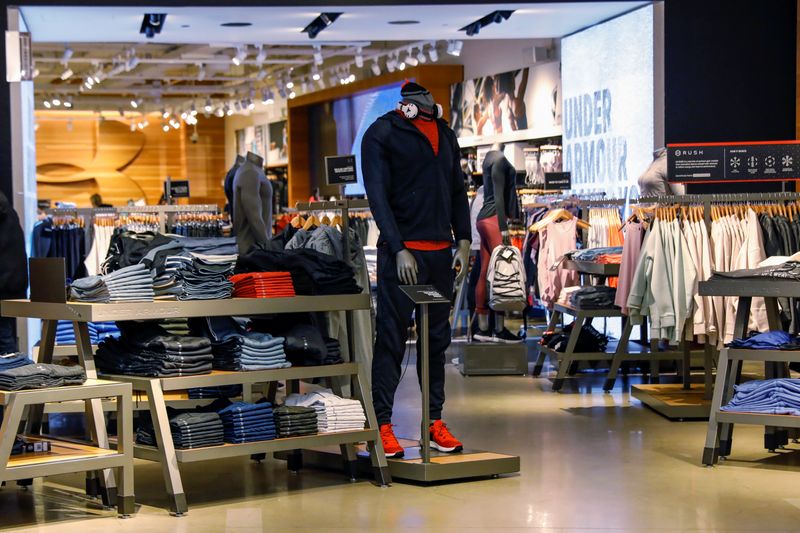
Under Armour raised FY2026 adjusted operating income guidance to $95M-$110M from $90M-$105M after narrowly beating Q2 sales and EPS expectations, but revenue still fell 3.8% over the last twelve months. The stock faces a structural headwind as the Stephen Curry partnership ends in calendar 2026, while North American stabilization is not expected until FY2027. Barclays kept an Equal Weight rating with a $5.00 target.
UAA’s operating leverage is now the main stock driver, not revenue growth. The upgrade to operating income guidance tells us management is buying time with cost cuts, but the business is still vulnerable to a single quarterly miss because the top line is not yet self-sustaining. The next few prints matter less for absolute earnings power and more for whether gross margin and SG&A discipline can offset the post-timing reversal, which is why the stock can stay range-bound even if headline EPS holds up.
The Curry exit is the bigger second-order issue than it looks. This is not just loss of an endorsement; it removes a cultural distribution channel that helped the brand stay relevant in basketball and, by extension, in youth/athleisure adjacent demand. The likely loser set extends beyond UAA: mid-tier athletic brands that rely on athlete-led credibility may see sharper share volatility if retailers re-rank shelf space away from weaker velocity stories, while NKE and ADDYY are better positioned to absorb displaced basketball demand with less incremental marketing spend.
Catalyst timing is asymmetric. In the next 1-2 quarters, the setup is vulnerable because the quarter-to-quarter noise masks underlying trends and leaves the stock exposed to any guidance reset. Over 6-12 months, the real inflection is whether North America stabilizes before the partnership fully unwinds; if not, valuation support from “turnaround optionality” fades and the market likely re-rates UAA as a low-growth, low-brand-momentum apparel name rather than a restructuring story. The consensus may be underestimating how expensive it is to replace a single premium athlete platform with paid media at scale.
Contrarian angle: the bear case may already be crowded because expectations are low and the stock is trading like a perpetual disappointment. If management can show even modest sequential improvement in North America while preserving the raised profit bridge, a relief rally is plausible. But the upside is capped unless they secure a credible successor brand narrative; without that, any rally should be sold into strength rather than treated as a durable rerating.
AI-powered research, real-time alerts, and portfolio analytics for institutional investors.
Request DemoOverall Sentiment
neutral
Sentiment Score
0.05
Ticker Sentiment
