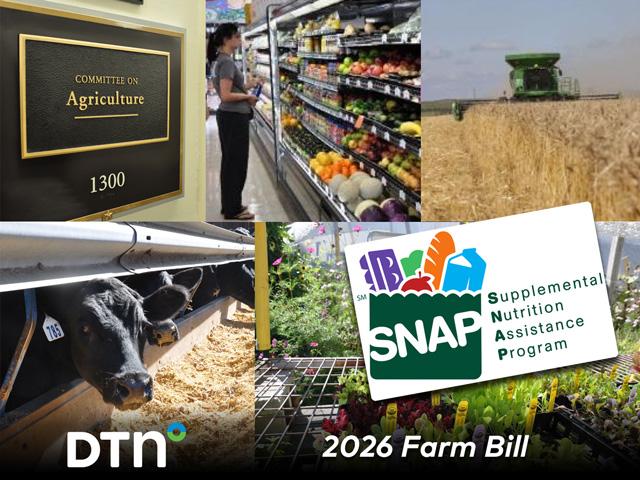
A coalition of 330 farm groups is pressing House leadership to advance Farm Bill 2.0, with the bill already before the House Rules Committee and amendment submissions open through Wednesday ahead of a possible rule the week of April 27. Separately, 524 farmers are urging Congress to ensure USDA agencies are fully staffed and funded after reported 2025 staffing losses of 22% at NRCS and 24% at the Farm Service Agency. The piece is policy-focused and highlights ongoing legislative and operational risks for agriculture, but it does not indicate an immediate market-moving event.
The near-term market signal is less about farm policy content and more about timing risk being pulled forward into a narrow amendment window. That matters because ag and rural-credit equities, input distributors, and farm equipment names tend to discount policy change only when legislative calendars become concrete; until then, the catalyst is mostly headline beta. If the bill advances in late April/May, the first-order beneficiaries are likely lenders and specialty finance names with rural exposure, while the second-order winner is any segment tied to capex confidence in the farm economy, since improved policy visibility tends to lift borrowing and replacement cycles.
The staffing issue is more economically important than the bill rhetoric because it hits program throughput, not just funding levels. Longer delays at USDA agencies can create a self-reinforcing squeeze: slower payments and weaker technical assistance reduce farm liquidity, which in turn raises delinquencies and increases demand for operating credit at exactly the time lenders are already sensitive to credit deterioration. That sets up a lagged benefit for private ag lenders and farm credit institutions, but a delayed-hurt for farm operators and some input suppliers if working capital tightens through planting and into harvest decisions.
The contrarian read is that investors may be overestimating how quickly legislation translates into cash flow while underestimating how disruptive administrative bottlenecks can be even without new appropriations. A bipartisan committee passage does not eliminate Senate timing risk, conference risk, or the possibility that staffing constraints blunt the real-world impact of any policy win. In other words, the better trade may be on execution quality in USDA service delivery than on the bill itself; if staffing metrics continue to worsen over the next 1-2 quarters, the market should price a growing rural credit stress premium even before any legislative resolution.
AI-powered research, real-time alerts, and portfolio analytics for institutional investors.
Request TrialOverall Sentiment
neutral
Sentiment Score
0.05
