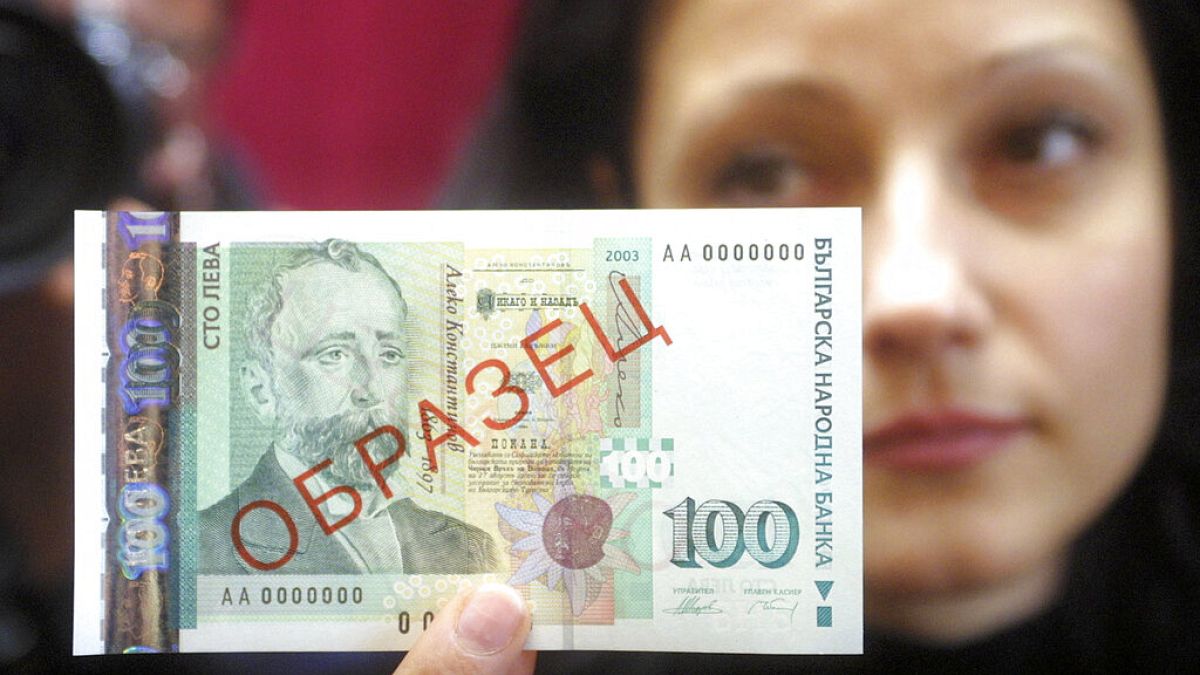
Thousands protested in Bulgaria against the government's plan to adopt the Euro, citing concerns over rising prices and loss of economic sovereignty, spearheaded by the ultranationalist Revival Party. President Radev has requested a parliamentary referendum on Euro adoption, while the Revival party insists on preserving the Bulgarian lev. Bulgaria aims to join the Eurozone by 2026, despite the ECB's 2024 assessment that the country's inflation is too high.
Bulgaria's new government has prioritized Eurozone membership, aiming for adoption by 2026, but faces significant domestic opposition. Thousands recently protested, organized by the ultranationalist Revival Party and NGOs, demanding a referendum to preserve the Bulgarian lev, citing concerns over potential price increases and loss of economic sovereignty. This sentiment is underscored by President Rumen Radev's formal request to parliament for a referendum on the matter. The European Central Bank's 2024 assessment highlighted that Bulgaria's high inflation rate was a key impediment to joining the currency union, a factor that continues to be relevant. The situation introduces considerable political and economic uncertainty, reflected in the 'mixed' sentiment and 'uncertain' tone signals, particularly regarding the feasibility of the 2026 target and the stability of the government's agenda. This internal division contrasts with the EU obligation for most non-Eurozone members to eventually adopt the Euro once convergence criteria are met.
AI-powered research, real-time alerts, and portfolio analytics for institutional investors.
Request DemoOverall Sentiment
mixed
Sentiment Score
-0.05
