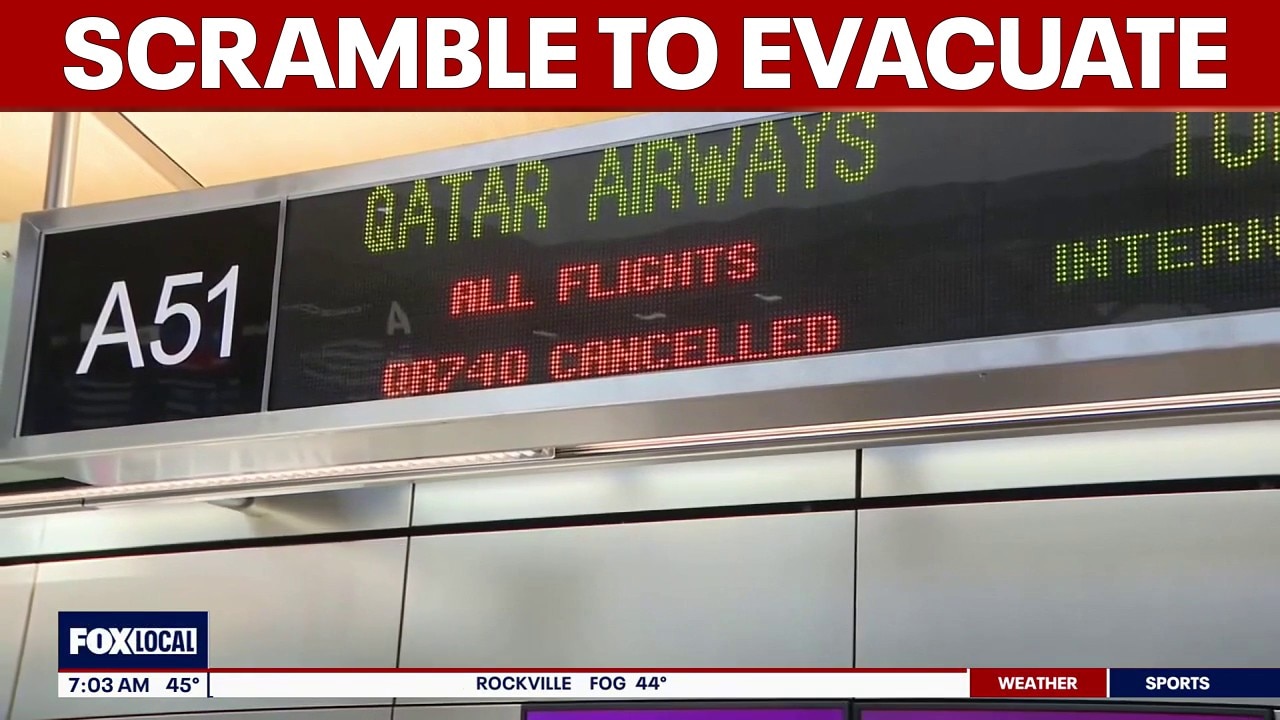
The U.S. State Department is urging Americans across more than a dozen Middle East countries to leave immediately as the conflict with Iran expands, with commercial flights canceled and airspace intermittently closed, leaving many stranded; roughly 9,000 Americans have reportedly evacuated so far out of an estimated 500,000–1,000,000 in the region. The Pentagon identified four of six U.S. soldiers killed by a drone strike at a command center in Port Shuaiba, Kuwait—members of the 103rd Sustainment Command—while regional missile and drone exchanges have driven an overnight gasoline price rise of about 11 cents. The escalation poses near-term upside risk to energy prices, travel and logistics disruptions and a broader risk-off impulse for markets should military actions widen further.
Market structure: Defense primes (LMT, RTX, NOC) and energy producers (XOM, CVX, large E&P) are direct beneficiaries as budgets, spot oil and risk-premia rerate; airlines, leisure, regional travel stocks and tour operators are immediate losers due to flight cancellations and demand destruction. Supply/demand: risk to Gulf crude flows tightens the oil balance — expect inventory draws and a 5–20% Brent upside in the next 2–8 weeks if disruptions persist; shipping/security premiums and marine insurance rates will rise, lifting revenues for specialty insurers and brokers.
Risk assessment: Tail risks include Strait of Hormuz closure or strikes on major terminals that could push crude >30% and cause a global equity drawdown >10% within weeks; safe-haven flows could compress 10-year yields by 10–30 bps short-term but inflation expectations could lift yields if oil stays high for quarters. Hidden dependencies: elevated insurance costs and port disruptions will ripple into global supply chains (autos, chips) with 2–4 month lag; catalyst set includes further Iranian retaliation, OPEC+ emergency meetings, or U.S. mobilization.
Trade implications: Favor tactical longs in large-cap defense and integrated oil (2–4% position sizes) and short travel/airline exposure via JETS or AAL for 1–3 month horizons; use oil call spreads or BNO for directional Brent exposure limited to 0.5–2% for downside-controlled upside. Options/FX/bonds: buy 3–6 month defense call spreads, consider 1–2% GLD for tail hedge, and expect USD strength vs risk currencies if risk-off continues.
Contrarian angles: Consensus overlooks mean-reversion risk — past Gulf crises (1990–91, 2003) produced sharp oil spikes then reversion over 3–6 months, so long-duration commodity trades risk being time-decay losers. Also defense capex is lumpy — order wins can take quarters to convert to revenue; prefer pair trades (long defense, short airlines) and capped-cost option structures rather than outright long equities at peak fear.
AI-powered research, real-time alerts, and portfolio analytics for institutional investors.
Request TrialOverall Sentiment
moderately negative
Sentiment Score
-0.60
