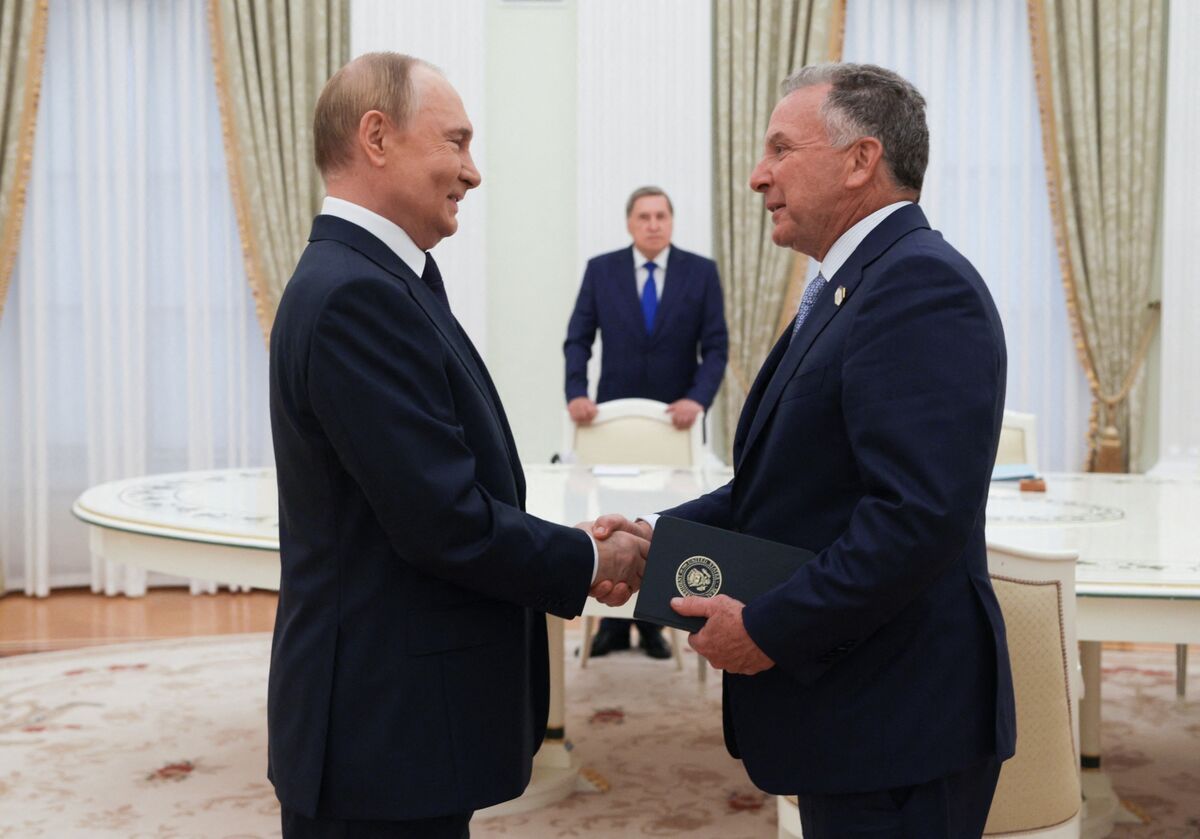
Steve Witkoff held a phone call on Oct. 14 that lasted a little over five minutes with Yuri Ushakov, President Putin’s top foreign policy aide, advising on how Russia should pitch a Ukraine peace plan to Donald Trump and proposing a Trump–Putin call before Volodymyr Zelenskiy’s White House visit, using the Gaza agreement as an entry. The exchange highlights private diplomatic outreach linking Middle East diplomacy to Ukraine at a high political level, a development with potential political and regulatory implications but limited immediate market impact.
Market structure: A credible push for a negotiated Ukraine pause linked to US politics would redistribute risk premia away from defense and energy and toward cyclicals and travel. Expect a 5–15% relative de-rating of prime defense primes (LMT, RTX, GD) over 3–6 months if risk premium compresses; Brent could fall 5–10% in the same window, pressuring integrated E&Ps (XOM, CVX) relative to refined product names.
Risk assessment: Tail risks include sudden sanctions escalation or a political scandal that re-tightens risk premia—low probability but could spike Brent >$100 and defense equities +20% within days. Immediate (0–7 days) volatility spikes of 3–6% are likely on headlines; 1–3 month outcomes depend on election messaging and any formal bilateral engagements; structural (≥12 months) outcomes hinge on election results and Congressional sanctions authority.
Trade implications: Tactical plays should be option-based and size-constrained: short-defense via 3-month put spreads, short-oil via put spreads or short USO/XOP, and rotate into Europe cyclicals/airlines (VGK, AAL) and industrials if de-risking persists. FX and rates: a 1–2% USD weakening and 10–25bp rise in 10y yields are plausible if geopolitical risk falls and risk-on returns.
Contrarian: Consensus assumes perpetual stalemate; that ignores political tail-risks where disclosures or sanctions could re-price risk rapidly—historically (post-Minsk) “relief rallies” lasted months then reversed. Use tight rules-based triggers (news-confirmed diplomatic calls, sanction votes) to scale positions and keep hedges sized to 1–3% NAV to avoid regime-reversal losses.
AI-powered research, real-time alerts, and portfolio analytics for institutional investors.
Request DemoOverall Sentiment
neutral
Sentiment Score
0.00
