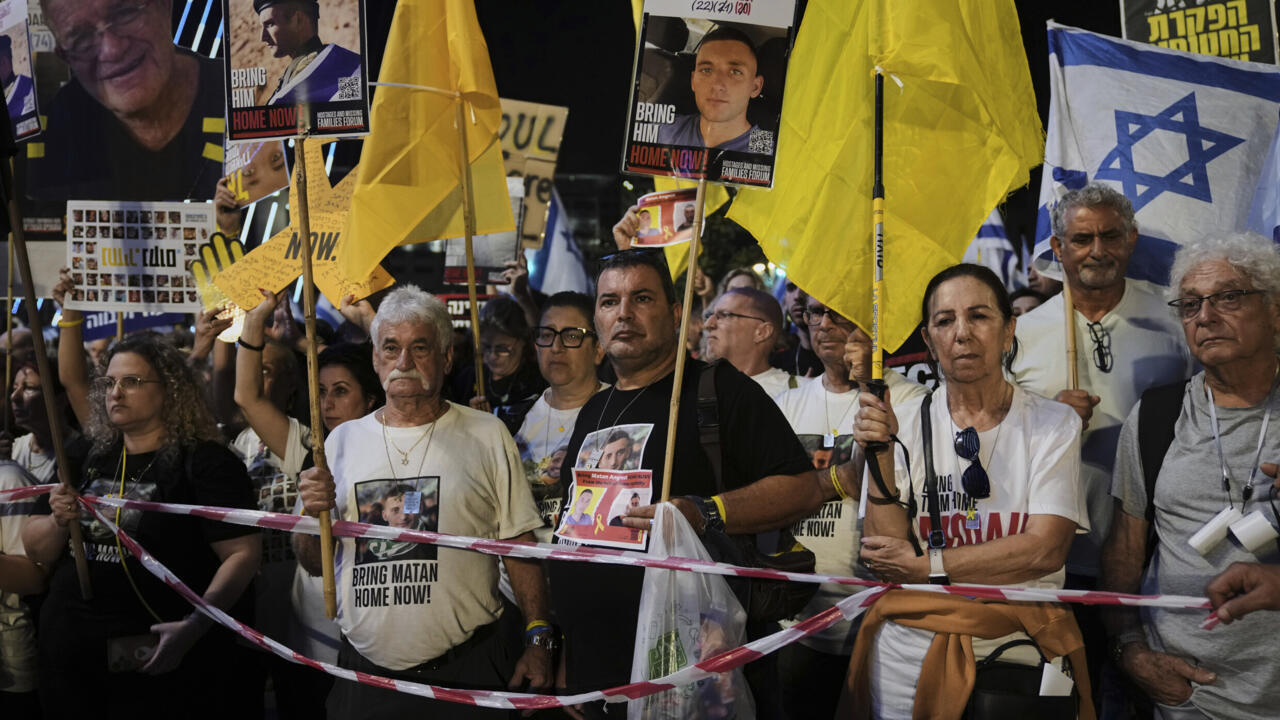
Thousands protested in Israel, urging a Gaza ceasefire and hostage release deal, as the IDF continued strikes on Gaza City, urging civilians to a southern 'humanitarian zone' despite its contested safety. Prime Minister Netanyahu maintains an 'all-or-nothing' stance on hostage release and Hamas surrender, contrasting with Hamas's offer of partial release for a temporary ceasefire. This ongoing conflict, amidst growing domestic dissent, diplomatic isolation, and a deepening humanitarian crisis, signals persistent geopolitical instability and complex resolution challenges in the region.
The conflict in the Gaza Strip is characterized by a significant divergence between Israeli government policy and growing internal and external pressures. Prime Minister Benjamin Netanyahu's administration is pursuing a hardline military objective, evidenced by the recent destruction of a high-rise in Gaza City and the call-up of tens of thousands of reservists, despite reported opposition from military leadership. This aggressive stance, demanding an 'all-or-nothing' hostage release and Hamas's surrender, directly contrasts with significant domestic protests in Tel Aviv and Jerusalem calling for a ceasefire and a negotiated deal. The situation is exacerbated by Israel's increasing diplomatic isolation and a stalled negotiation process, with past talks mediated by the US and Arab states having collapsed. The humanitarian crisis is acute, with the UN warning of a 'disaster' and residents expressing a profound lack of safety even in designated 'humanitarian zones'. The overall sentiment is strongly negative (-0.8), reflecting a pessimistic outlook on a near-term resolution and pointing towards sustained geopolitical instability in the region.
AI-powered research, real-time alerts, and portfolio analytics for institutional investors.
Request DemoOverall Sentiment
strongly negative
Sentiment Score
-0.80
