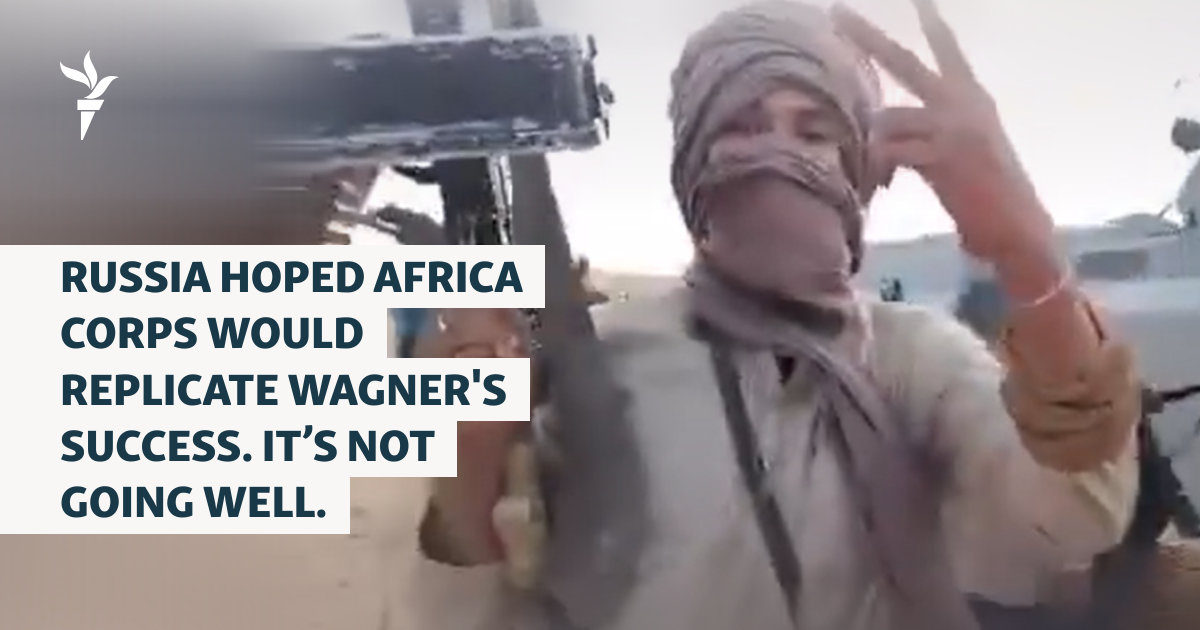
Russia’s Africa Corps withdrew from Kidal after a coordinated offensive by jihadist and Tuareg forces, leaving behind weaponry, vehicles, drone equipment, and a reportedly downed helicopter. The setback is a major reputational and operational blow for Moscow’s security footprint in Mali, with officials suggesting the mission may not be fully over despite the retreat. The episode raises broader concerns about Russian influence in West Africa and the stability of junta-led governments reliant on Russian mercenaries.
This is a credibility shock to Russia’s expeditionary model, not just a local tactical retreat. The key second-order effect is that mercenary “security guarantees” across the Sahel just became more expensive and less believable, which should pressure downstream partners to hedge, delay commitments, or diversify suppliers. In practical terms, the losing side is any junta or regime using Russian support as a substitute for institutional capacity; the winning side is any rival security provider that can credibly offer ISR, air mobility, and training with fewer political strings.
The more important market implication is not Mali-specific GDP damage, but the risk premium re-pricing for any asset tied to the Sahel security corridor: mining logistics, border trade, and infrastructure buildouts all face a higher disruption probability over the next 3-12 months. The abandonment of advanced kit also signals weak command-and-control and poor sustainment; that raises the odds that future Russian deployments are smaller, more defensive, and less able to stabilize flashpoints. If that happens, insurgents can shift from isolated raids to coordinated pressure campaigns, which is the kind of pattern that eventually forces capital flight from frontier EM exposures.
The contrarian view is that this could be a tactical withdrawal masked as a reputational defeat. If Moscow reallocates better assets, doubles down on airpower, or replaces Africa Corps branding again, the near-term optics may overstate the medium-term degradation. But the bar for re-establishing deterrence has risen sharply: one more visible setback would likely accelerate partner defections and make Russian security guarantees in Africa structurally discounted for 6-18 months.
AI-powered research, real-time alerts, and portfolio analytics for institutional investors.
Request DemoOverall Sentiment
strongly negative
Sentiment Score
-0.78
