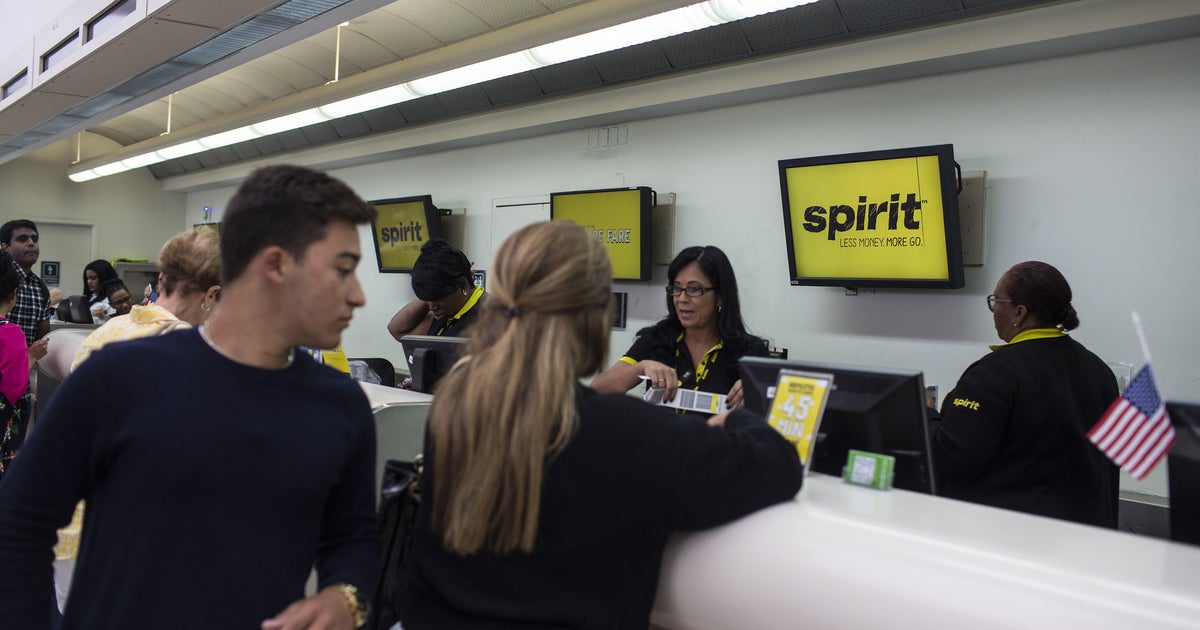
Spirit Airlines may shut down as soon as Saturday unless it receives intervention, after a $500 million federal bailout stalled. Analysts say Spirit's exit could lift fares materially: a CBS analysis found average round-trip prices rose 23%, or about $60, when Spirit left a route, while passenger volume fell 20%. The fallout could force stranded travelers onto higher-priced carrier rescue fares, with United and American preparing support measures.
The immediate market implication is not just a one-time fare pop; it is a capacity shock in the most price-sensitive slice of domestic leisure travel. The first-order winners are the airlines with overlapping ultra-low-cost or rescue coverage, but the bigger second-order effect is that legacy carriers regain pricing power on routes where Spirit has been the marginal discounter, which can persist through the summer booking season because schedule and aircraft redeployment decisions are largely locked in. That makes the near-term earnings leverage more meaningful for carriers with dense domestic networks than for pure ULCC substitutes.
American looks best positioned for tactical share capture because it can monetize stranded Spirit demand while capping fares on selective routes, preserving goodwill without fully surrendering yield. United also benefits from rescue traffic, but its value is more in premium and connecting flow than in true ULCC substitution, so the incremental revenue is likely less elastic. The more interesting second-order effect is on cost inflation: if fare normalization coincides with elevated jet fuel, airlines with weaker unit-cost control will struggle to retain volume, which could push some demand into driving, rail, or deferred leisure spend.
The counter-consensus risk is that the market may overestimate how much revenue survives the transfer. Historically, a meaningful chunk of Spirit traffic disappears rather than migrates, so the net industry gain is smaller than the gross fare uplift suggests. Over 3-6 months, the key catalyst is whether Frontier, Allegiant, Breeze, and Avelo can backfill enough capacity to cap pricing; if they can’t, the benefit accrues to incumbents, but if they do, the upside shifts from pricing to market share and Spirit’s demise becomes a temporary rather than structural boost.
For investors, the trade is less about owning airline beta and more about owning the carriers with the best ability to absorb stranded demand at controlled yields. The cleanest expression is a relative-value long in the best rescue-capable network carrier versus a more fuel-sensitive or weaker execution name, with the thesis that industry pricing power improves faster than the market currently discounts. The main risk is political or competitive intervention that accelerates capacity replacement, compressing the fare spike within one booking cycle.
AI-powered research, real-time alerts, and portfolio analytics for institutional investors.
Request DemoOverall Sentiment
strongly negative
Sentiment Score
-0.65
Ticker Sentiment
