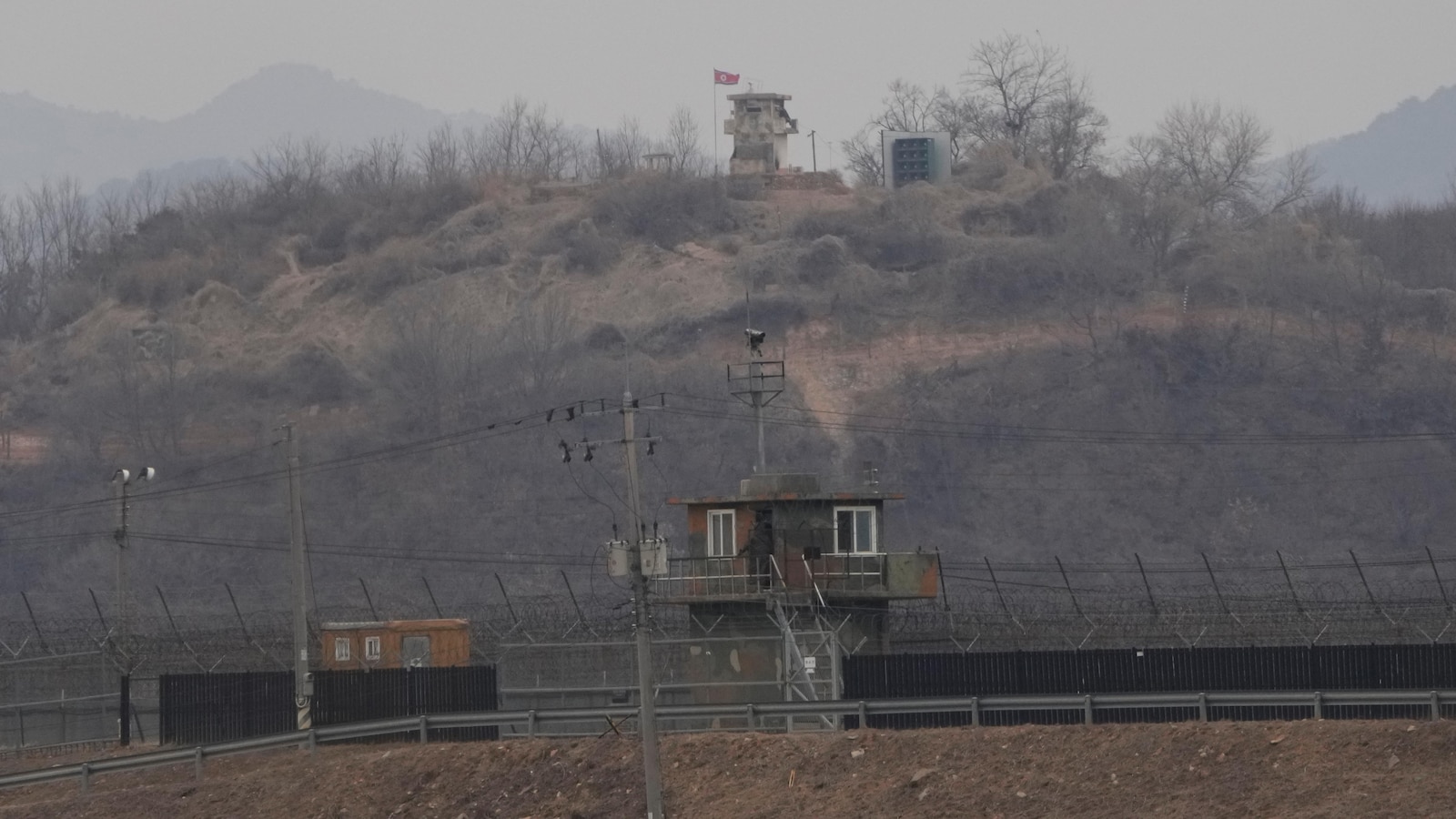
11-day Freedom Shield joint U.S.-South Korea exercise has begun with 'thousands of troops', prompting Kim Yo Jong to warn of "terrible consequences" and pledge to further bolster North Korea's nuclear/destructive capabilities. South Korean President Lee said some U.S. air-defense assets (e.g., Patriot systems) could be relocated to the Middle East, which Seoul opposes but expects won't seriously undermine defenses. Pyongyang and Beijing are set to resume train services between capitals this week after a six-year suspension, while North Korea deepens ties with Russia and China.
The immediate, underpriced dynamic is not just saber-rattling but an operational gap: moving Patriot/air-defense assets out of Korea to the Middle East opens a 3–12 month window where Seoul either accepts reduced layered air defenses or accelerates rapid procurement — and rapid procurement flows premium dollars to high-margin missile/air-defence primes. Expect procurement tuck-ins (spares, launchers, interceptors, integration) that are contract-sized in the $100s of millions per program, not years-long headline programs; this benefits firms with ready-made, exportable kit.
Resumption of China–North Korea rail links is a slow burn catalyst for regional logistics and rail-equipment demand: incremental freight capacity could materialize within weeks for trade goods and months for passenger services, tightening demand for rolling stock, signaling components and cross-border freight services. That will lift certain Chinese rail OEMs and regional port throughput while also creating new channels that complicate sanctions enforcement — raising compliance costs and war-risk premia for insurers and carriers.
Geopolitically, deeper Pyongyang–Moscow/Beijing alignment increases tail-risk for asymmetric risks (weapons transfers, troop deployments) that can produce 5–15% episodic spikes in risk premia across Asian credit and EM FX in 0–6 months. A plausible reversal is diplomatic de‑escalation or visible redeployment of defensive assets back to the peninsula within 1–3 months, which would quickly compress risk premia and punish stretched defense-supply valuations.
Net market stance: tilt risk-off for Korea/near‑term EM exposure, overweight immediate beneficiaries in air‑defense supply and hard‑asset hedges. Position sizing should assume binary events — contain with option protection or short‑dated hedges given the high probability of episodic volatility.
AI-powered research, real-time alerts, and portfolio analytics for institutional investors.
Request DemoOverall Sentiment
strongly negative
Sentiment Score
-0.65
