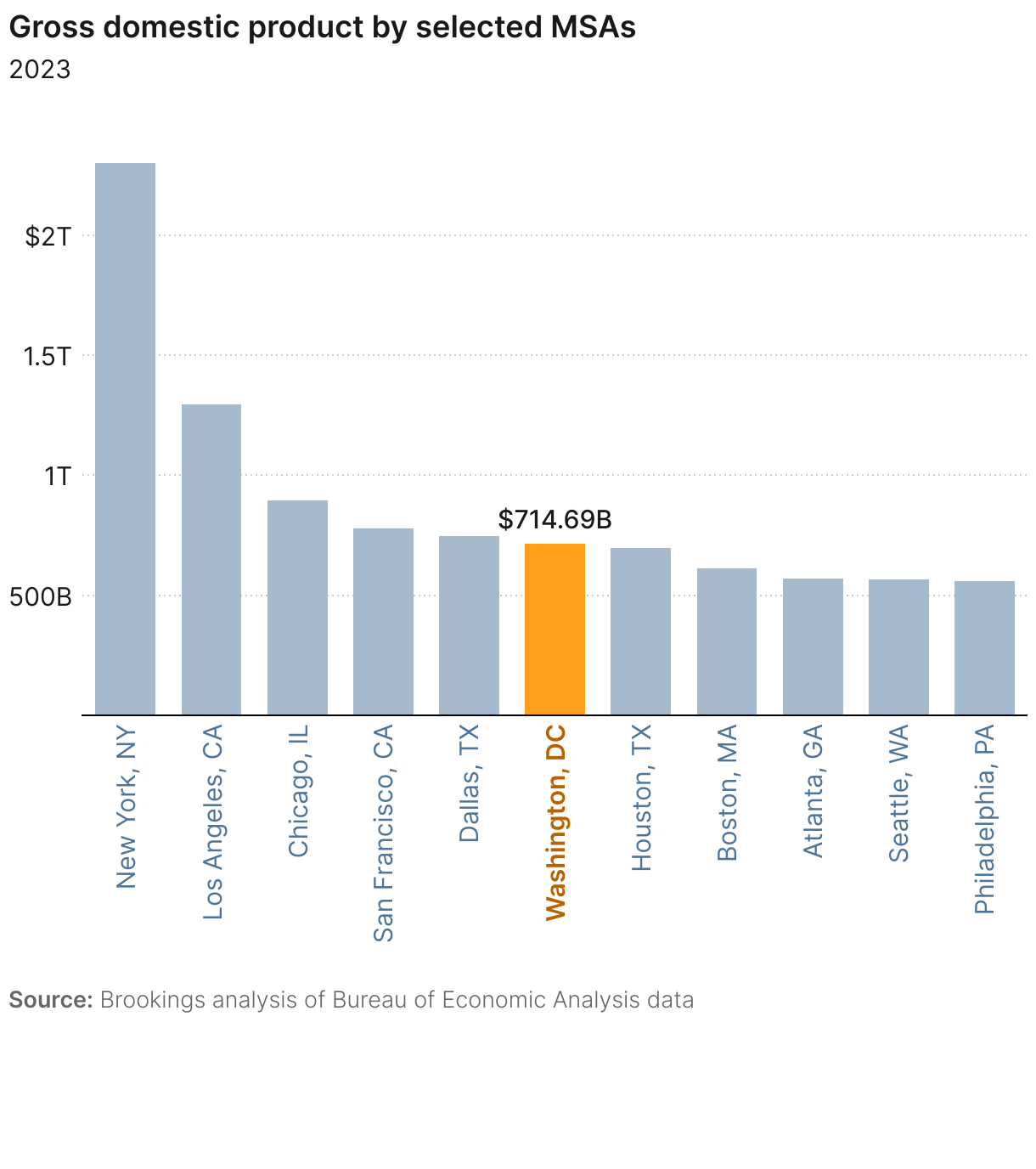
The DMV region is experiencing significant economic headwinds since January 2025, largely driven by federal downsizing, which has resulted in a 4.5% reduction in federal jobs and plateauing private sector growth, unlike national trends. This has led to a 0.6 percentage point surge in the regional unemployment rate and a dramatic over 30% decline in venture capital flows, alongside a 64% increase in homes for sale, double the national average, signaling potential household instability. These indicators suggest substantial economic distress in a region highly dependent on federal activity, posing risks to its status as a major economic engine despite some resilience in tourism and declining crime rates.
The Washington D.C., Maryland, and Virginia (DMV) regional economy is exhibiting clear signs of contraction driven by aggressive federal government downsizing initiated in January 2025. Federal employment in the region has declined by 4.5%, a rate significantly faster than the national average, contributing to a 0.6 percentage point jump in the regional unemployment rate, with suburban counties bearing the brunt of the increase. While the private sector added jobs, growth has plateaued and is concentrated in sectors like construction and hospitality, which show a skills mismatch with the displaced federal workforce. This economic shock is creating second-order effects, evidenced by a more than 30% collapse in venture capital investment, diverging sharply from a positive national trend and threatening the region's innovation ecosystem. The housing market is flashing a significant warning signal, with a 64% year-over-year increase in active homes for sale, double the rate of peer metros, suggesting heightened household instability and potential out-migration. Concurrently, a rising share of the population is becoming severely credit-constrained. While resilient air travel and declining crime rates provide minor counterpoints, the overall data points to a serious, policy-driven downturn with significant near-term risks to regional employment, real estate values, and household financial well-being.
AI-powered research, real-time alerts, and portfolio analytics for institutional investors.
Overall Sentiment
strongly negative
Sentiment Score
-0.65
Ticker Sentiment
