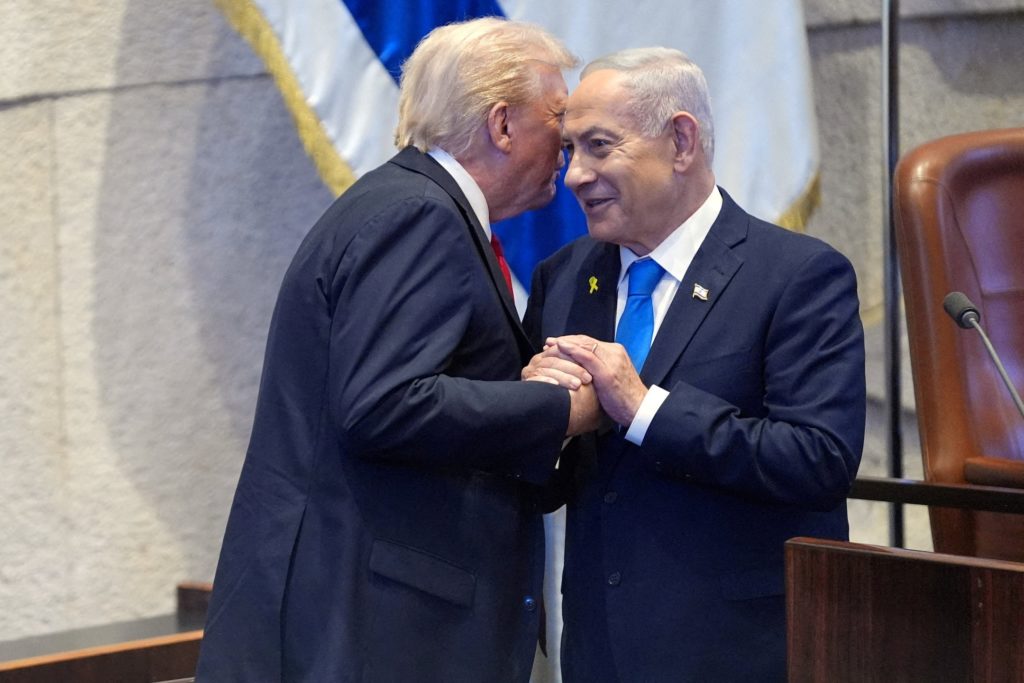
President Trump hosted Israeli Prime Minister Benjamin Netanyahu for a 2.5-hour meeting as the U.S. restarts negotiations with Iran’s nuclear program, with both countries pressing for an end to uranium enrichment, limits on ballistic missiles, and cuts to regional militant funding. The White House has coupled diplomatic outreach with a U.S. military buildup in the region and mixed signals on annexation — while Israel’s Security Cabinet approved measures easing settler land seizures in the West Bank, drawing international criticism and raising the prospect of a U.S.-Israel rift. The developments increase regional political risk and warrant monitoring for potential spillovers into energy and risk-asset volatility, though no immediate financial metrics were reported.
Market structure: Renewed U.S.–Israel alignment around Iran increases near-term demand for defense and intelligence services (contracting cycle). Expect tactical winners: prime defense contractors (Lockheed LMT, Raytheon RTX, Northrop NOC) and defense-focused ETFs; losers include regional airlines (AAL, LUV), tourism operators, and any EM assets with Iran exposures. Energy markets will price a risk premium: a minor regional skirmish could lift Brent +5–15% in weeks; sustained disruption could push +20–40%.
Risk assessment: Tail risks include a full-scale strike on Iranian nuclear sites, major tanker interdictions, or widescale cyber retaliation—each would spike oil, FX volatility and safe-haven flows. Timeline: immediate (days) = elevated VIX/FX swings; short-term (weeks–months) = re-rating of defense and energy equities by +5–15%; long-term (quarters+) = structural shifts in supply chains and regional basing. Hidden dependencies: OPEC spare capacity, U.S. election calendar, and Israeli domestic legislation that could change diplomatic backstops.
Trade implications: Tactical long defense/energy, hedge equities with gold and long-duration Treasuries. Use option structures to buy convexity (call spreads on primes, put hedges on regional equities). Pair trades: long LMT/RTX vs short U.S. airlines will capture relative re-rating if tensions persist. Entry window: act within 2 weeks to capture risk-premium; reassess at 6–8 weeks or on key triggers (Brent > $90, attack on commercial shipping).
Contrarian angles: The market may overprice escalation—past Iran cycles (2019–2020) saw sharp but short-lived oil/defense rallies that reversed 6–12 weeks after de‑escalation. A successful diplomatic backchannel could hurt defense names by 10–20%, so scale positions and buy protection. Unintended consequence: a negotiated outcome that restricts Iran’s missile program could shift capex into cyber/intel contractors rather than traditional platforms.
AI-powered research, real-time alerts, and portfolio analytics for institutional investors.
Request DemoOverall Sentiment
moderately negative
Sentiment Score
-0.35
