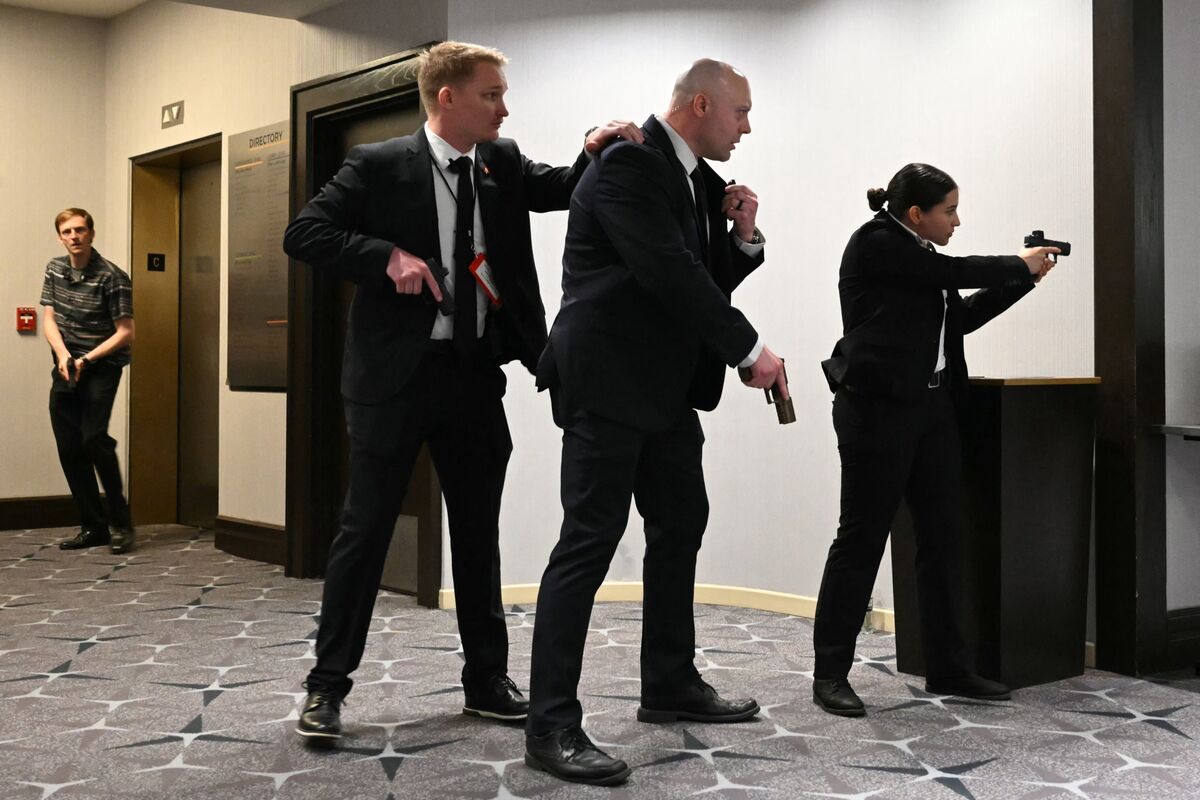
President Donald Trump and Vice President JD Vance were evacuated from a Washington event after shots were fired, with attendees hiding under tables and the shooter detained. The incident is a serious security breach involving top U.S. officials and raises near-term concerns around political safety and event security. While the article is primarily political and security-focused, it is unlikely to drive broad market action absent further escalation.
This is a classic volatility-event, not an immediate fundamental earnings shock, but the second-order market impact is still meaningful: it raises the probability of a sustained higher-security regime around federal institutions, campaign events, and public appearances. That tends to benefit the defense/security procurement stack at the margin, especially companies tied to perimeter defense, surveillance, crowd-control, and secure communications, while increasing operating friction for venues, media events, and urban hospitality exposures near political hubs.
The bigger medium-term effect is political-option pricing: incidents like this usually widen the tail around domestic policy outcomes by increasing pressure for accelerated protective spending and tighter event security standards. That can feed incremental demand into homeland security budgets over the next 1-4 quarters, but the market often overreacts for a few days before realizing the capex flow is slower and bureaucratic. The more immediate losers are businesses whose revenue depends on large public gatherings, especially in Washington, where even a short-lived chill in attendance can hit booking velocity and insurance costs.
The contrarian read is that the initial risk premium may be overdone if the incident is contained and does not trigger a broader unrest cycle. Unless there is evidence of coordinated escalation, the tradeable impact is likely a short-duration volatility spike rather than a durable regime change. The key catalyst is whether lawmakers and federal agencies respond with fast-tracked security appropriations; absent that, the move should fade within days, while a legislative response would extend it into the next budget cycle.
AI-powered research, real-time alerts, and portfolio analytics for institutional investors.
Request DemoOverall Sentiment
strongly negative
Sentiment Score
-0.60
