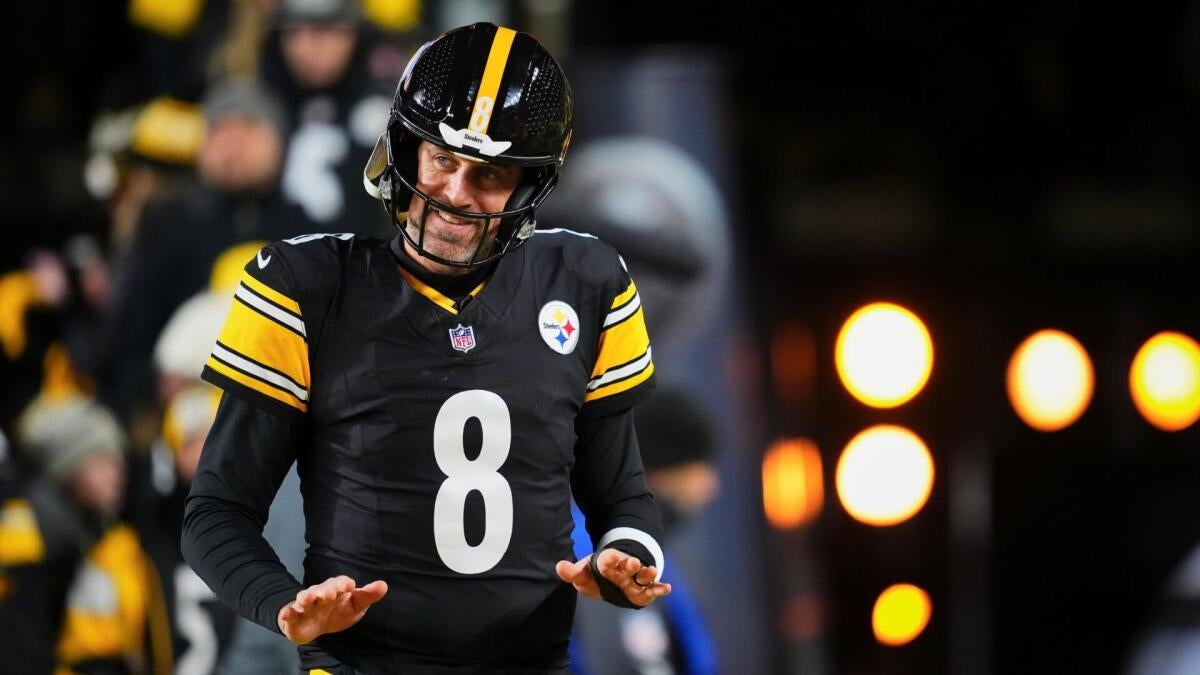
The Steelers’ decision to bring back 42-year-old Aaron Rodgers on a one-year deal is framed as a logical move for both 2026 and the short term, rather than a win-now desperation play. The article says Pittsburgh had 111 wins since 2015 but only 3 playoff wins, and argues the roster has improved with additions like Michael Pittman Jr., Rico Dowdle, and offensive line help. The move is presented as supportive of a longer-term plan to develop young quarterbacks while keeping Super Bowl upside alive.
The market is underestimating how much a competent veteran QB can change the distribution of outcomes for a roster that is now materially better suited to protect him. The key second-order effect is not just more wins; it is a narrower range of offensive failure, which reduces volatility in weekly game scripts and should improve conversion rates on possession value, especially in January when defenses force opponents into long drives. That matters because Pittsburgh’s prior playoff problem looked less like a talent cliff and more like an inability to sustain non-explosive offense when the game compressed.
The bigger strategic signal is that the franchise is explicitly buying time for quarterback development without forcing a premature transition. That is valuable because rookie-QB evaluation is often distorted by poor supporting casts; one more year behind a Hall of Fame passer lowers the probability of burning a high-upside young arm before the ecosystem is ready. In practical terms, the organization is shifting from “QB as emergency solvent” to “QB as final optimization layer,” which is the right sequence for a team trying to convert a good roster into a true contender.
The contrarian read is that the upside may be capped by aging-curve fragility rather than roster quality. A 42-year-old quarterback can still create a playoff run, but the probability mass is concentrated in a relatively small set of health and efficiency outcomes; one soft-tissue issue or arm decline event can erase the thesis quickly. The more important catalyst is not the regular season record but whether the offense looks materially less dependent on low-probability hero ball by midseason. If that does not show up, sentiment will likely pivot fast toward the future quarterback plan, and the perceived “win-now” logic will be reclassified as a one-year bridge rather than a sustained edge.
AI-powered research, real-time alerts, and portfolio analytics for institutional investors.
Request DemoOverall Sentiment
mildly positive
Sentiment Score
0.22
