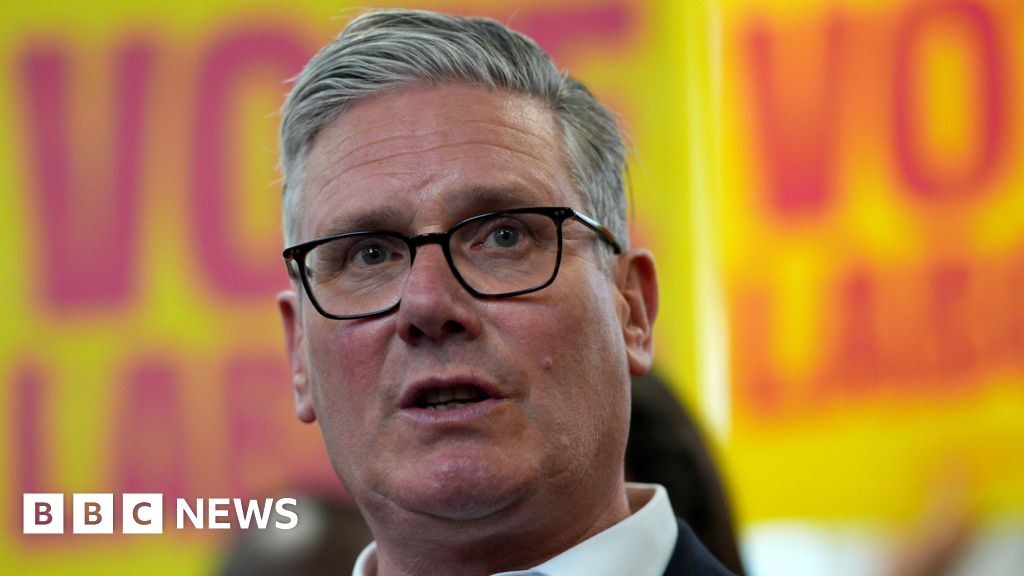
Sir Keir Starmer faces mounting leadership pressure after Labour's heavy local election losses, including nearly 1,500 council seats and the party's worst-ever Scottish Parliament result. He is expected to use a Monday speech to promise a bigger response on growth, defence, Europe and energy, while MPs weigh whether to trigger a leadership contest requiring 81 endorsements. The article is politically significant but has limited direct market impact.
The market implication is less about the headline political churn and more about the odds of a policy regime shift toward faster fiscal loosening and higher public-sector intervention. If leadership pressure forces a credibility reset, the path of least resistance is a more expansionary mix: looser welfare posture, more industrial policy, and a softer approach to Europe that could marginally improve UK risk premia but also complicate the gilt/sterling balance if growth delivery stays weak. The near-term winner is any asset tied to a lower probability of outright policy paralysis; the loser is anything pricing in a clean pro-business, rules-based agenda without coalition friction.
The second-order effect is that domestic UK cyclicals may outperform on relief if the speech signals decisiveness, but only if investors believe implementation can survive the internal party threat. That makes this a classic “headline beta” trade rather than a durable fundamental rerating: the next 1-2 weeks are about political survival, while the next 3-6 months are about whether Cabinet cohesion holds through the legislative calendar. If the speech disappoints, the risk is a rapid repricing of UK midcaps and sterling via fears of delayed investment decisions, weaker consumer confidence, and a higher discount on government execution.
The consensus is likely underestimating how quickly governance instability can feed into market microstructure even without immediate policy change. Foreign capital is especially sensitive here: an elevated leadership-risk premium can suppress inflows into UK equities and lengthen the underperformance of domestically oriented names versus global earners. Conversely, a credible de-escalation around leadership could spark a sharp short-covering rally in UK assets because positioning is already defensive, but that move would probably fade unless it is paired with a convincing growth-and-fiscal framework.
AI-powered research, real-time alerts, and portfolio analytics for institutional investors.
Request DemoOverall Sentiment
mildly negative
Sentiment Score
-0.25
