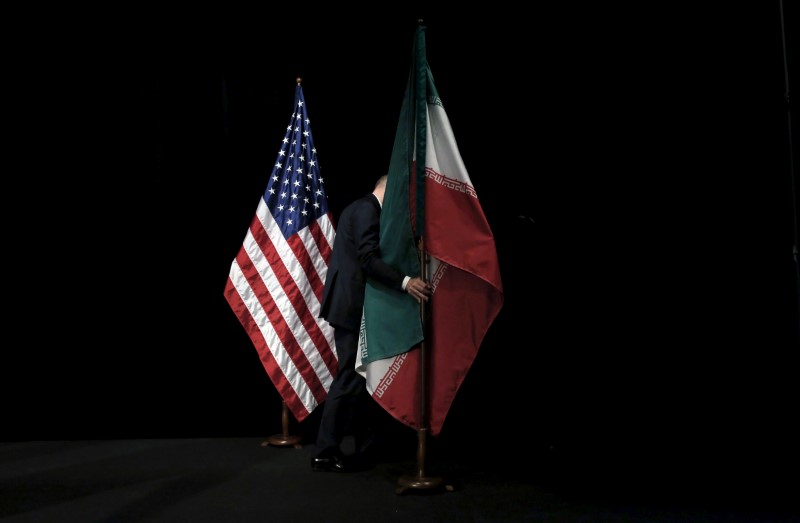
Oil prices moved lower as reports from Switzerland talks signaled "major progress" toward easing U.S.-Iran tensions and keeping a Lebanon ceasefire in place. Mediators said the sides agreed to a high-level committee, a de-confliction cell, and a 60-day timeline for more technical talks, while prior concerns included a threatened escalation and disruptions around the Strait of Hormuz. The developments reduce immediate geopolitical risk premiums in crude, but the situation remains volatile.
The market is treating the headline as an immediate supply-risk unwind, but the bigger signal is that the probability of a fast, disorderly disruption has fallen enough for freight, refining, and inventory holders to de-risk. That matters less for outright crude direction over a single session than for implied volatility and the front-end term structure: if the de-escalation holds for even 2-3 weeks, the prompt curve should soften, backwardation should compress, and physical optionality embedded in tanker rates and short-cycle barrels gets repriced lower.
The second-order loser is not just crude beta; it is anything financed off a geopolitical scarcity premium. Offshore drillers, spot-linked shipping, and storage/arbitrage names all lose the most when tail-risk gets pushed out 60 days, because their equity moves often embed the assumption that the market will keep paying for insurance. Conversely, EM importers and industrials in Asia/Europe get a cleaner input-cost backdrop, but the benefit is slow-burn rather than immediate: refiners may enjoy a few weeks of margin relief before product prices fully adjust.
The key risk is that this is a conditional pause, not a durable settlement. The market is underestimating how quickly a single violation in the ceasefire or shipping lane can reprice oil by $5-$10/bbl in a day, especially if traders have already sold down war premium. That creates a poor asymmetry for chasing the first down-tick; the better setup is to fade the move only through options or relative value, where you can survive a sharp headline reversal without being forced out.
Contrarian view: consensus is likely overstating how much supply comes back in the near term. Even with diplomatic progress, physical flows through chokepoints and insurance coverage can stay impaired for weeks, so the true bearish impact on oil may lag the headlines. In other words, the trade is less "sell oil now" and more "sell the insurance premium while keeping convexity on for re-escalation."
AI-powered research, real-time alerts, and portfolio analytics for institutional investors.
Request DemoOverall Sentiment
neutral
Sentiment Score
-0.05
