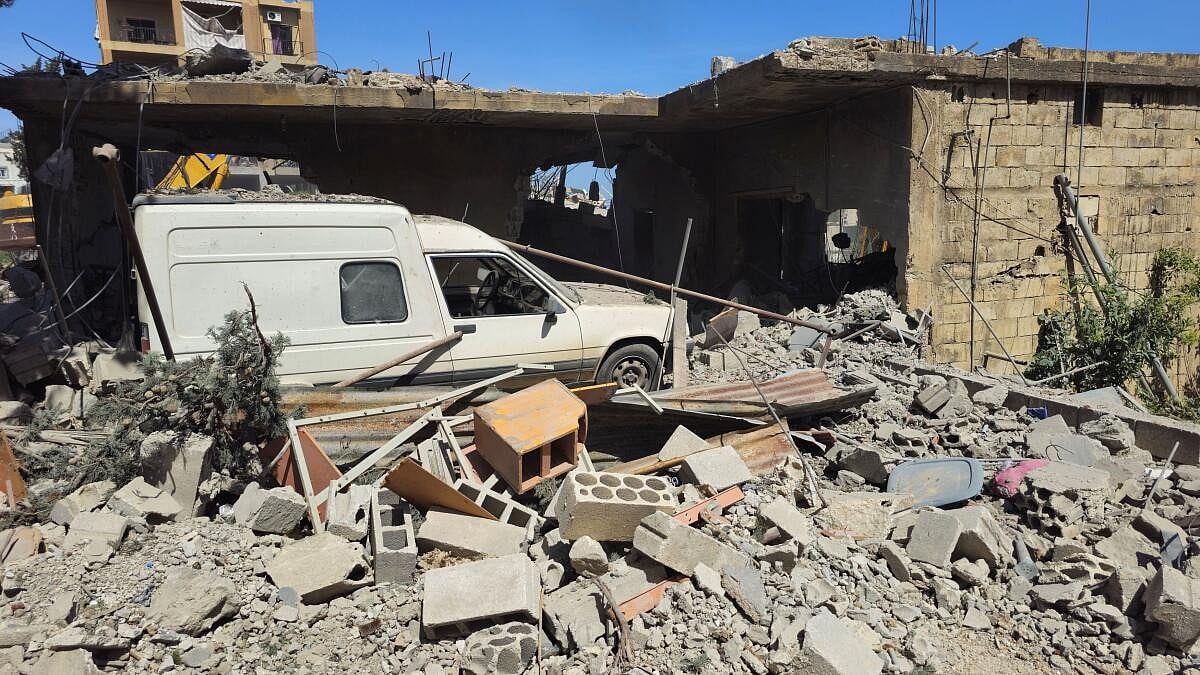
US President Donald Trump said he is reviewing Iran's fresh proposal and that military strikes could resume if Iran 'misbehave,' keeping geopolitical tensions elevated. The Israeli military also ordered residents in southern Lebanon to evacuate, while the Marshall Islands-flagged tanker Sarv Shakti carrying 46,313 metric tons of LPG for India transited the Strait of Hormuz. The developments underscore heightened shipping and energy-security risk in a key chokepoint, with potential spillover into oil, gas, and freight markets.
The immediate market read is not just “higher oil,” but a volatility regime shift: when shipping lanes and air defense alerts become the headline, near-dated options in energy, defense, and transport typically reprice faster than the underlying equities. The first-order beneficiaries are companies with hard-to-replicate logistics or domestic supply optionality; the second-order losers are firms with just-in-time inventory, low pricing power, or exposure to bunker fuel and insurance pass-throughs. A key nuance: even if physical flows remain intact, freight rates and marine insurance can gap on perceived convoy/escort risk, which can hit margins before any barrel shortage shows up.
The more interesting asymmetry is in the “duration” of the shock. A short, contained escalation usually supports crude and defense for days to a few weeks, but the real upside comes if the market starts pricing persistent Red Sea/Strait-of-Hormuz friction and higher security capex across global trade routes. That would be bearish for chemicals, airlines, parcel/logistics, and any importer with low hedging discipline; it would also raise the option value of US midstream and domestic refiners if regional differentials widen. Conversely, any credible diplomatic off-ramp or visible de-escalation can unwind a large share of the move quickly because the risk premium, not fundamentals, is doing most of the work.
Consensus may be underestimating how broad the second-order inflation impulse can become: it’s not just crude, but LPG, diesel, bunker, and transit insurance that matter for margins. That favors a relative-value expression over an outright commodity bet, because the market often overprices the immediate headline while underpricing the lagged margin squeeze on transport-heavy sectors. The contrarian risk is that a lot of bad news is already embedded in risk-off assets; if there is no actual disruption to volumes, energy may give back faster than defensives, and the better trade becomes fading the overreaction in cyclicals with robust pass-through and low energy intensity.
AI-powered research, real-time alerts, and portfolio analytics for institutional investors.
Request DemoOverall Sentiment
strongly negative
Sentiment Score
-0.55
