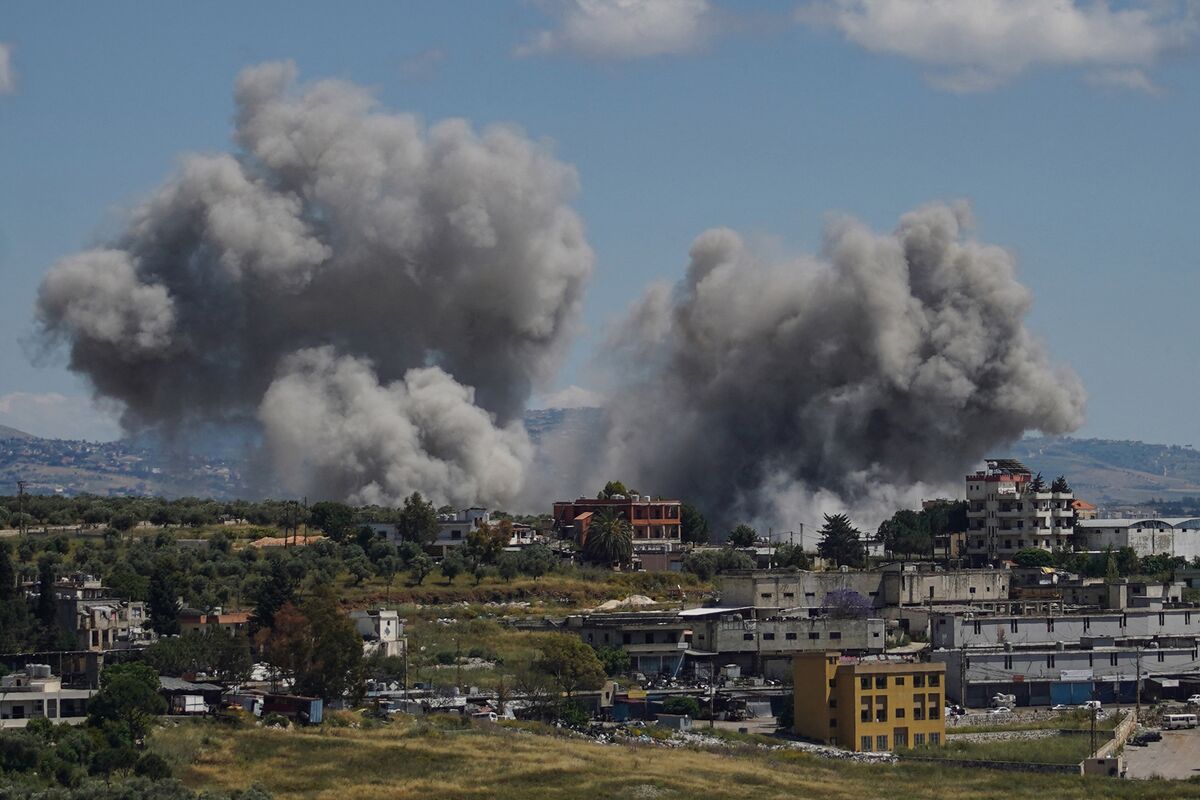
Israel-Hezbollah clashes continued even after the US and Iran agreed to a ceasefire on April 7, keeping regional hostilities active and complicating efforts to end the broader war. The preliminary June 17 agreement signed by President Trump declared an end to military operations on all fronts, including Lebanon, but Israel and Hezbollah were not parties to the deal. The unresolved fighting raises the risk of renewed escalation across the region.
The key market implication is not the headline fighting itself, but the failure of the conflict to “close” cleanly. That leaves a persistent geopolitical risk premium embedded in regional assets, shipping routes, and any capital-intensive project in the Eastern Mediterranean or Levant, with the highest sensitivity over the next 1-3 months rather than years. The longer the ceasefire architecture excludes the main spoiler on the ground, the more likely we see recurring low-grade escalations that are enough to delay investment decisions without necessarily triggering a full macro shock.
Second-order beneficiaries are defense contractors and security-enablement suppliers, but the cleaner trade is in infrastructure delay optionality: every additional week of uncertainty raises the odds of deferred port, telecom, power-grid, and reconstruction spending in neighboring states. That hurts local banks, insurers, and contractors first; the bigger effect is on any multinational with project revenue tied to sovereign capex timelines, where slippage can compress 2025-26 order conversion. Energy transport and insurance are the immediate pressure points because even limited cross-border fire tends to widen marine and political-risk premia faster than it moves outright commodity prices.
The contrarian read is that markets may be underpricing how “managed” this remains. If the US and Iran are trying to de-escalate while Israel and Hezbollah continue a bounded conflict, the base case may be a noisy but contained standoff rather than a region-wide reprice. In that case, the right expression is not a blanket risk-off position, but selective long volatility and relative-value exposure to actors with direct replenishment demand, while fading broad EM contagion until a material spillover into shipping lanes or US personnel emerges.
AI-powered research, real-time alerts, and portfolio analytics for institutional investors.
Request DemoOverall Sentiment
moderately negative
Sentiment Score
-0.40
