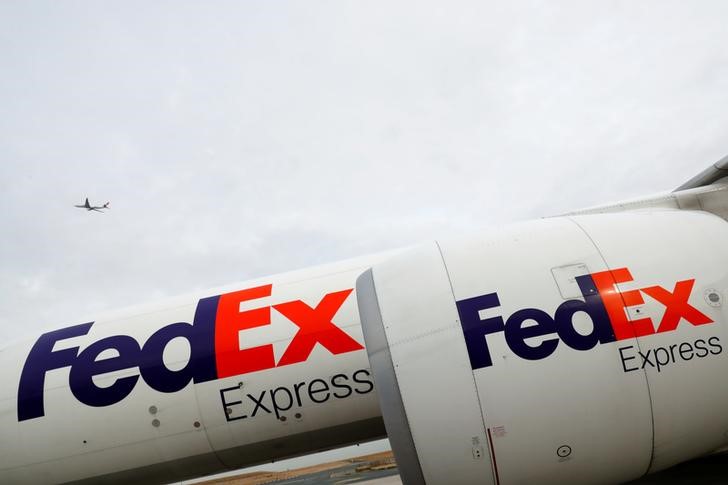
FedEx reported Q4 adjusted EPS of $6.31 and revenue of $25 billion, both ahead of estimates, but its fiscal 2026 EPS guide of $16.90-$18.10 came in well below the $19.86 consensus. The company also flagged softer e-commerce shipping demand and pressure from changes to U.S. trade policy and the end of de minimis treatment for low-value China-linked imports. Shares fell more than 6% in premarket trading and were down about 4% after hours.
The market is treating this as a simple miss, but the bigger signal is that parcel economics are still being reset by policy, not just by demand. The removal of de minimis acts like an implicit tax on the lowest-value, highest-volume cross-border lanes, which should keep a lid on network utilization across the broader logistics stack for several quarters even if headline GDP holds up. That makes the earnings power of express and premium time-definite services more important than package count growth, and it likely widens the gap between asset-light brokers and large integrated carriers.
The second-order loser is any carrier with exposure to small-parcel international e-commerce and limited pricing power: lower-velocity retail flows reduce backhaul efficiency, pressure yield management, and force more promotional capacity decisions into the holiday build. UPS is less levered than FDX to the specific transformation narrative, but it still inherits the same demand math; if shippers keep rationalizing lanes, the next leg down is likely margin compression rather than outright revenue collapse. On the other side, any company that can consolidate freight, optimize origin/destination density, or monetize premium service tiers should see relative share gain once the market stops extrapolating peak-pandemic parcel mix.
The contrarian view is that the guide may be close to a trough in expectations rather than the start of another leg lower. The Freight separation removes a low-multiple drag and should improve sum-of-parts optics over the next 1-2 quarters; if investors get comfortable that cash flow is being prioritized over growth for growth’s sake, the stock could re-rate before earnings inflect materially. The key catalyst is whether management can show that premium overnight and margin actions offset cross-border softness by the next quarter or two; if not, the stock remains in penalty-box mode until shipping data stabilizes.
From a trading standpoint, the best risk/reward is to express relative rather than directional logistics exposure. A long UPS / short FDX pair can work if the market is over-discounting FDX’s guidance reset and underappreciating UPS’s steadier earnings base, but it should be sized modestly because both names are being hit by the same demand regime. For outright exposure, selling upside calls against FDX into a relief bounce makes sense over the next 2-6 weeks, while any long should wait for evidence of post-guidance stabilization in the overnight premium mix.
AI-powered research, real-time alerts, and portfolio analytics for institutional investors.
Request DemoOverall Sentiment
moderately negative
Sentiment Score
-0.35
Ticker Sentiment
