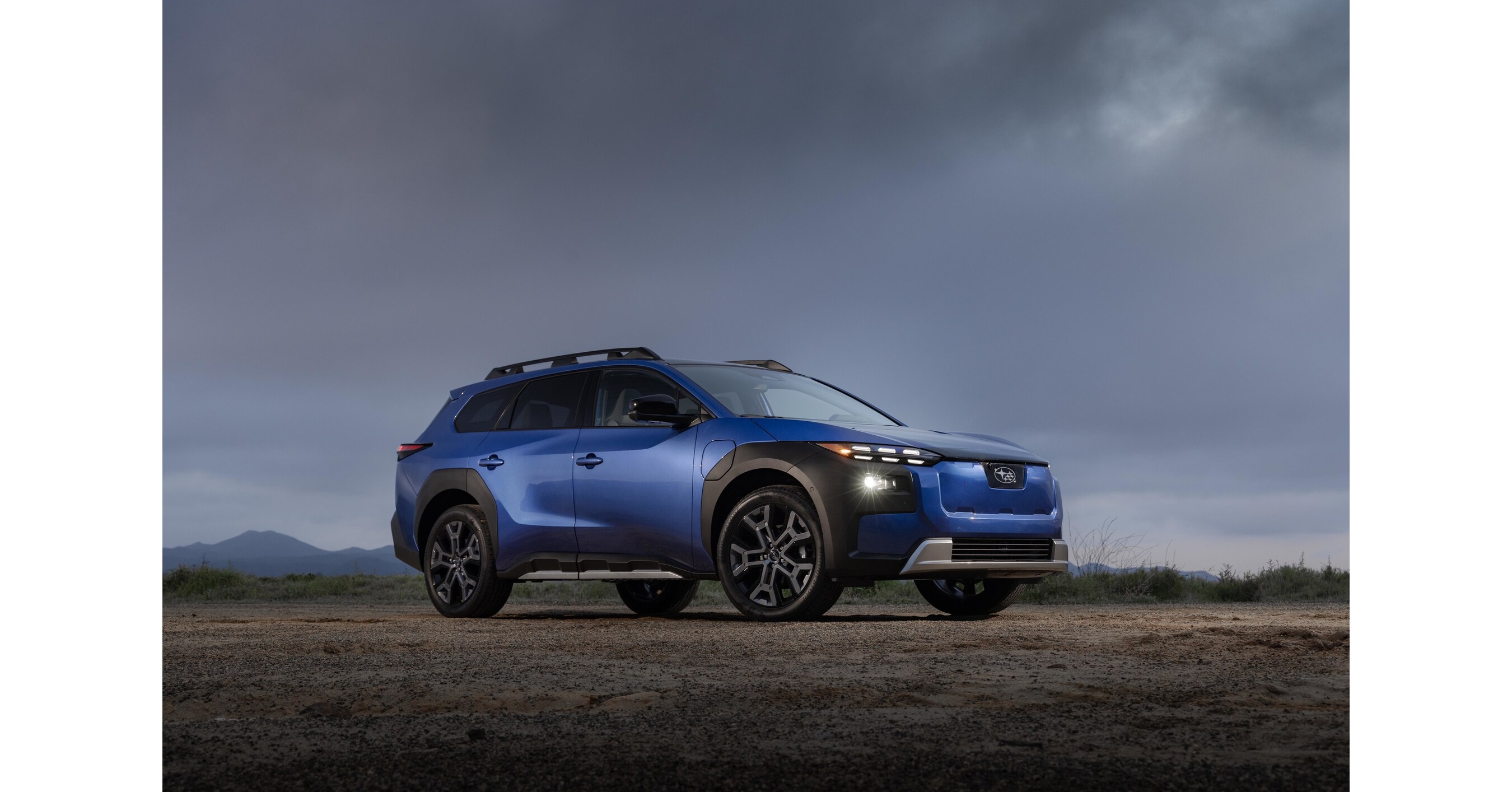
Subaru of America announced pricing for the 2027 all-electric Trailseeker SUV at a $39,995 MSRP (flat vs. the outgoing model), with 375 hp and a 0–60 mph time of 4.3 seconds. Range is up to 281 miles on a single charge, and the vehicle supports DC-fast charging up to 150 kW (10% to 80% in as little as 28 minutes) via a standard NACS port. Trim pricing rises to $43,995 (Limited) and $46,555 (Touring), with an indicated ~274 miles of range on Limited/Touring.
This is more of a competitive positioning check than a fundamental inflection. The meaningful signal is that a legacy Japanese OEM can still bring a $40k-ish AWD EV to market without forcing a meaningful sticker-price premium, which keeps the mainstream crossover fight centered on brand, dealer execution, and residual values rather than just battery specs. That is a mild negative for incumbents that rely on AWD/cold-weather differentiation in the same purchase set, especially those with weaker dealer economics and less coherent EV messaging.
The second-order winner is the charging ecosystem, not necessarily the automaker: standardizing on the dominant plug architecture reduces consumer friction and makes EV adoption look more normal, which helps Tesla's charging network moat more than it helps Tesla's vehicle margin. The loser, if this scales, is the middle of the pack in the $35k-$50k compact SUV segment, where pricing power is already thin; every credible AWD EV option raises the bar for Model Y, Mach-E, Equinox EV, and Prologue-style offerings. The caveat is that Japan assembly and trans-Pacific logistics keep this vulnerable to FX and freight, so headline MSRP can evaporate quickly if the yen strengthens or incentives fade.
Time horizon matters: over the next few days this is likely a low-impact headline unless dealers report unusually strong order flow. Over 1-3 months, the real catalyst is inventory and discounting; if the launch needs incentives to move units, the bullish read-through dies fast. Over 6-18 months, the question is whether Subaru can defend its rugged-value brand while absorbing EV complexity; if not, this becomes a halo product rather than a profit driver. The consensus is probably overrating the spec sheet and underrating how small the volume opportunity is relative to the capital required to keep the program competitive.
AI-powered research, real-time alerts, and portfolio analytics for institutional investors.
Request DemoOverall Sentiment
mildly positive
Sentiment Score
0.25
Ticker Sentiment
