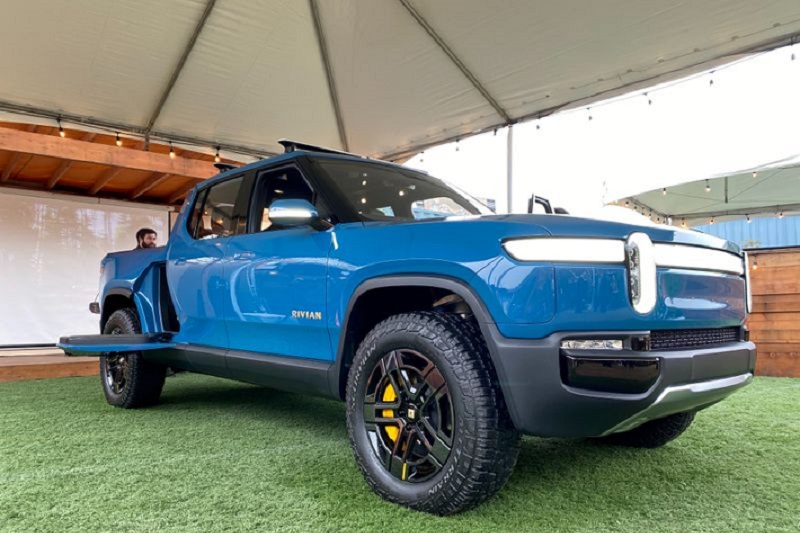
Rivian said it is developing undisclosed variants of its R2 EVs at its Georgia plant, with deliveries of the smaller SUV expected to begin around June. The update suggests product expansion and manufacturing scaling, but details remain limited and U.S. EV demand has been soft after tax credit removals. Higher fuel prices have supported some renewed interest in EVs since March.
The more interesting read-through is not the EV headline itself, but what it says about demand elasticity and mix. If Rivian is already discussing additional R2 variants before the first meaningful delivery ramp, it suggests management is trying to broaden addressable demand and improve plant utilization early, which is critical because EV manufacturers rarely fix margin issues on price alone — they need option value from trims, batteries, and body styles. That can help de-risk the launch cadence over the next 2-4 quarters, but it also raises execution complexity at the exact moment the company needs a clean ramp.
For competitors, the second-order effect is that a successful lower-priced R2 platform could pressure the premium EV set more than legacy automakers. The real vulnerability is not Tesla’s flagship products; it is the mid-market EV cohort and ICE SUVs where purchase economics are most sensitive to fuel prices and incentives. If gasoline remains elevated for several months, the demand bridge shifts from policy-driven to utility-driven, which can create a temporary pocket of strength in EV traffic even as the broader U.S. EV adoption narrative remains sluggish.
The key risk is timing: this is a near-term sentiment catalyst, not yet a fundamental de-risking event. Any production hiccup, delayed delivery start, or sign that variants are being introduced to stimulate demand rather than expand it would quickly unwind the trade, especially because the market tends to overcapitalize optionality in pre-scale EV names. Conversely, if R2 initial deliveries and reservation conversion look clean into summer, the stock can keep rerating for months as investors price a path to better factory utilization and lower per-unit overhead.
Contrarian view: the move may be partially overdone because variant announcements often mask the harder problem of demand quality. New trims can expand TAM, but they can also fragment manufacturing and slow learning curves; in other words, more SKUs are not automatically more profit. The market may be underestimating how much of Rivian’s valuation case depends on avoiding complexity creep while preserving a credible low-cost launch narrative.
AI-powered research, real-time alerts, and portfolio analytics for institutional investors.
Request DemoOverall Sentiment
mildly positive
Sentiment Score
0.30
Ticker Sentiment
