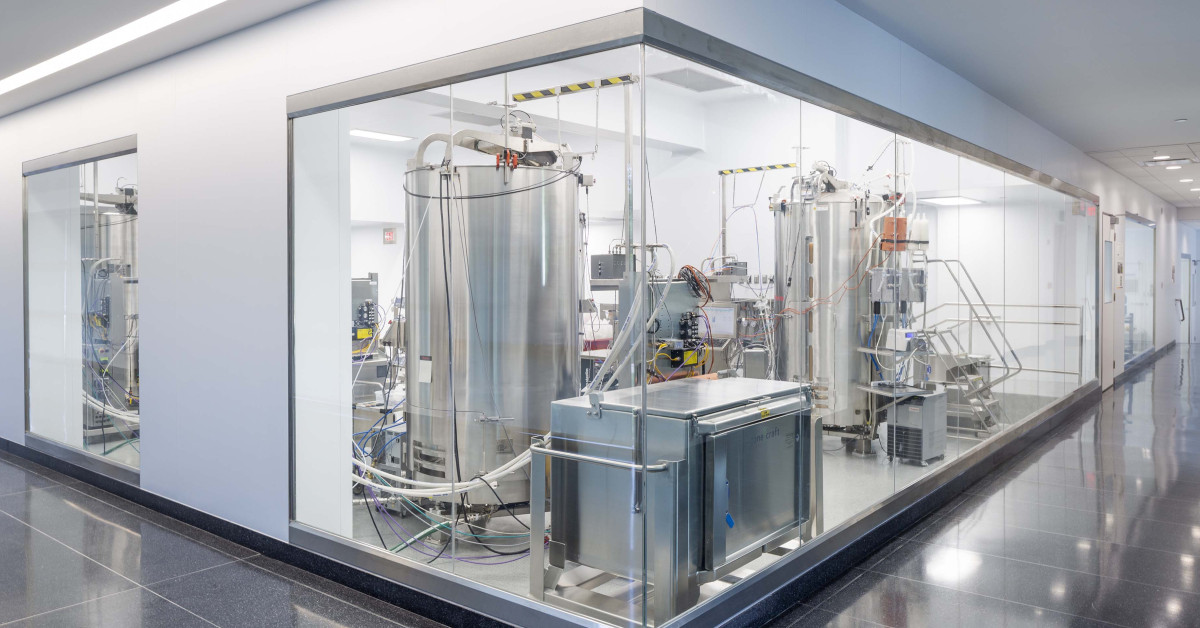
Bora Biologics announced a U.S. Rockville, MD site expansion that raises installed U.S. single-use drug-substance bioreactor capacity to 20,000 liters (scalable to 30,000 liters) across FDA-registered facilities in Rockville and San Diego. The network adds seven 2,000L commercial bioreactors operating on a 100% single-use GMP architecture and reports 60+ commercial GMP batches plus 100% first-pass PPQ success. Company positioning emphasizes more dependable late-stage/BSU program launch execution under an inspection-proven, U.S.-anchored infrastructure—supportive but primarily operational/press-release level news with limited immediate market impact.
The economic value is not in the press release itself but in the implied pull-through to recurring consumables, validation work, and release testing. Each incremental commercial bioreactor line tends to create a disproportionate tail of sticky revenue for bioprocessing suppliers, especially single-use systems and analytics, where gross margin is typically better and switching costs are real. That makes names like RGEN and, to a lesser extent, TMO more interesting than the CDMO headline, because they monetize the industry’s need for redundancy without carrying the same utilization risk.
Near term, this is more a sales/credibility event than an earnings event. The key 1-3 month catalyst is whether the added site converts into signed commercial slots and higher PPQ throughput; if not, the market should discount this as capacity marketing and worry about fixed-cost absorption. The main falsifier is flat backlog or no improvement in commercial batch cadence over the next two quarters, which would imply the expansion is premature relative to demand.
Contrarianly, the market may underprice the policy value of domestic biologics manufacturing while overestimating how immediately accretive this scale is. Twenty thousand liters is meaningful for niche launches and biosimilars, but it is not enough to reshape global biologics capacity economics, so the best expression is a quality-services/picks-and-shovels trade rather than a broad CDMO basket. If U.S. launch activity or FDA scrutiny around supply resilience fades over 6-12 months, the urgency of this theme falls quickly.
AI-powered research, real-time alerts, and portfolio analytics for institutional investors.
Request TrialOverall Sentiment
mildly positive
Sentiment Score
0.25
