


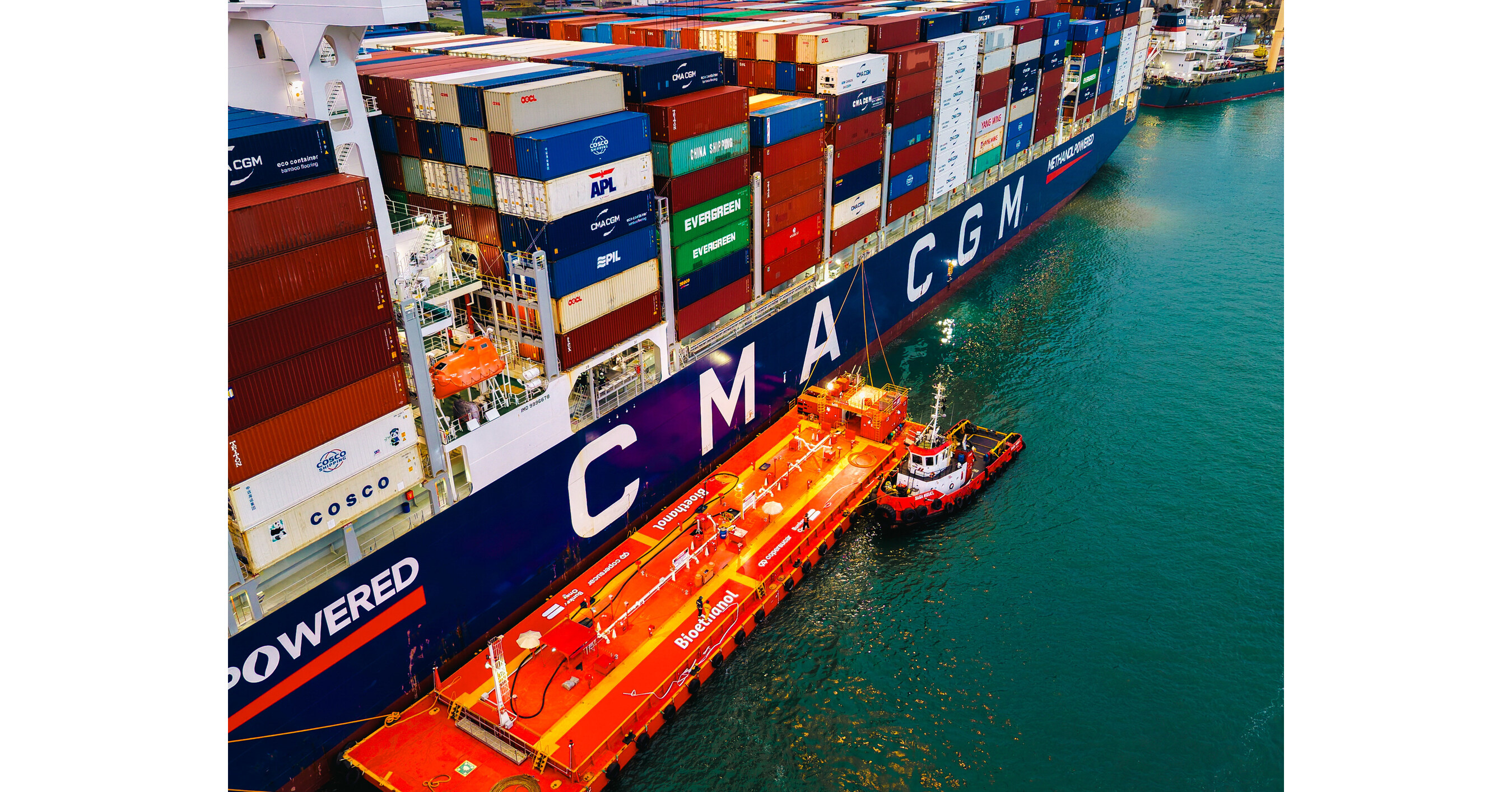
CMA CGM completed bioethanol bunkering for the CMA CGM IRON (first 13,000 TEU tri-fuel certified deep-sea containership) at Brazil’s Port of Santos on July 12, 2026—positioning Brazil as a low-carbon marine-fuel hub. The operation used Copersucar bioethanol via dedicated storage and specialized barge transfer, highlighting scalable, certified supply-chain capability to cut shipping greenhouse-gas emissions. CMA CGM reiterated its Net Zero by 2050 plan, targeting ~200 bio/low-carbon-capable containerships by 2031.
This is more important as a proof-of-concept than as an earnings event. The market mechanism is that a locally abundant biofuel can now compete for a new end-market without waiting for a bespoke hydrogen/ammonia buildout, which improves the economics for Brazilian ethanol producers, terminal/storage operators, and bunker distributors while leaving the traditional marine fuel value chain more exposed to gradual share loss than abrupt disruption.
The first-order P&L impact is small; the second-order effect is infrastructure optionality. If this becomes repeatable, the value migrates to whoever controls logistics, certification, and blending capacity around Santos rather than to the shipowner alone. That favors integrated Brazilian bioenergy platforms and port assets, while pressuring pure-play methanol narratives because charterers may prefer the fuel with existing supply depth and lower transition friction.
Over 1-3 months, the key catalyst is whether this turns into a framework agreement or merely a one-off demo. Over 6-18 months, the real bull case is a cluster effect: more capable vessels, more port storage, and more counterparties willing to contract bioethanol volumes, which could re-rate the ecosystem as a regional low-carbon fuel hub. The main falsifier is simple: no follow-on bunkerings, or a widening bioethanol-versus-VLSFO spread that kills the claimed competitiveness.
Consensus may be overestimating how quickly this scales globally and underestimating how fast it can matter locally. The bottleneck is not engine certification; it is reliable fuel economics plus carbon accounting that holds up under charter-party scrutiny. If policy credits or carbon prices improve, this could become a durable Brazil export story; if they do not, it stays a niche ESG headline.
AI-powered research, real-time alerts, and portfolio analytics for institutional investors.
Request TrialOverall Sentiment
moderately positive
Sentiment Score
0.35
Ticker Sentiment
