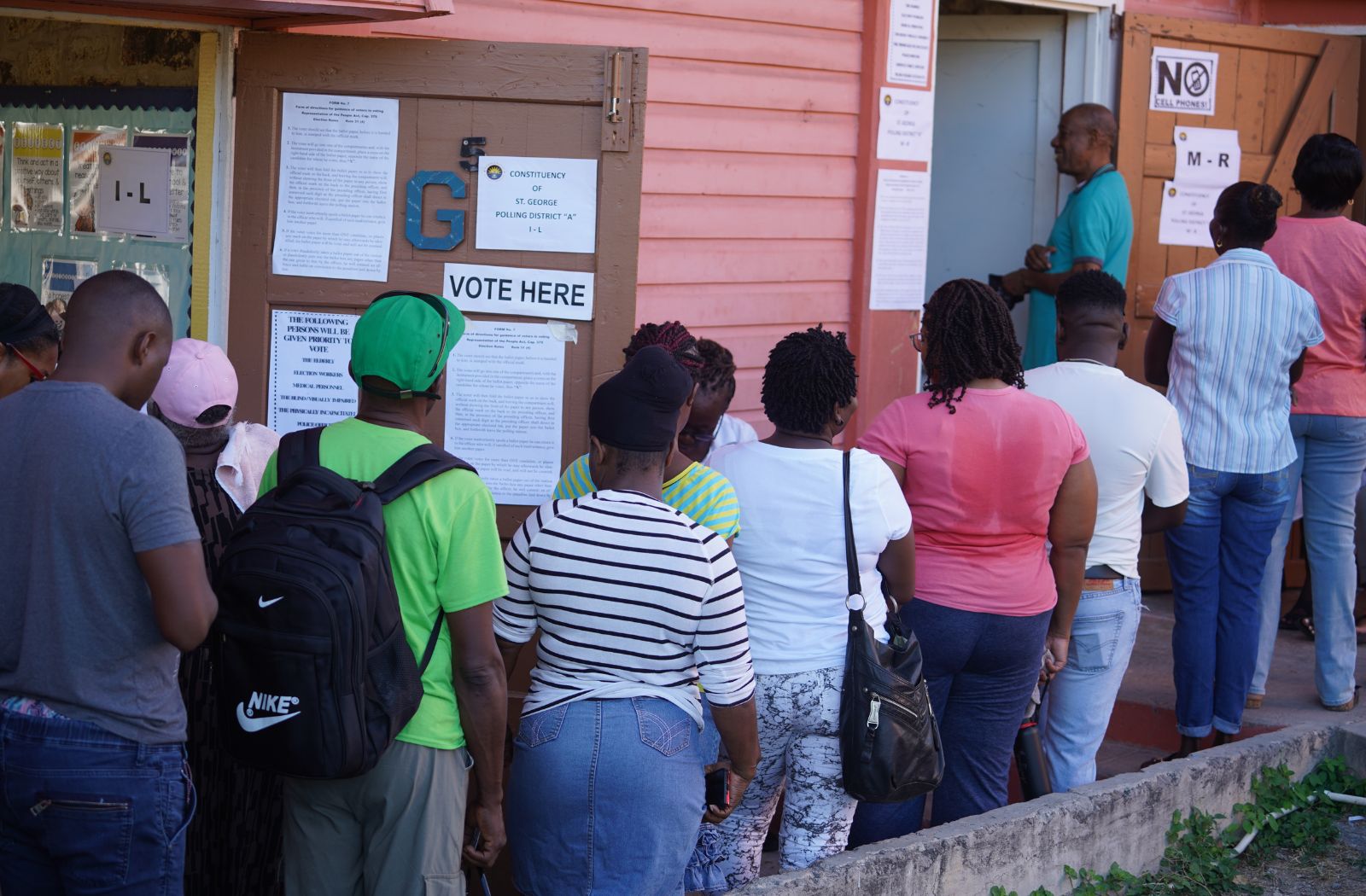
Antigua and Barbuda held a snap general election with polling stations open from 6:00 a.m. to 6:00 p.m. across 17 constituencies and about 190 polling stations for more than 63,000 registered voters. The vote follows Prime Minister Gaston Browne’s early dissolution of Parliament ahead of the expected 2028 timeline, with Commonwealth observers monitoring the process and issuing a preliminary statement on 1 May. The article is largely procedural and has limited direct market impact.
The immediate market read is not on direct asset exposure, but on governance risk premium. A clean, orderly vote reduces the probability of short-term policy discontinuity, which matters most for a small open economy where tourism, correspondent banking, and fiscal credibility are tightly linked to perceived institutional quality. The second-order effect is that even a modestly smoother transition can support FX stability, bank deposit retention, and the sovereign’s refinancing terms, especially if observers validate the process quickly.
The more interesting trade is around fiscal follow-through, not the election outcome itself. Snap elections often signal an incumbent trying to reset the legislative calendar before harder budget choices, so investors should watch for post-vote moves on public wages, subsidies, infrastructure spending, and tax collection. If the new mandate is narrow, policy may become more populist in the first 3-6 months, which can mechanically widen deficit financing needs and pressure local financial institutions that hold sovereign paper.
Contrarian risk: the consensus may overstate event risk because small Caribbean elections rarely move macro assets unless they threaten tourism flows or debt servicing. The real catalyst is the observer statement and any sign of administrative friction in results management; a disputed count would matter far more than the ballot outcome and could hit sentiment for weeks, not days. Conversely, a credible result can compress risk premia quickly, making any election-related dislocation a fade rather than a trend.
For broader EM, the signal is that institutional process remains intact in a low-volatility jurisdiction, which is mildly supportive for frontier sovereigns with upcoming elections. But investors should not extrapolate this to growth: the upside case is reputational, while the downside is fiscal slippage. That asymmetry favors playing stabilization rather than directional economic acceleration.
AI-powered research, real-time alerts, and portfolio analytics for institutional investors.
Request DemoOverall Sentiment
neutral
Sentiment Score
0.05
