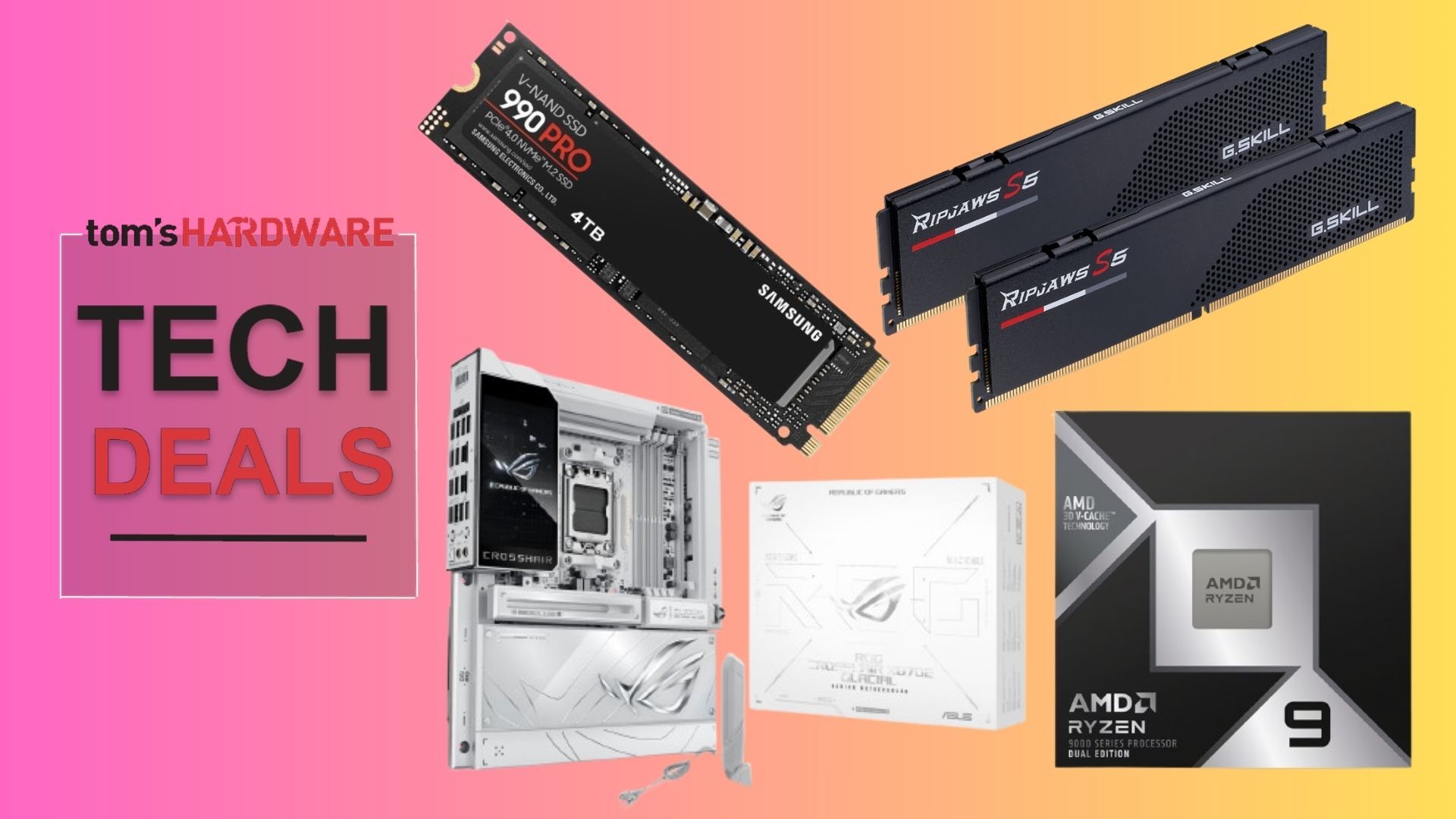
Newegg is offering a high-end PC hardware bundle for $2,899.99, down from $4,083.97 separately, delivering savings of $1,183.98, or about 29%. The kit includes AMD's Ryzen 9 9950X3D2, an Asus ROG Crosshair X870E Glacial motherboard, 64GB of DDR5-6000 RAM, and a 4TB Samsung 990 Pro SSD. The deal is consumer-facing and attractive for enthusiasts, but it is unlikely to have a meaningful market-wide impact.
This bundle is a better read on the component market than on gaming demand. The real signal is that premium retail inventory is being packaged to defend ASPs while memory and NAND remain tight enough that buyers are willing to pay for convenience and immediate availability. That favors the upstream stack near term, but it also tells us the consumer upgrade cycle is being pulled forward by scarcity psychology, not just performance needs.
AMD is the cleanest beneficiary, but the upside is mostly mix and halo, not unit volume. A niche flagship CPU winning attention helps reinforce the high-end AM5 ecosystem and can widen platform stickiness, yet the pricing power story is fragile because the product is overkill for the median gamer and power costs rise meaningfully with each incremental performance gain. If the market starts treating this as proof of broad gaming demand, that is likely too optimistic.
The more interesting second-order effect is on board partners and memory/storage vendors: these bundles help clear premium SKUs that are otherwise hard to move in a slower DIY market, but they also compress the visible discounting window for independent sales. If AI-related component inflation eases even modestly, the entire rationale for bundling weakens quickly over the next 1-3 months, and the promotional lift could reverse into channel inventory digestion. The contrarian view is that this is less a demand breakout than a merchandising tactic to monetize scarcity while consumers are still anchored to pre-AI pricing.
For competitors, the message is that the ultra-high-end DIY market is still alive, but it is increasingly a luxury category. That leaves room for OEMs and prebuilt system integrators to capture less price-sensitive buyers, while standard retail parts face higher elasticity once the initial FOMO passes.
AI-powered research, real-time alerts, and portfolio analytics for institutional investors.
Request DemoOverall Sentiment
mildly positive
Sentiment Score
0.35
Ticker Sentiment
