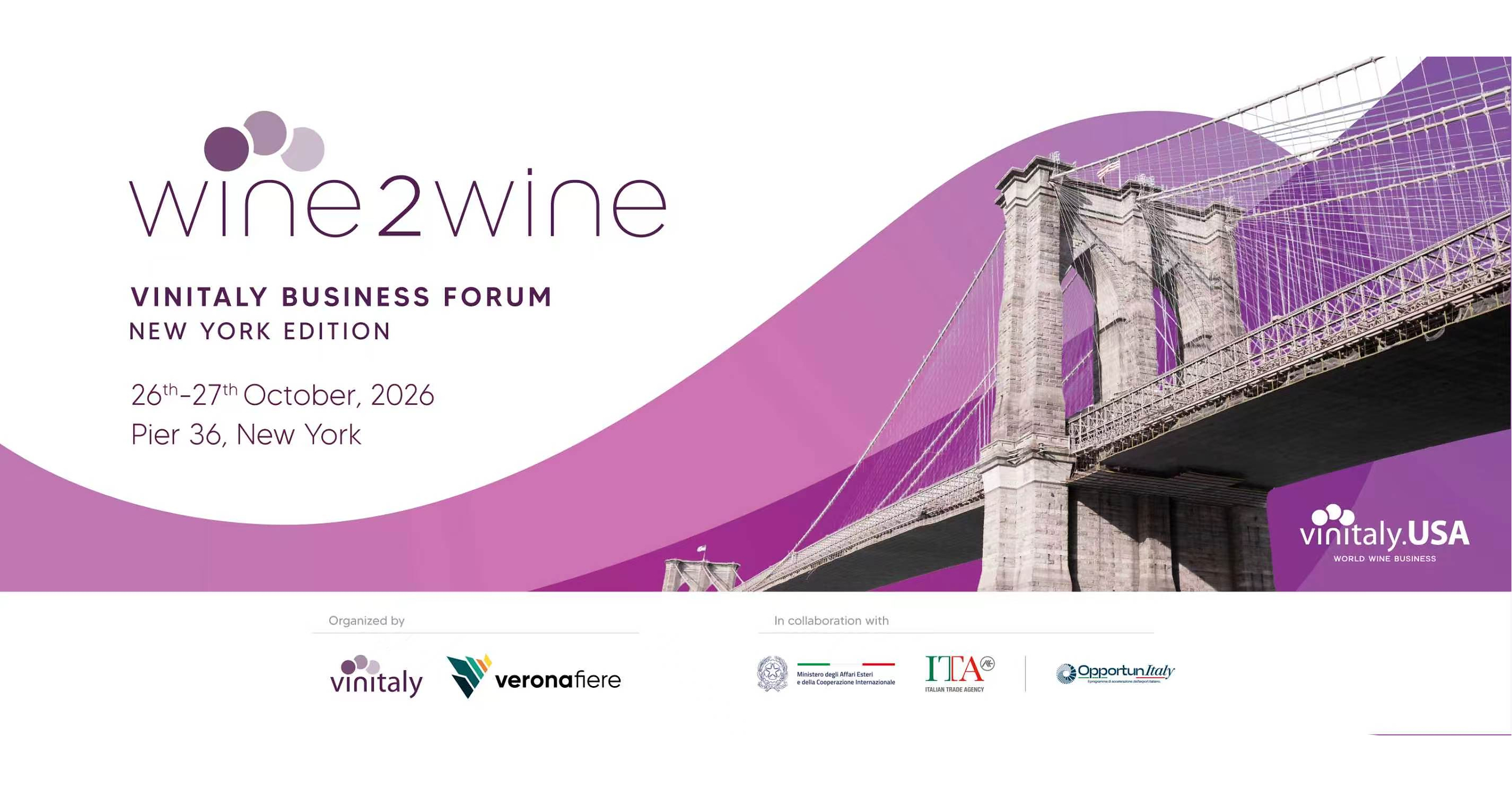
Wine2wine Vinitaly Business Forum / Vinitaly.USA 2026 unveiled the theme "Education is Influence," emphasizing training for sommeliers, educators, hospitality professionals, journalists and travel specialists. The two-day forum (Oct. 26-27, 2026 in New York) will run through four programming pillars—Train the Trade, Sharpen the Method, Deepen the Expertise and Activate the Experience—using sessions on topics like blind tasting and next-step wine tourism for American travelers. Overall, this is event-focused industry programming with no direct financial disclosures or measurable market-moving impact.
This is primarily a channel-control story, not a demand-shock story. In a soft U.S. wine environment, education mostly reallocates share toward labels and regions that can be narrated well by sommeliers and buyers; it does not automatically expand total category consumption. That means the nearest beneficiaries are importers, distributors, and high-end on-premise accounts with stronger menu influence, while undifferentiated Italian SKUs risk losing space to better-story competitors.
The second-order effect is mix, not volume. If the program works, the first evidence will show up in restaurant check averages, list penetration, and premium by-the-glass placement—not in broad scanner data. That favors premium-positioned wine portfolios and experiential operators tied to Italy travel, but the P&L impact for public equities is likely small unless it translates into repeat depletion over several quarters.
Contrarian take: the market may overestimate education as a growth lever in a constrained discretionary backdrop. Better-trained trade can simply concentrate demand into fewer premium labels while the rest of the portfolio keeps shrinking, so this is more a share-warfare tool than a category re-acceleration tool. The thesis is vulnerable if U.S. dining traffic weakens, import costs rise, or tariff politics disrupt Italian wine economics; any structural benefit is a 6-18 month story, with the next 1-3 months likely just promotional noise.
AI-powered research, real-time alerts, and portfolio analytics for institutional investors.
Overall Sentiment
neutral
Sentiment Score
0.10
