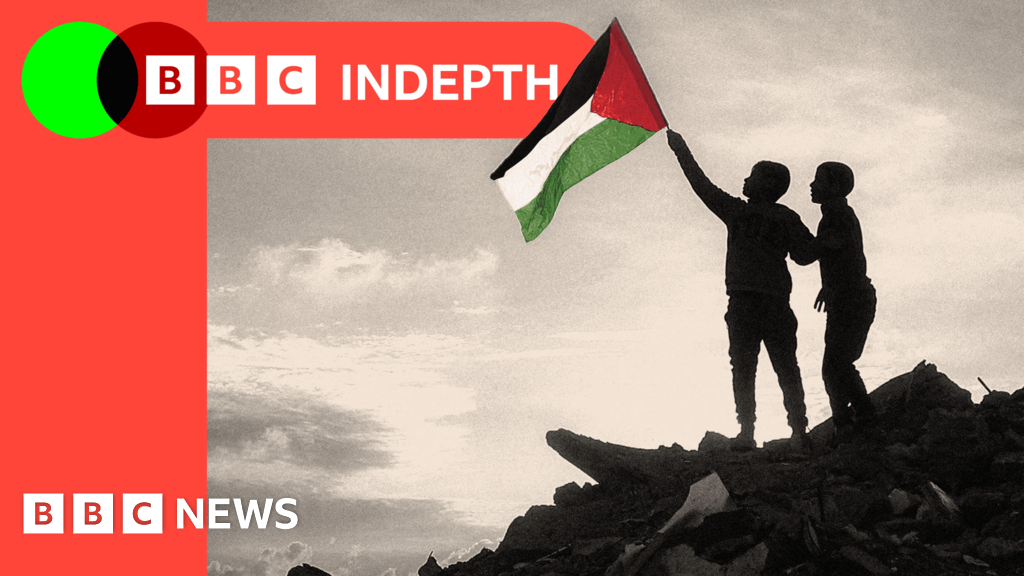
Recent recognition of a Palestinian state by key Western nations, including the UK, Canada, and Australia, signals a significant diplomatic shift, yet the viability of such a state faces profound challenges. Obstacles include the lack of defined territory due to Israeli settlement expansion and military presence, deep fragmentation within Palestinian leadership between Hamas and the Palestinian Authority, and explicit opposition from Israel. While international efforts push for tangible steps towards a two-state solution, the absence of unified governance and conflicting regional and US strategies underscore continued geopolitical instability and uncertainty regarding the future of the Palestinian territories.
The recent recognition of a Palestinian state by key Western nations, including the UK, Canada, and Australia, marks a significant diplomatic development but is overshadowed by formidable practical and political obstacles to actual statehood. Despite this international momentum, the criteria for statehood under the 1933 Montevideo Convention remain largely unmet. There is no 'defined territory' due to the geographic separation of the West Bank and Gaza, ongoing Israeli settlement expansion which has fragmented the West Bank, and the unresolved status of East Jerusalem. Furthermore, the requirement of a 'functioning government' is critically undermined by an 18-year political schism between the Fatah-led Palestinian Authority (PA), which administers only about 40% of the West Bank, and Hamas. Palestinian politics are described as 'ossified,' with no elections since 2006 and a leadership vacuum, as the current president is nearly 90 and a popular potential successor, Marwan Barghouti, remains imprisoned. This internal disarray is compounded by staunch external opposition from Israel's government, which is actively working to block a Palestinian state, and a US administration that appears unsupportive of the international consensus, creating a substantial disconnect between diplomatic symbolism and on-the-ground viability.
AI-powered research, real-time alerts, and portfolio analytics for institutional investors.
Request DemoOverall Sentiment
mixed
Sentiment Score
-0.15
