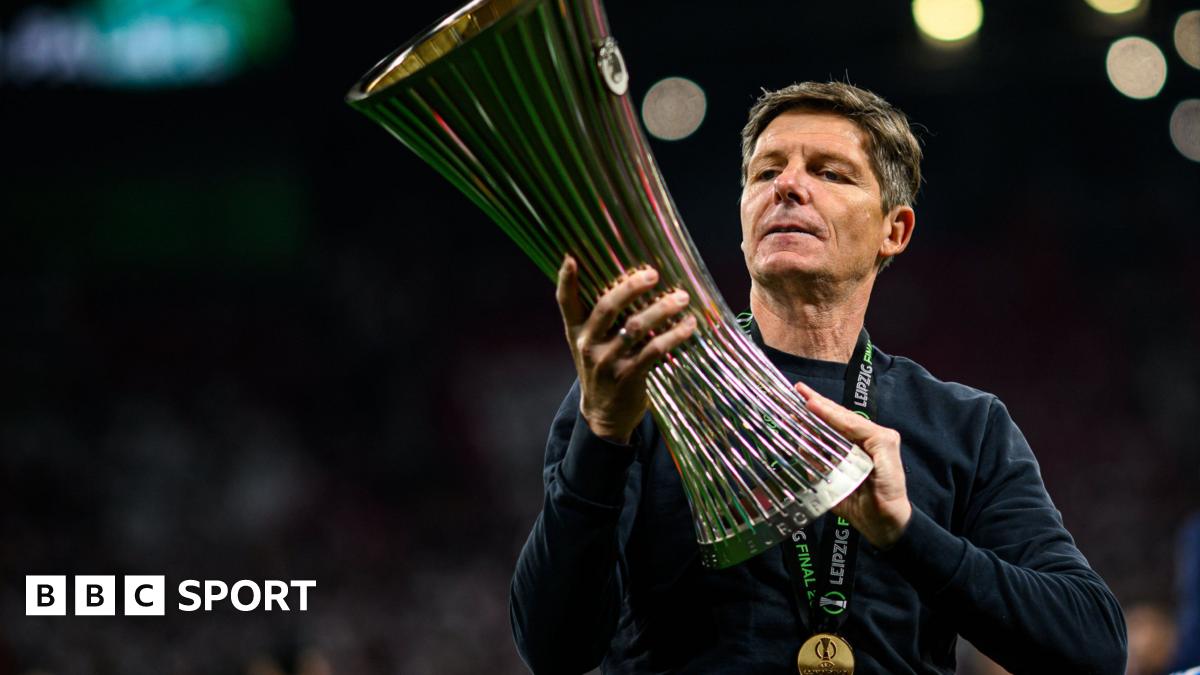
Crystal Palace under Oliver Glasner won three trophies in 375 days, capped by a 1-0 Conference League final win over Rayo Vallecano that secures Europa League football next season. The club also lifted the FA Cup and Community Shield, despite losing Eberechi Eze and nearly selling Marc Guehi amid reported tensions between Glasner and chairman Steve Parish. The piece is largely a success-story profile rather than price-sensitive market news.
The key market takeaway is not the trophy cabinet; it’s the governance lesson. Palace’s outperformance came from an unusually high-agency manager willing to override board-level inertia, which is rare but fragile: clubs with this profile tend to show step-change results until the first serious disagreement over capital allocation, at which point cohesion can deteriorate quickly. That creates a second-order risk that the “winner” effect is already near its peak, because the next phase depends less on coaching and more on whether ownership can keep talent, reinvest proceeds, and avoid selling the edge that produced the gains.
The most investable angle is the premium placed on scarcity of elite decision-makers in sports and entertainment assets. If the club’s success translates into sustained European participation, the value uplift will likely come from higher recurring matchday/media cash flow and sponsor re-pricing, not just one-time trophy optics; however, that requires retaining at least one of the two pillars of the model: manager continuity or squad continuity. The market is underestimating how quickly a “fairytale” can revert if either the coach departs or the roster is monetized to fund balance-sheet priorities.
For competitors, the lesson is that mid-tier clubs are increasingly judged on upside optionality rather than relegation avoidance. That can pressure similarly positioned teams to spend more aggressively, raising wage inflation and transfer fee competition for the next tier of managerial and player talent. The broader implication is that clubs with clearer ownership structures and less internal friction should trade at a governance premium, while multi-owner or politically constrained platforms should see higher discount rates.
Contrarian view: the consensus will treat this as a durable arrival into a higher tier, but the more likely base case is mean reversion in results if the manager exits. The “new ambition” narrative can also become self-defeating if it forces Palace into overpaying for talent to sustain a step-change that was partly driven by emotional momentum and unusually favorable tournament dynamics. The right question is not whether the club won; it is whether its operating model can absorb success without fragmenting.
AI-powered research, real-time alerts, and portfolio analytics for institutional investors.
Request TrialOverall Sentiment
strongly positive
Sentiment Score
0.70
