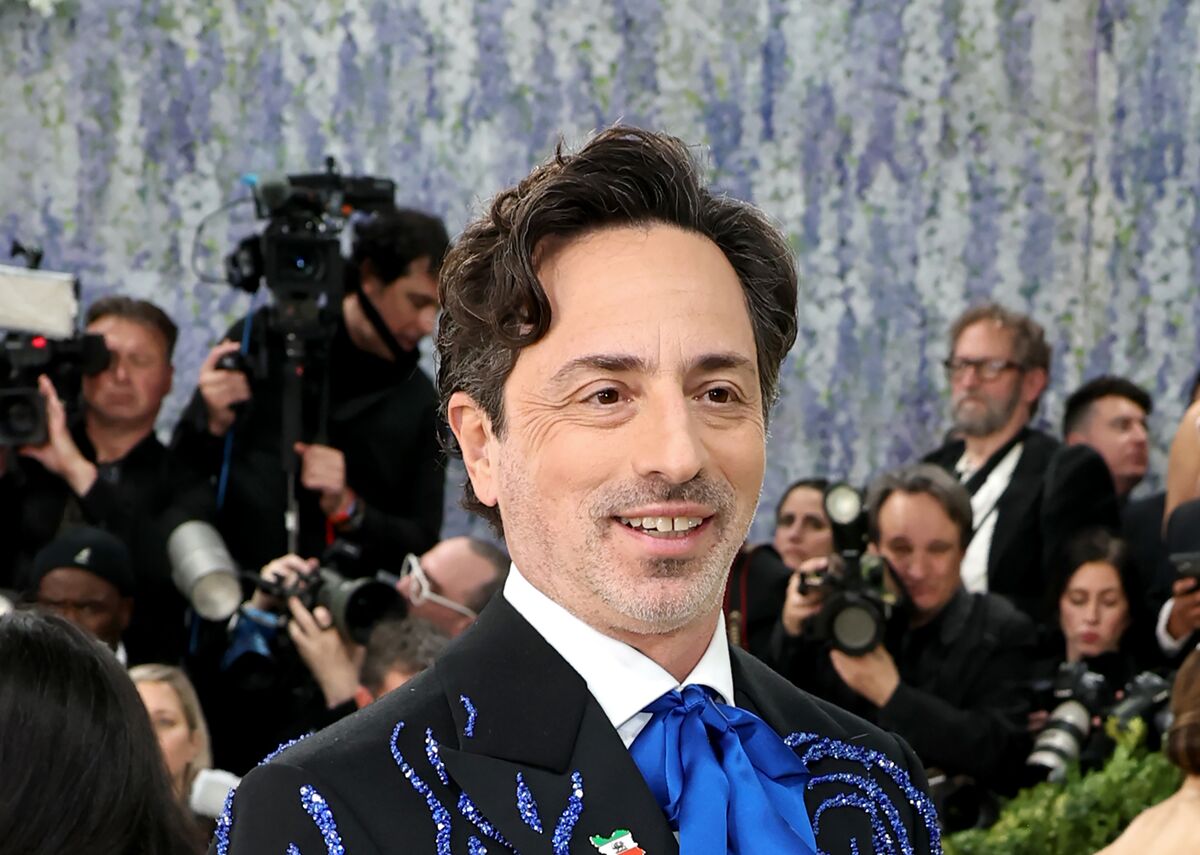
Sergey Brin donated $500,000 to oppose San Francisco’s proposed tax hike on businesses with highly-paid executives. The move underscores his continued push into California and city-level politics, extending beyond the earlier fight over a proposed tax on billionaires. The article is primarily political and tax-focused, with limited direct market impact.
This is less a direct GOOGL earnings catalyst than a signal that the company’s political risk profile is becoming more idiosyncratic and more personal to its founders. That matters because the market usually prices “Big Tech regulation” as a federal/antitrust bundle, but city- and state-level taxation can create a slower, more persistent margin overhang through compensation design, entity location, and hiring mix. The second-order effect is that local policy fights can encourage firms to re-optimize headquarters footprint and executive residence structure, which is incremental friction rather than a headline P&L hit.
For GOOGL, the near-term fundamental impact is negligible, but the investor question is whether founder activism increases the probability of broader California policy alignment against high-paying tech employers over the next 12-36 months. If that happens, the real cost is not the tax itself; it is the cumulative drag from compliance, lobbying, and compensation engineering, plus a higher probability of copycat proposals in other urban markets. That creates a valuation multiple issue if investors start assigning a wider “policy beta” to mega-cap tech with heavy California concentration.
The contrarian read is that markets may overestimate the economic significance and underestimate the signaling value. A visible founder donation can normalize political engagement by other tech executives, which may actually reduce the odds of abrupt punitive measures by shifting the debate earlier. In other words, this may be more of a negotiation tactic than a pure anti-business move, so the initial impulse to short GOOGL on regulatory fear is probably premature unless there is evidence of cross-city replication or ballot momentum.
The more tradable angle is dispersion inside the sector: companies with lower geographic concentration and less exposure to local executive-tax politics should be relatively insulated versus California-heavy peers. Expect the first-order reaction to fade quickly, but watch for follow-on contributions, ballot language, and municipal coalition-building over the next 1-2 quarters; those are the real catalysts that could turn a soft political headline into a persistent governance discount.
AI-powered research, real-time alerts, and portfolio analytics for institutional investors.
Request DemoOverall Sentiment
neutral
Sentiment Score
-0.05
Ticker Sentiment
