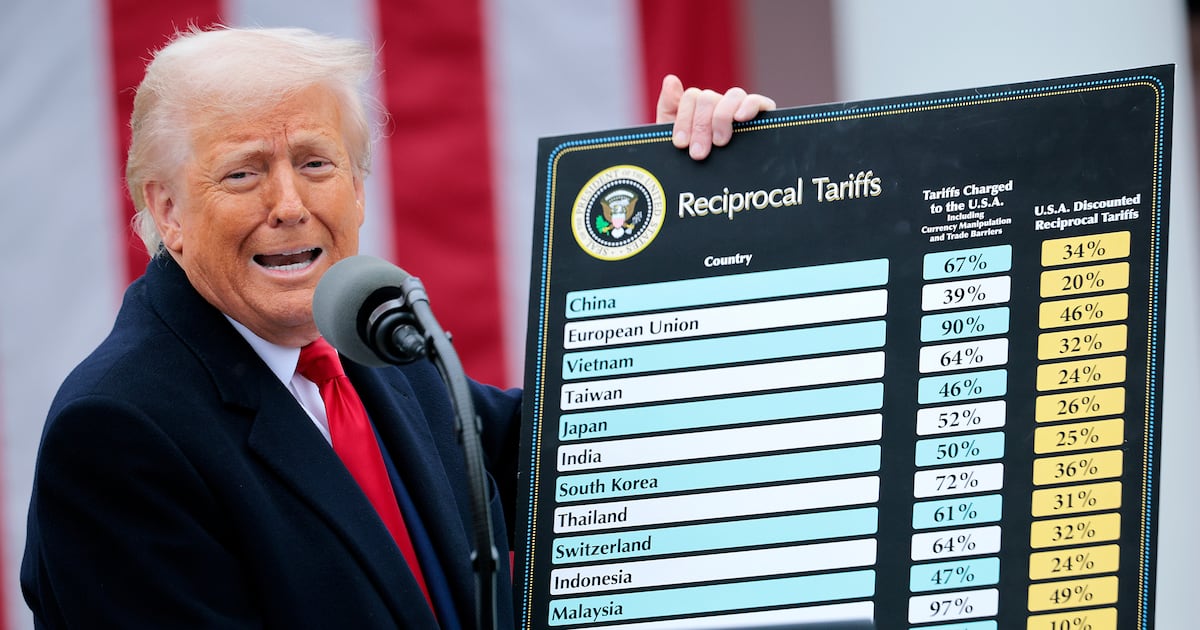
The Supreme Court ruled 6-3 that the president exceeded his authority by imposing sweeping global tariffs without congressional approval, a decision approved by 60% of 1,931 U.S. adults in a YouGov poll; 66% of respondents said tariffs had increased their costs. A JPMorgan Chase report found mid-size U.S. firms passed tariff costs onto consumers, heightening affordability concerns ahead of the midterms, while the president publicly denounced the decision and announced a 10% global tariff on Truth Social, amplifying policy and legal uncertainty for trade-sensitive sectors.
Market Structure: A sudden reimposition or threat of broad 10% global tariffs shifts pricing power toward domestic producers of tradable goods (steel, basic materials, some manufacturing). Expect winners: domestic steel/metal producers (NUE, X), selected industrials (CAT) and materials ETFs (XLB); losers: import-heavy retail (TGT, WMT, AAPL), consumer discretionary (XLY) and mid-cap exporters who will see margin squeeze and volume declines. The policy raises transitory input-cost inflation by 100–300 bps on affected goods categories over 3–6 months if passed and enforced.
Risk Assessment: Tail risks include retaliatory tariffs hitting agricultural exporters (soybean/shipping names) or a legal injunction that creates policy whipsaw; either can trigger >20% moves in sector equities within weeks. Immediate shock (days) is volatility and sector rotation; short-term (1–3 months) carries earnings revisions as companies report margin compression; long-term (6–18 months) risks are structural reshoring, capex reallocation, and higher core PCE leading to potential Fed tightening. Watch CPI prints, Fed minutes, and trade-retaliation announcements as 1–3 catalysts.
Trade Implications: Direct trades: overweight XLB/NUE and underweight XLY/TGT; use 3-month 5–8% OTM puts on XLY and 3–6 month calls on XLB as asymmetric plays. Pair trade: long NUE (2–3% portfolio) vs short TGT (2–3%) sized to cash flow parity, re-evaluate at 30–60 days or on CPI move >+0.3% MoM. Use TIP/GLD (2–4% combined) to hedge inflation/policy risk; reduce duration if 10y > +25 bps move.
Contrarian Angles: Consensus assumes tariffs equal persistent inflation; market could overprice downside for importers if tariffs are legally blocked or supply chains absorb costs via lower margins. Historical parallels: 2002 steel tariffs produced only short-lived domestic gains and higher consumer prices—if this repeats, short-cover in materials after a 10–20% run is prudent. Monitor legislative signals over next 30–90 days before forcing large structural bets.
AI-powered research, real-time alerts, and portfolio analytics for institutional investors.
Request DemoOverall Sentiment
moderately negative
Sentiment Score
-0.50
Ticker Sentiment
