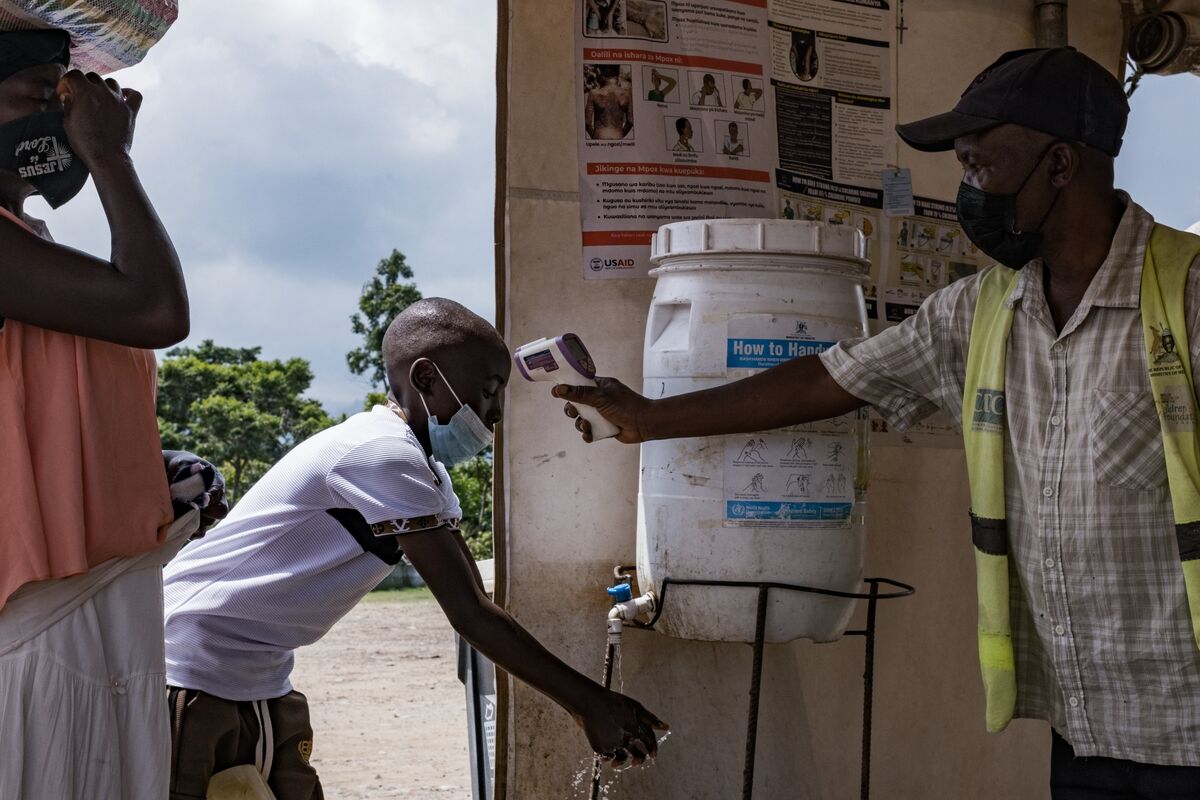
WHO and Imperial College London analysis suggests Ebola infections in the Democratic Republic of Congo may exceed 800 cases, significantly above reported figures. The outbreak appears to be undercounted after Uganda confirmed infections in travelers from eastern Congo’s Ituri province. The report raises concern about broader regional spread and a larger-than-detected public health burden.
The market implication is not the headline disease count itself, but the probability that containment costs and mobility friction rise faster than official responses can scale. That tends to hit the weakest link first: eastern DRC logistics, local transport, border commerce, and any EM assets exposed to humanitarian funding gaps or regional trade interruptions. The second-order effect is that neighboring countries with porous borders may see more enforcement, screening, and travel latency, which can dampen cross-border flows even if the outbreak remains geographically concentrated.
For healthcare, this is mildly supportive for firms tied to diagnostics, cold-chain logistics, and outbreak-response procurement, but the trade is usually too diffuse to express through single names unless there is a clear government/NGO supply chain beneficiary. The better expression is in broad healthcare tools/diagnostics exposure if case detection broadens, because undercounting usually translates into a delayed but sharper surge in testing demand once surveillance expands. Biopharma vaccine developers could see optionality, but the market typically prices these as low-probability event trades unless procurement is explicitly funded.
The main risk case is a 2-6 week lag where official case counts stay low while traveler-linked exportation changes the policy tone; that is when sentiment and operational restrictions can decouple from local epidemiology. If that happens, the negative surprise is less about global health damage and more about renewed risk premia in EM frontier assets, regional airlines, and border-sensitive consumer names. Conversely, if contact tracing and ring vaccination rapidly cap secondary transmission, the move can fade quickly because the market will not sustain a broad de-risking on a localized outbreak alone.
Consensus is likely underestimating the asymmetry between under-detection and the speed of policy escalation. Even if the epidemiological footprint remains manageable, the economic disruption can be outsized because authorities react to uncertainty, not just confirmed cases. That makes this a volatility event more than a fundamental earnings event: the best trades are tactical, short-duration, and focused on spillover risk rather than the pathogen itself.
AI-powered research, real-time alerts, and portfolio analytics for institutional investors.
Request DemoOverall Sentiment
moderately negative
Sentiment Score
-0.45
