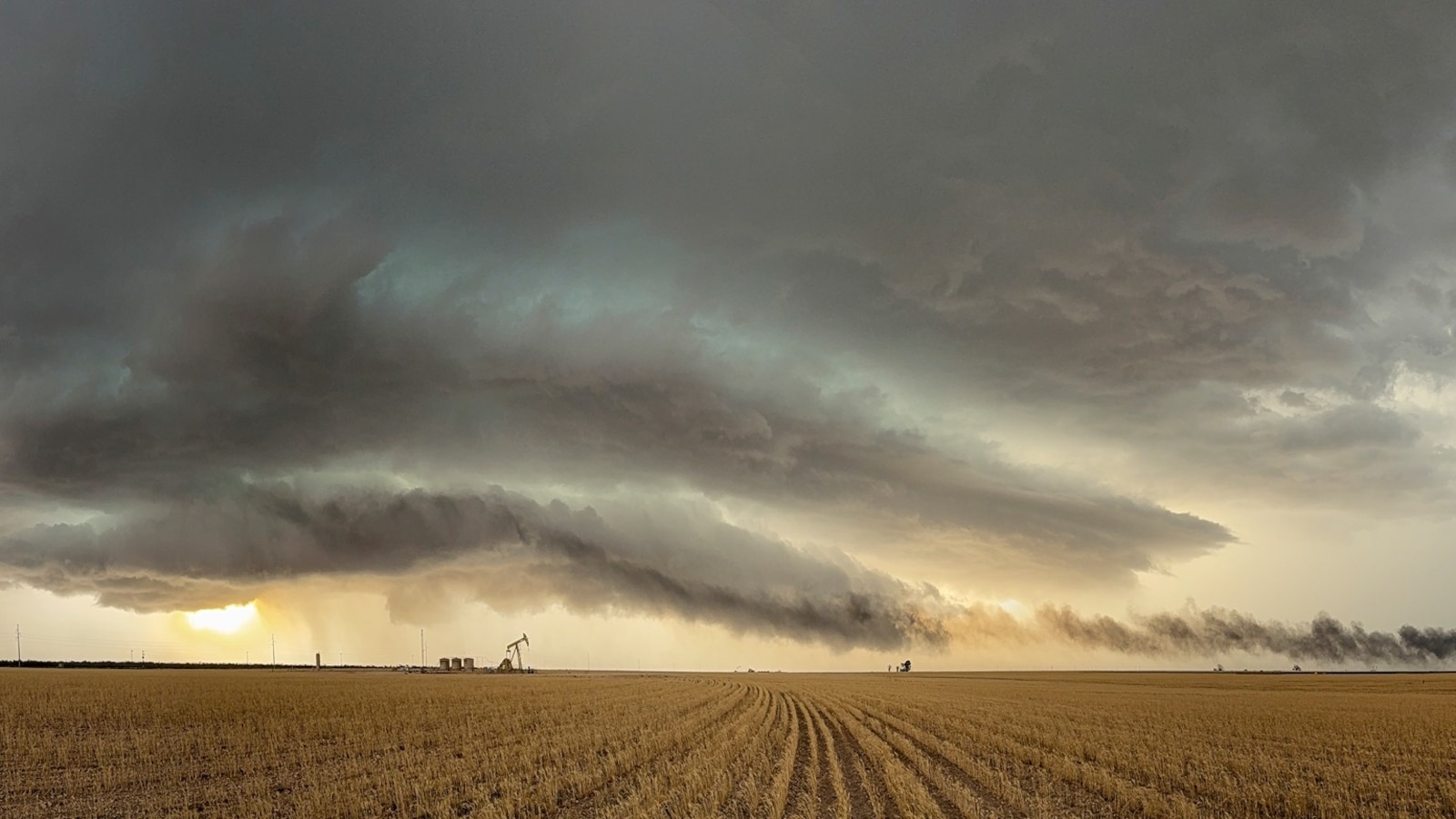
Severe weather threats are expected to persist through Monday and Tuesday across the Plains and Midwest, with enhanced and moderate risk areas for tornadoes, damaging winds and large hail affecting cities including Topeka, Wichita, Omaha and Des Moines. The article also highlights escalating fire weather, with Minnesota's Flanders Fire burning more than 1,100 acres and prompting evacuations, while red-flag warnings span parts of the Plains, Southwest and California. The combination of tornado risk, flash flooding, and wildfire danger raises regional disruption risk for transport, utilities and agriculture.
The near-term equity impact is less about headline damage and more about operating friction: repeated severe weather across the central corridor raises the probability of localized utility outages, rail delays, and intermittent trucking bottlenecks exactly where grain, fertilizer, propane, and livestock flows are concentrated. That creates a short-duration margin squeeze for shippers and industrial distributors, while benefiting firms with flexible rerouting, embedded inventory, and decentralized last-mile networks. The bigger second-order effect is on working capital: when weather repeatedly interrupts harvest prep, feed delivery, and outbound freight, customers tend to pre-buy and over-order, temporarily lifting volumes for select inputs and logistics providers.
The fire-weather overlay matters because it broadens the risk from episodic storms to multi-day infrastructure stress. High winds plus drought raise the odds of transmission interruptions, substation damage, and rural service restoration costs, which can pressure regional utilities and electric cooperatives even if headline storm losses look contained. For insurers, the pattern is unfavorable not because any single event is catastrophic, but because frequency clustering increases attritional claims and reinsurance attachment risk over a short window; that is the kind of regime shift that can reprice catastrophe-exposed names before loss estimates are finalized.
From a commodities standpoint, the most underappreciated channel is basis volatility, not outright price. Grain and livestock corridors in the Plains can see localized cash market dislocations that widen spreads versus national benchmarks, which tends to help merchandising and storage players with physical optionality while hurting processors that need predictable inbound supply. On the energy side, wind-related outages can temporarily disrupt power demand and fuel logistics, but the larger setup is broader than oil/gas: wildfire risk and storm repairs can accelerate short-cycle demand for transformers, poles, wire, and repair services over the next 1-3 months.
The contrarian view is that the market may be overestimating immediate macro damage while underestimating duration. Severe weather headlines often fade after 48-72 hours, but the real P&L impact shows up later through claims inflation, service interruptions, and logistics cost pass-through. If the pattern persists into another week, expect the trade to rotate from pure event-risk hedges into beneficiaries of repair, resilience, and supply-chain redundancy.
AI-powered research, real-time alerts, and portfolio analytics for institutional investors.
Request DemoOverall Sentiment
mildly negative
Sentiment Score
-0.25
