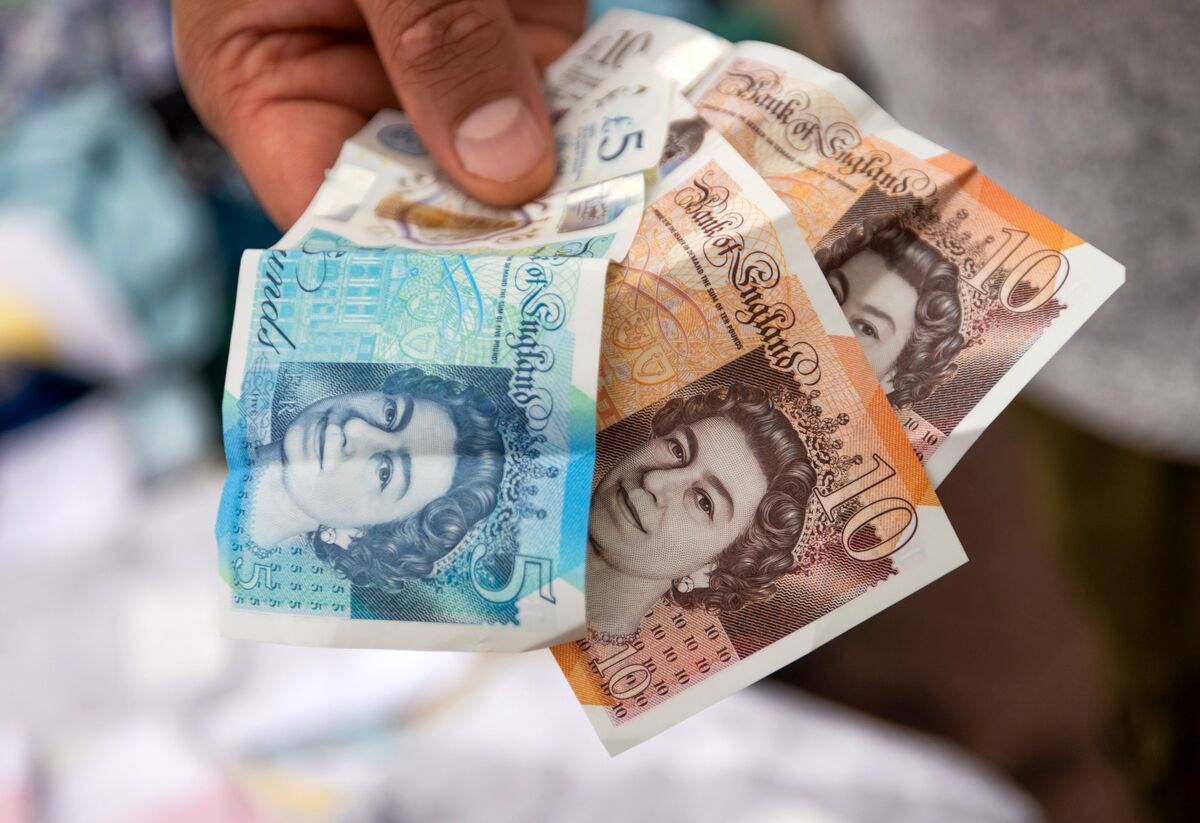
Sterling fell as much as 0.4% to $1.3181, nearing its 2026 low of $1.3159 set in March as expectations build that Keir Starmer will outline a timetable for his departure. A break below that level would leave the pound at its weakest since November. The move reflects rising UK political uncertainty and a modest risk-off tone in sterling.
The market is treating this as a governance shock, but the deeper issue is pricing a higher UK risk premium across the entire sterling asset complex. When leadership uncertainty rises, foreigners typically demand more compensation to hold UK duration and domestic cyclicals, which can amplify FX weakness even if the direct political event is short-lived. That creates a reflexive loop: weaker GBP tightens financial conditions, which raises recession odds and keeps foreign capital on the sidelines.
The technical setup matters more than the headline. The pound is close enough to a multi-month floor that systematic sellers and stop-loss flows likely dominate the next leg, so a clean break would invite momentum accounts rather than fundamental macro money. The second-order loser is the UK consumer/import channel: a weaker currency raises input costs and imported inflation, which reduces the odds of near-term policy easing and can hurt domestically oriented equities more than exporters benefit.
Consensus is probably underestimating how quickly this can reverse if the political timetable becomes clear and orderly. If the departure timeline is perceived as controlled rather than destabilizing, the move can unwind fast because positioning is likely one-sided and the macro data backdrop is not obviously deteriorating enough to justify a persistent new low. The key risk is not the resignation itself; it is a messy succession process that prolongs uncertainty into the next policy cycle.
For trade construction, the asymmetry favors selling rallies or buying downside convexity rather than chasing spot weakness. The cleanest expression is short GBP/USD on a break below the prior low, with a tight stop back above the breakdown level, because the next move is likely driven by flows more than valuation. If the pound stabilizes after the announcement, that would signal the market has priced the event and allow a fast tactical cover.
AI-powered research, real-time alerts, and portfolio analytics for institutional investors.
Request DemoOverall Sentiment
mildly negative
Sentiment Score
-0.25
