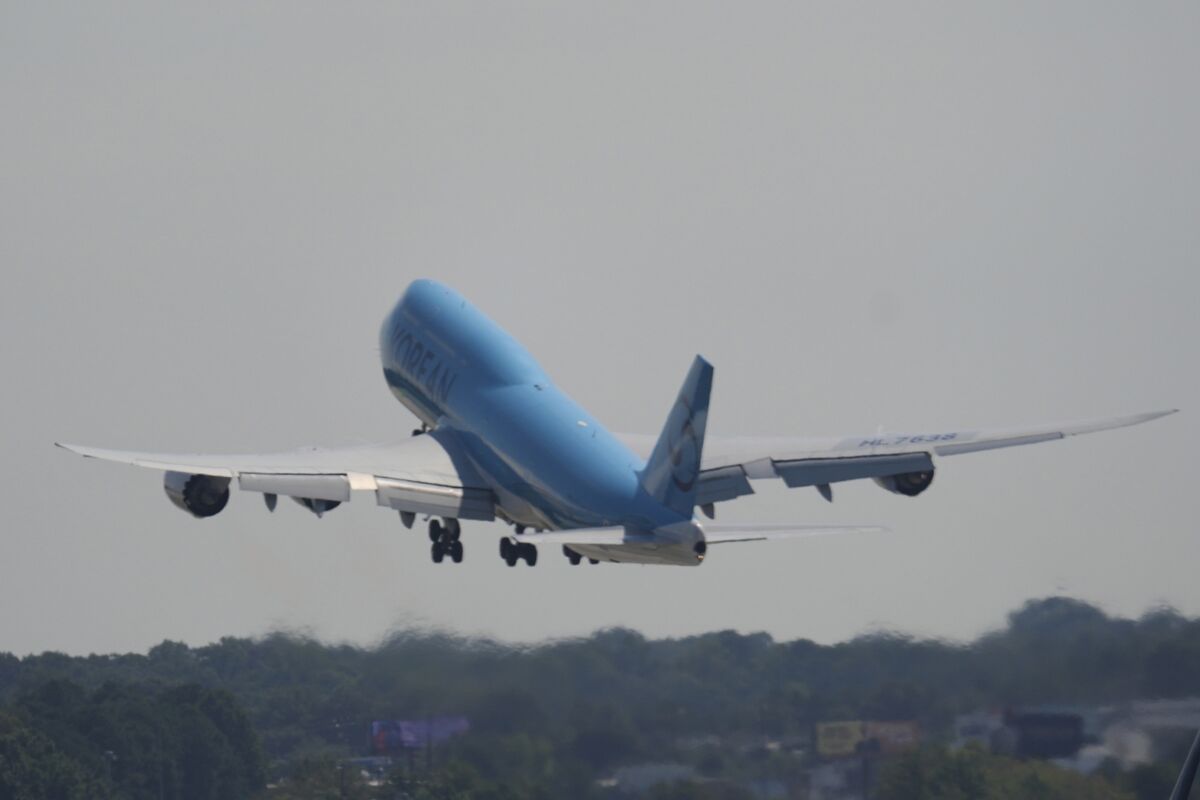
A chartered Korean Air Lines flight departed Atlanta with 316 South Korean workers who had been detained in a U.S. immigration sweep, returning them to South Korea. This incident has reportedly raised concerns over Korean investment prospects and strained diplomatic relations between the two allied nations.
The repatriation of 316 South Korean workers from the United States via a chartered Korean Air Lines flight, following a US immigration sweep, marks a significant geopolitical friction point between the two allied nations. According to the report, this event has already "stirred doubts over Korean investment" in the US and "strained ties" at a diplomatic level. While the immediate market impact is rated as low, the moderately negative sentiment and uncertain tone highlight a developing risk. The primary concern for investors is the potential for a chilling effect on future foreign direct investment from South Korea into the US, which could disrupt businesses reliant on this economic corridor and potentially alter the calculus for cross-border capital allocation.
AI-powered research, real-time alerts, and portfolio analytics for institutional investors.
Request DemoOverall Sentiment
moderately negative
Sentiment Score
-0.50
