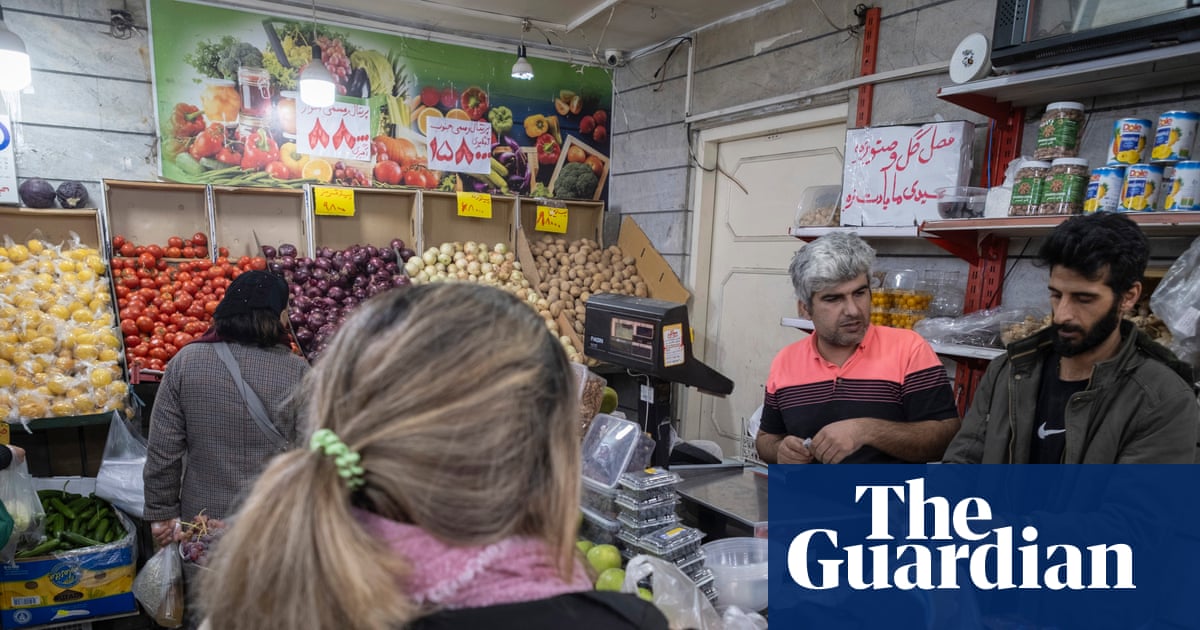
Iran is facing acute consumer inflation, with annual price increases of 308% for vegetable oil, 190% for chicken, and 170% for rice, while IMF data shows food inflation running 140% to 200% and overall inflation at 70%. The partial restoration of internet access exposed widespread public anger over living costs and shortages, alongside government fears of renewed unrest and 'cognitive warfare.' The combination of war-related disruption, sanctions, subsidy cuts, and hyperinflation points to heightened political and macro instability in an important emerging market.
The key market signal is not the internet restoration itself, but the regime’s need to relax information control precisely when price pressure is becoming socially explosive. That usually marks a transition from “managed inflation” to a higher-volatility political phase: once households can coordinate around shortages, the feedback loop from prices to protest intensity accelerates quickly, and authorities are forced into either more subsidies or harsher repression. In practice that increases the probability of sudden policy lurches over the next 1-3 months rather than a smooth adjustment. The second-order economic effect is a worsening of supply inefficiency. If the state leans harder on price caps, anti-gouging campaigns, and subsidy reinstatement, it may temporarily suppress visible inflation but will further distort incentives for traders and importers, which typically means less inventory, more parallel-market pricing, and larger FX premium dispersion. That is bearish for domestic consumer demand, local retailers, and any quasi-official distribution channels dependent on regulated margins; it also raises the odds of import rationing becoming a de facto policy tool. For geopolitics, the administration’s attempt to frame the issue as foreign “economic warfare” is an early warning that external scapegoating will intensify as domestic legitimacy erodes. The contrarian point is that the market may be underestimating how quickly internet partial liberalization can become a protest-enabling catalyst: even if only a minority is mobilized, coordinated outrage around food costs is enough to force policy concessions. The near-term risk is not just unrest, but a broader deterioration in FX confidence and sanctions compliance as the state seeks emergency funding and barter arrangements to plug the food-import gap.
AI-powered research, real-time alerts, and portfolio analytics for institutional investors.
Request DemoOverall Sentiment
strongly negative
Sentiment Score
-0.82
