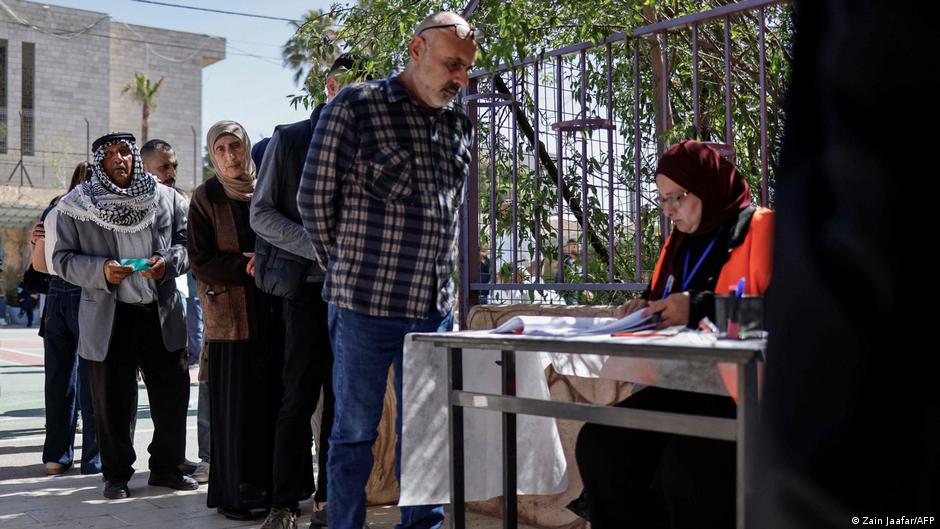
Palestinians are voting in local municipal elections this weekend across the occupied West Bank and central Gaza, marking the first poll of any kind in Gaza since 2006. The article is primarily a political update with limited direct market implications. Any financial relevance is indirect, tied to broader geopolitical risk in the Palestinian territories.
Local elections in a fragmented authority structure are less about governance optics than about revealing which power network can still mobilize civilians, administer patronage, and claim legitimacy. The key second-order signal is not turnout per se, but whether any faction can convert a localized administrative win into broader donor, security, and reconstruction credibility over the next 3-12 months. If the process is perceived as credible, it modestly improves the odds of more predictable permitting, municipal budgeting, and aid absorption; if it fractures or is boycotted, it reinforces a high-friction operating environment for any outside capital tied to infrastructure, utilities, or humanitarian logistics.
The market-relevant implication is that this is a binary information event for regional risk premium rather than a direct asset-price catalyst. Near term, the main transmission channel is through sentiment in MENA risk assets, especially EM sovereign spreads and regional equities exposed to headline sensitivity. The larger medium-term effect would be on reconstruction optionality: better local coordination lowers execution risk for any future buildout in Gaza and the West Bank, while a disputed result raises the probability of renewed interruption to aid corridors and local contracting, pushing timelines out by quarters.
The contrarian read is that the election’s importance may be understated because local legitimacy is often the prerequisite for external money to scale, especially in places where central institutions are weak. The consensus tends to focus on geopolitics, but the more investable variable is administrative capacity: who can actually sign, police, and implement. That means the real winner may be any group positioned to underwrite post-conflict services and logistics, while the losers are contractors and donors that need a stable counterpart but may be forced to wait for a clearer mandate.
AI-powered research, real-time alerts, and portfolio analytics for institutional investors.
Request DemoOverall Sentiment
neutral
Sentiment Score
0.00
