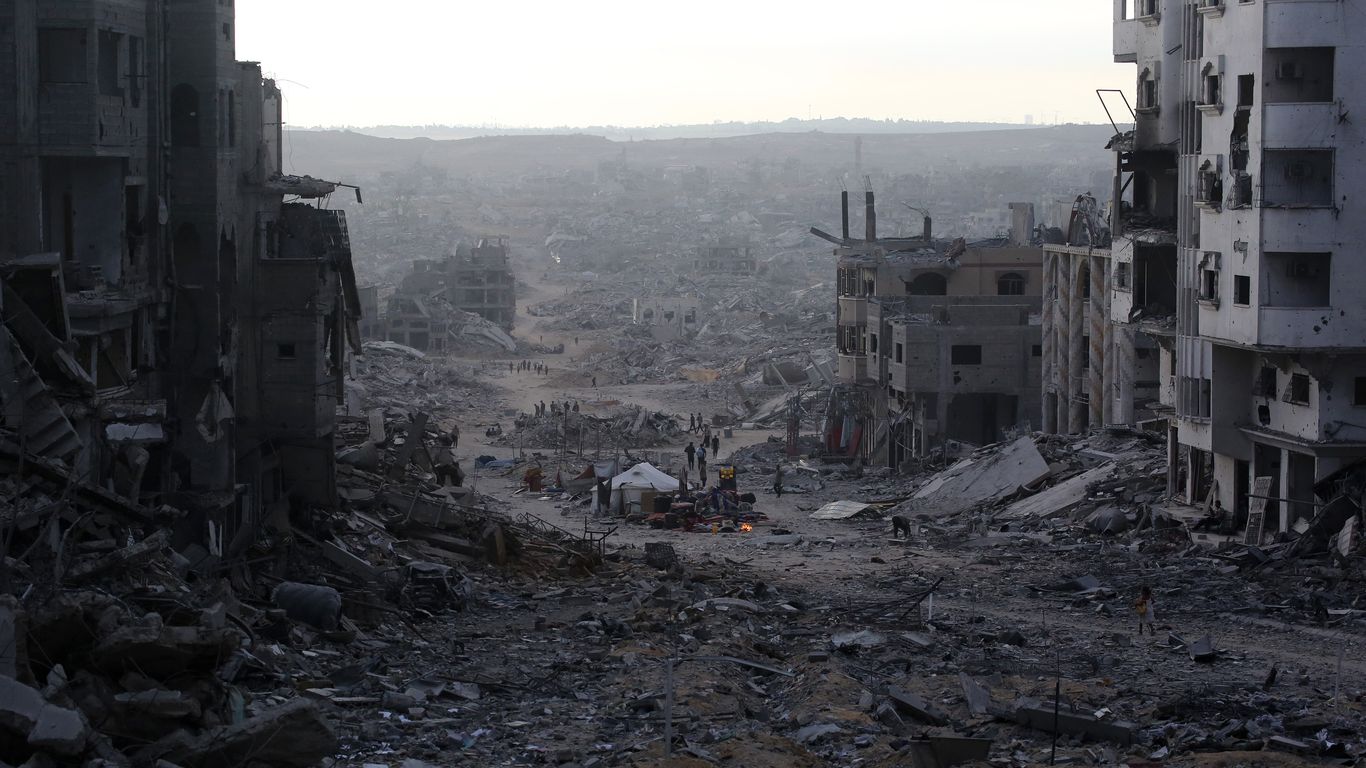
The Trump administration is spearheading efforts to establish a multinational security force, vet Palestinian leadership, and begin reconstruction in Gaza, particularly in Rafah, post-conflict. However, the nascent peace process is fraught with challenges, including Hamas's reassertion of control through crackdowns and its incomplete compliance with obligations such as returning deceased Israeli hostages, which Israeli officials warn could jeopardize the deal. Demilitarization remains a critical friction point, with Hamas resisting immediate disarmament due to security concerns, while the U.S. and mediators prepare for complex Phase Two negotiations on Israeli withdrawal and disarmament, with President Trump indicating potential for forced disarmament if Hamas does not comply.
The nascent Gaza peace process, spearheaded by the Trump administration, aims to establish a multinational security force, vet Palestinian leadership, and initiate reconstruction, particularly in Rafah. Despite an initial exchange of hostages and aid flow, the situation remains highly volatile, marked by both positive developments and significant instability. The core issues of governance, security, and the future roles of Hamas and Israeli forces are largely unresolved, creating a precarious environment.
A critical friction point is Hamas's compliance with obligations, specifically the return of deceased Israeli hostages, which Israeli officials warn could derail the deal. Concurrently, Hamas is reasserting control through public executions and clashes with rival militias, raising concerns about its willingness to cede power. This contradicts the peace agreement's demilitarization clause, as Hamas expresses concerns about fighter vulnerability if they disarm immediately.
The U.S. is actively mediating, working with Turkish, Qatari, and Egyptian counterparts to define demilitarization and facilitate a pathway for Palestinians seeking refuge from Hamas. However, hardliners within the Netanyahu government pose a risk to the deal's integrity, potentially using non-compliance as a pretext for renewed conflict. The upcoming Phase Two negotiations, focusing on demilitarization and further Israeli withdrawal, are anticipated to be extremely challenging, with President Trump indicating a potential for forced disarmament if Hamas resists.
AI-powered research, real-time alerts, and portfolio analytics for institutional investors.
Request DemoOverall Sentiment
moderately negative
Sentiment Score
-0.40
