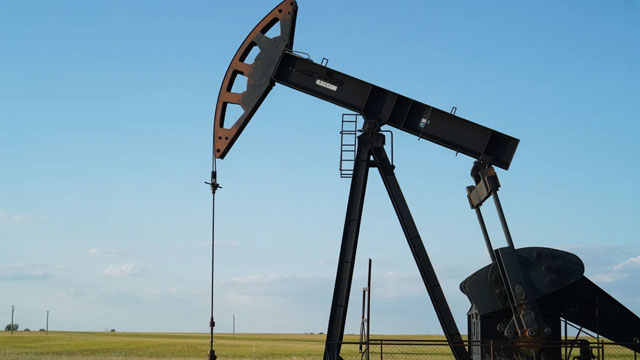
LandBridge’s latest quarter points to accelerating demand tied to its Permian Basin footprint, with seven counterparties in late-stage negotiations for 10+ GW of power/data center projects and revenue expected before end-2026. Produced water is also strengthening: sequential disposal volumes rose 15%, with pricing expected to reach $0.15/bbl and EBITDA projected to grow to $360M by 2029. Overall, the update suggests improving fundamentals and a visible pipeline for both power/data center and produced-water monetization.
The market is likely still undervaluing LB as a scarcity asset rather than a normal Permian royalty/land story. If even a fraction of the announced power pipeline monetizes, the incremental margin should look more like infrastructure than commodity land: high fixed-cost leverage, limited capex, and very little working-capital drag. The bigger second-order winner is not just LB’s cash flow, but its negotiating power with adjacent developers, because control of acreage plus water handling can become a bundled solution for hyperscale and industrial users looking to shorten siting timelines.
The key loser is any competitor trying to assemble comparable sites from fragmented surface rights and water infrastructure: they face higher transaction costs, slower permitting, and more basis risk on power access. For the broader Permian ecosystem, rising produced-water economics can tighten disposal capacity and push fees higher, which is a tailwind for infrastructure owners but a margin headwind for E&Ps with high water-intensity wells. Over 6–18 months, the real question is whether this becomes a repeatable rent stream or a one-off set of negotiations; if LB can show signed, financeable contracts, the multiple can re-rate well before full revenue ramps.
Consensus may be missing how binary the catalyst path is: headline pipeline count does not equal monetizable revenue until interconnection, permitting, and offtake are locked. The setup is attractive, but the thesis breaks if the company keeps talking about late-stage negotiations without conversion, or if produced-water pricing fails to inflect toward the implied target. Near term, the stock can grind higher on narrative alone; over 1–3 quarters, the market will want proof in booked revenue and disclosed backlog, not just LOIs.
AI-powered research, real-time alerts, and portfolio analytics for institutional investors.
Request DemoOverall Sentiment
moderately positive
Sentiment Score
0.45
Ticker Sentiment
