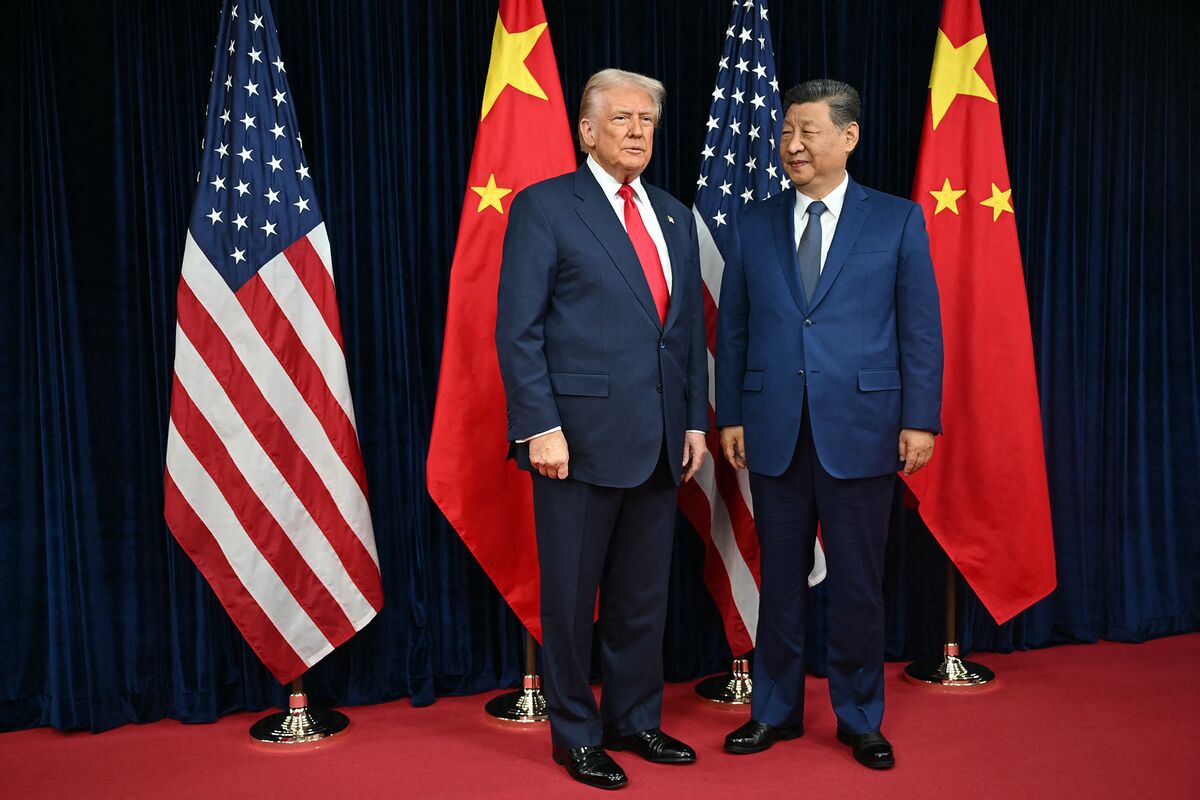
Chinese President Xi Jinping urged U.S. President Donald Trump to maintain improved bilateral ties and pressed him on the status of Taiwan, saying Taiwan's return to China is a key part of the post‑World War II international order. Xi referenced the positive momentum from their meeting in South Korea last month and called for expanded cooperation, a diplomatic exchange that highlights persistent China–Taiwan tensions and raises modest geopolitical risk for markets sensitive to cross‑Strait stability and supply‑chain exposure.
Market structure: A sustained uptick in cross‑Strait tension favors defense contractors, safe havens and premium insurance products while impairing Taiwan‑centric semiconductor supply chains. Expect tactical downside of 5–15% in Taiwan‑exposed equities within 1–3 months on risk spikes and a 1–3% bid for USD and USTs; commodity flows should favor gold (+3–8% on spikes) and oil on logistic disruption. Competitive dynamics: higher political risk compresses pricing power for contract manufacturers reliant on uninterrupted Taiwan output and increases negotiating leverage for diversified or onshore fabs, shifting capex pools over quarters. Supply/demand: advanced-node capacity (TSMC >50% share in cutting‑edge nodes) becomes single‑point risk, raising idiosyncratic scarcity premia for critical chips and equipment if access is disrupted.
Risk assessment: Tail risks include kinetic conflict, a protracted blockade, or sweeping export controls that would cause >30% drawdowns for Taiwan fabs and 10–20% supply shocks to foundry‑dependent OEMs. Near term (days) expect volatility spikes and localized liquidity stress; short term (weeks–months) see rerating and flight to quality; long term (quarters–years) anticipate structural re‑shoring, higher defense budgets and accelerated capex into non‑Taiwan fabs. Hidden dependencies: southern Taiwan geography concentration, Chinese semiconductor substitution lead times, and insurance/derivatives liquidity. Catalysts to monitor: US arms sales, PLA drills, Taiwan elections, and ASML/TSMC capex announcements.
Trade implications: Tactical longs: defense (LMT, RTX) and gold miners (GDX) via 3–6 month instruments; tactical shorts: Taiwan‑listed or Taiwan‑exposed semis (TSM) and China ADRs (BABA, BIDU) in next 2–8 weeks. Options: buy 3‑month ATM puts on TSM and 3‑month call spreads on LMT/RTX; maintain a 0.5–1% tail‑hedge in VIX/short‑dated VXX call spreads. Sector rotation: reduce China/EM exposure by 20–30% within 30 days, increase cash/UST duration by 3–6 months for optionality.
AI-powered research, real-time alerts, and portfolio analytics for institutional investors.
Request DemoOverall Sentiment
mildly negative
Sentiment Score
-0.25
Contrarian angles: The market may underprice differentiated winners — US domestic semiconductor equipment makers (LRCX, AMAT) stand to gain over 12–36 months from re‑shoring even if near‑term disruption hurts demand. The knee‑jerk selloff in TSM could be overdone if diplomacy holds; a disciplined buyback on a 20–30% pullback with a 12‑month horizon could work. Unintended consequence: a big risk‑off move could lower real yields and buoy long growth names, so maintain hedged exposure not pure directional risk.
