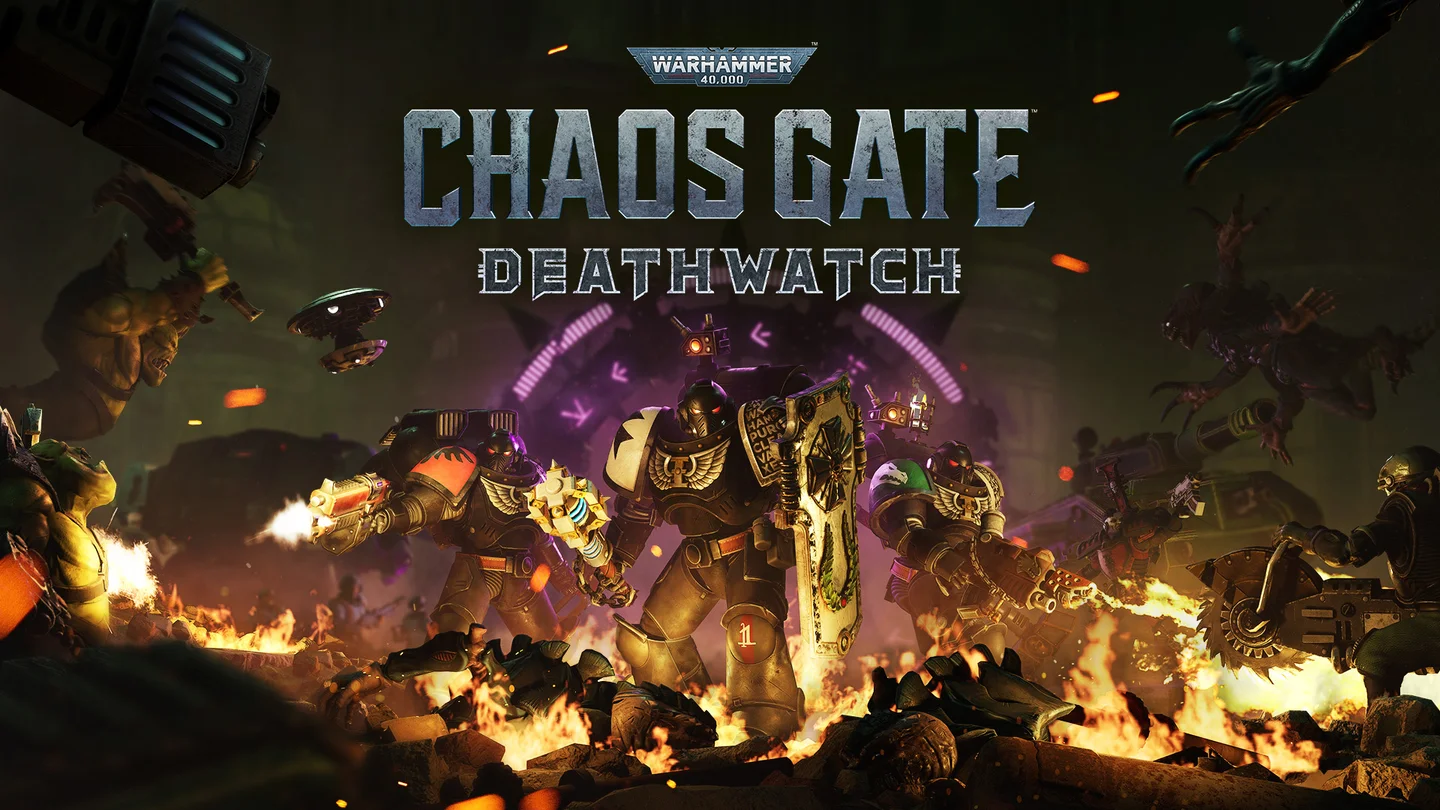
Warhammer 40,000: Chaos Gate – Deathwatch has been announced for PC, PlayStation 5, and Xbox Series X|S as a sequel to Daemonhunters. The title adds broader class identity, new squad customization, challenging missions, and a Skirmish mode, which should support franchise engagement but is unlikely to materially move markets. The news is primarily a game product reveal with limited near-term financial impact.
This is a low-P&L but useful signal that the Warhammer franchise remains a durable cash-flow asset rather than a one-hit game cycle. The second-order beneficiary is less the publisher’s one title and more the broader licensed-IP monetization model: sequels reduce customer acquisition cost, extend lifetime value, and improve visibility on long-tail digital sales and DLC attach rates. In a weaker consumer spending backdrop, established fandoms with pre-sold demand tend to outcompete new-IP launches, so this reinforces the relative resilience of premium niche franchises.
The real competitive read-through is that tactical RPGs are becoming a “quality over scale” segment where execution and retention matter more than marketing spend. That favors teams with proven live-ops and community management, while punishing studios that rely on broad-launch hype without a sticky endgame loop. It also increases pressure on adjacent AA publishers to either double down on owned-IP sequels or accept lower hit rates versus recurring brands.
From a market perspective, this is not a broad sector catalyst; it is a modest positive for sentiment around licensed entertainment and game development services. The useful contrarian view is that sequel announcements often overstate near-term monetization: the stock/pipeline benefit usually occurs at reveal, while the actual revenue inflection depends on review scores, conversion on wishlist-to-purchase, and DLC cadence over the subsequent 6–12 months. If the title underdelivers on polish or content depth, the market typically re-rates the announcement premium quickly.
The best trade is to express this as a quality-vs-noise preference rather than a pure beta call. The upside is steadier than explosive, but the downside is asymmetric if the broader AAA slate stumbles and publishers with reliable franchises continue to take share of wallet. Watching for review embargo risk and launch-window sentiment is key, because that is where the thesis either compounds or breaks.
AI-powered research, real-time alerts, and portfolio analytics for institutional investors.
Request DemoOverall Sentiment
mildly positive
Sentiment Score
0.35
