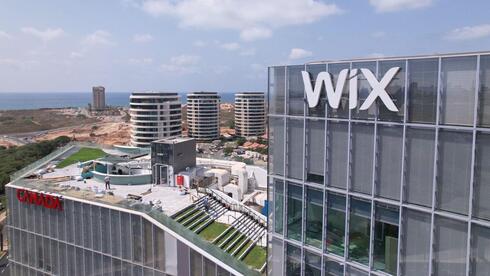
Wix plans to cut about 1,000 jobs, or 20% of its workforce, after a nearly 50% stock slide, weak profitability, and rising AI-related costs. The company reported a Q1 net loss of $57.5 million on revenue up 14% to $541 million, while operating expenses jumped 50% to $423 million and cash fell to $900 million after a $1.6 billion buyback. Base44 is growing quickly, with ARR reaching $150 million in May, but the expansion is increasing computing costs and investor skepticism.
This is less a one-time cost reset than a forced re-rating event: management is implicitly admitting that prior growth was bought with too much labor, too much marketing, and too much AI infrastructure spend. The key second-order effect is that cutting headcount will likely improve optics faster than economics, because the real cost drag now sits in compute, acquisition-related payouts, and growth efficiency for Base44, not payroll alone. If the market wanted evidence that AI can compress software headcount, it just got it — but the larger question is whether Wix can monetize AI without turning itself into a lower-margin services-and-inference business.
The competitive implication is nuanced. A leaner Wix could be more resilient than investors assume if it uses AI to reduce product development cycle time and support burden, but the more immediate beneficiary may be Fiverr if campus consolidation and internal restructuring improve cost discipline across the Israeli tech ecosystem. More importantly, this situation validates the bear case that no-code website builders are vulnerable to native AI coding tools; that pressure likely extends to adjacent SMB software vendors with weak differentiation and heavy CAC. The risk is that layoffs do not stop the valuation bleed if top-line growth remains tied to paid acquisition and expensive compute.
Catalyst-wise, the next 1-2 quarters matter more than the next 12 months. If headcount reduction plus lower marketing intensity can lift operating margin by even 300-500 bps, the stock can stabilize from deeply distressed levels; if not, the company risks entering a negative loop where buyback cash is viewed as wasted and any further AI investment is discounted as value-destructive. The contrarian angle is that the selloff may already price in a lot of bad news, so a cleaner margin inflection could trigger a sharp short-covering rally — but only if management proves Base44 can grow without proportionally rising inference and incentive costs.
AI-powered research, real-time alerts, and portfolio analytics for institutional investors.
Request DemoOverall Sentiment
strongly negative
Sentiment Score
-0.78
Ticker Sentiment
