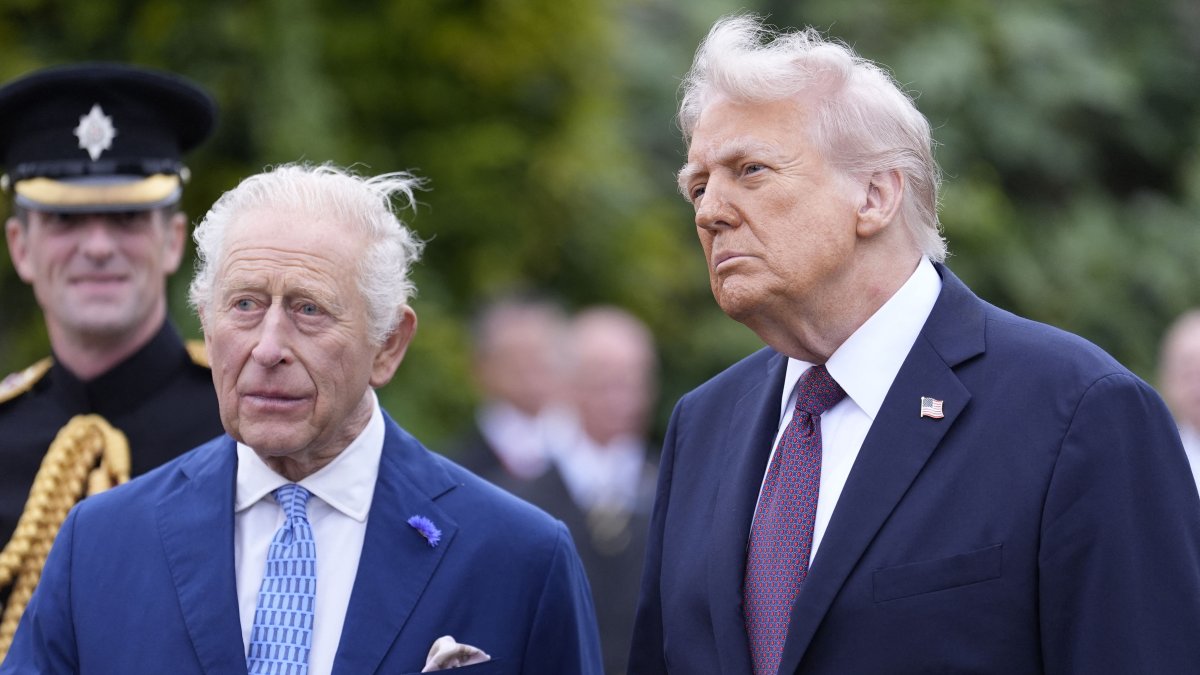
King Charles III begins a four-day U.S. state visit in Washington amid heightened security concerns after a shooting at a Trump dinner, but Buckingham Palace said the trip will proceed as planned. The visit is intended to reinforce the U.S.-U.K. special relationship, though tensions over Iran, NATO, and the Falklands have raised the political stakes. Market impact is limited, with implications mainly for diplomacy and geopolitical sentiment rather than direct financial fundamentals.
The market-relevant signal is not the ceremonial visit itself but the evidence that U.S.-U.K. policy alignment is becoming more conditional and personality-driven. That increases the odds of episodic friction around defense procurement, intelligence cooperation, and sanctions coordination — all of which matter more for sub-sectors than for the broad index. The first-order beneficiaries are likely to be firms exposed to higher European defense readiness and domestic security spending, while the losers are names reliant on smooth trans-Atlantic political execution and steady procurement timing.
The most interesting second-order effect is on European defense budget durability. If Washington continues publicly pressuring allies, it strengthens the political case in London and continental capitals for pre-committing to defense capex, cyber, ISR, and air/missile defense to prove credibility independent of U.S. support. That is a multi-quarter tailwind for primes with backlog leverage and for suppliers tied to munitions, radar, and secure communications; it is also supportive for shipbuilding and infrastructure-hardening themes because governments prefer visible, local spend when geopolitics is noisy.
The downside risk is that the visit becomes a media trap rather than a de-risking event: any off-script comment about NATO, war policy, or allied sovereignty could widen the gap between rhetoric and budget reality, causing a short-term repricing in FX-sensitive U.K. assets and in contractors with heavy U.K./European exposure. Conversely, if the speech and meetings are handled smoothly, the near-term move could be faded — because symbolism does not change procurement pipelines immediately. The real catalyst window is 1-3 months, when autumn budget negotiations and 2026 defense guidance will reveal whether the political theater converts into incremental spending authority.
A contrarian point: consensus may be underestimating how much this kind of diplomatic strain actually helps defense multiples by reducing headline risk around already-high budget expectations; investors often wait for formal appropriations, but the rerating usually starts when governments begin signaling urgency. The bigger risk may be to complacent sovereign-exposure trades if the rhetoric spills into intelligence-sharing or treaty language, which would matter more for telecom, aerospace, and satellite supply chains than for broad macro hedges.
AI-powered research, real-time alerts, and portfolio analytics for institutional investors.
Request DemoOverall Sentiment
neutral
Sentiment Score
-0.05
