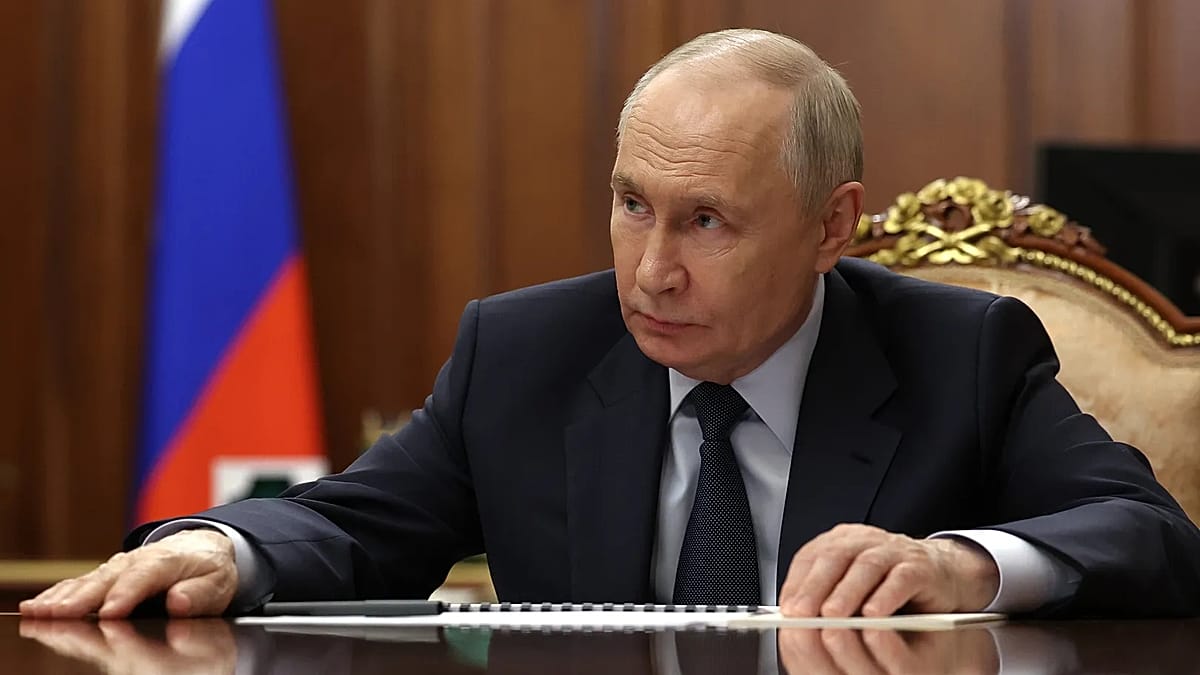
Putin said the Ukraine war is "heading to an end" and signaled willingness to meet Zelenskyy only after peace terms are settled, but ceasefire violations and mutual accusations continued during a US-brokered three-day truce. The conflict remains active despite no major missile or air attacks reported on the first day, and the Kremlin downscaled Victory Day events amid security concerns and internet shutdowns. The article underscores a still-volatile geopolitical backdrop with potential implications for defense, European security, and risk sentiment.
The market implication is less about an immediate ceasefire and more about the increasing probability of a drawn-out negotiation process that still preserves a war premium in European defense, energy, and infrastructure resilience. The key second-order effect is that even modest de-escalation rhetoric can compress the most extreme tail-risk hedges in oil/gas and grain, while simultaneously extending budget visibility for defense procurement in Europe because governments will treat any pause as tactical rather than strategic. In other words, the regime shift is not peace; it is a move from emergency replenishment to multi-year rearmament with a lower headline temperature.
For defense contractors, the risk is not demand destruction but timing and mix. If the conflict meaningfully cools over the next 1-3 months, near-dated “Ukraine urgency” orders can slow, but NATO inventory replacement, air defense, EW, and munitions replenishment should persist for years because stockpiles remain structurally thin. The better read-through is to favor primes and ammunition suppliers with multi-year backlog conversion, while being more cautious on niche names whose revenue is highly correlated with incremental battlefield attrition.
The biggest contrarian point: markets may overstate the probability that a ceasefire narrative translates into durable lower geopolitical risk. A partial truce with intermittent violations reduces immediate volatility, but it can also free bandwidth for Russia to rotate, replenish, and reset, which historically raises the odds of a larger confrontation later if negotiations fail. That argues for selling short-dated volatility in some risk assets, but maintaining longer-dated hedges against renewed escalation.
Net, this is a good setup for relative-value positioning rather than outright directional bets: the short-term winner is anything priced for permanent war escalation, while the medium-term winner is defense and infrastructure resilience. The loser is the part of the commodity complex that had embedded a fast escalation premium; the move there may be overdone if traders assume a real peace path rather than a managed freeze.
AI-powered research, real-time alerts, and portfolio analytics for institutional investors.
Request DemoOverall Sentiment
mildly negative
Sentiment Score
-0.15
