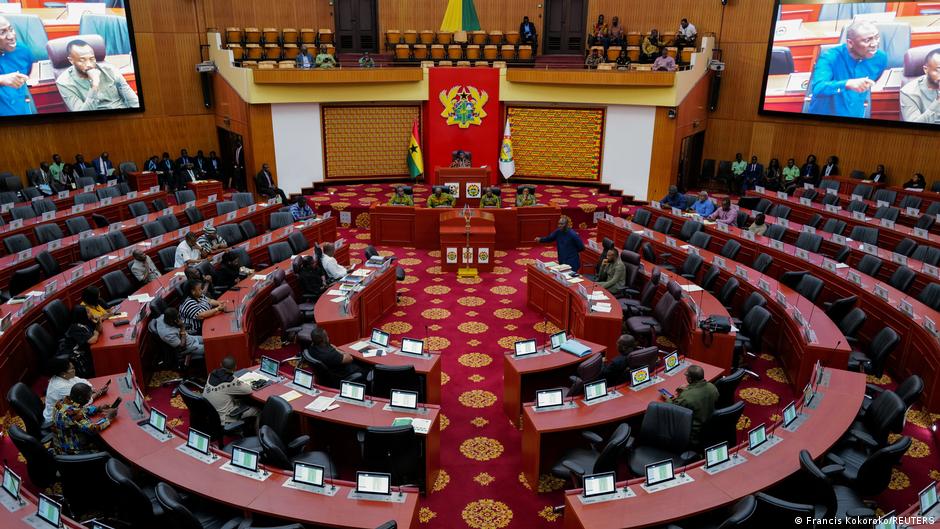
Ghana’s Parliament passed a bill that would impose up to 10 years in prison for promoting or funding LGBTQ+ advocacy and 3-year prison terms for homosexual acts, pending presidential sign-off. The law adds exemptions for legal, media, and healthcare professionals but is still expected to face criticism over discrimination and constitutional concerns. Human rights groups warn it could damage Ghana’s international financing prospects, as the prior version did in 2024.
This is less a pure social-policy headline than a sovereign-risk signal. The first-order market reaction should be on Ghana's external funding stack: anything that depends on concessional lending, budget support, or IMF program durability becomes more fragile when governance conditionality collides with domestic politics. The more important second-order effect is not an immediate cash-flow hit but a widening of the sovereign risk premium through slower disbursements, higher policy uncertainty, and greater odds that ESG-sensitive allocators avoid or underweight Ghana-linked exposure.
The market should also think in terms of optionality around implementation rather than passage. Enforcement intensity is likely to matter more than the statute itself: a low-prosecution regime would preserve most macro relationships, while selective enforcement against NGOs, media, or corporate sponsors could quickly chill foreign direct investment and donor flows over the next 1-2 quarters. The legal carve-outs reduce operational disruption for multinationals on paper, but they do not eliminate headline risk for country management teams, especially in consumer, telecom, healthcare, and financial services where employee safety and reputational exposure can become board-level issues.
The contrarian angle is that the economic damage may be overstated in the immediate term because Ghana has already internalized similar legal risk and the same-sex act provision existed previously. The incremental shock is reputational and financing-related rather than operational, so the more tradable expression is not a blanket EM short, but a relative-value view against peers with cleaner governance trajectories. If the government quietly downshifts enforcement to protect IMF/disbursement needs, the initial selloff in Ghana risk assets could reverse quickly; if not, the downside compounds over months via weaker capital inflows and a higher cost of capital.
AI-powered research, real-time alerts, and portfolio analytics for institutional investors.
Request DemoOverall Sentiment
moderately negative
Sentiment Score
-0.45
