

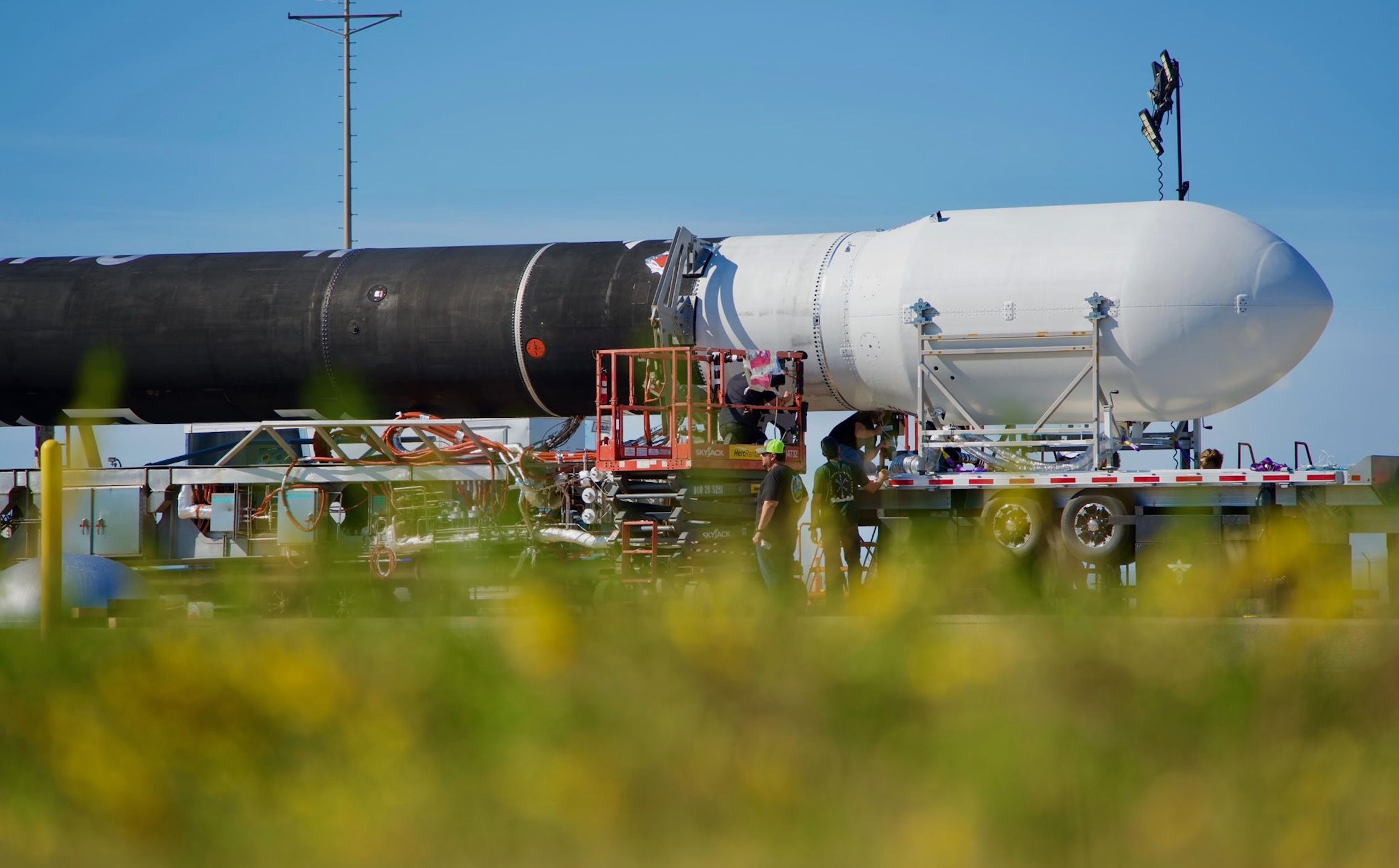
Firefly Aerospace scrubbed the planned March 1 return-to-flight of its Alpha rocket (“Stairway to Seven”) due to high winds, with no new target date announced. The two-stage, 96.7-foot Alpha was set to perform a purely test mission (no operational payload) as the seventh liftoff and final Block I flight after an April failure that broke the first-stage booster and a later ground-test explosion of a booster in Texas; the FAA had cleared Alpha to return to flight in August. Flight 7 is intended to validate first- and second-stage performance ahead of a Block II upgrade that adds 7 feet to the vehicle and revised batteries, avionics, thermal protection and composite structures. The scrub is a delay with technical and schedule risk implications but does not involve lost commercial payloads on this mission.
Market structure: Firefly’s scrub widens the gap between well-capitalized, proven launch providers and niche small-launchers. Near-term losers: small-cap launch firms (FLY) and their suppliers face higher financing costs and bid premiums; winners: large defense primes (LMT) and established launch integrators who can absorb schedule shifts and command price/slot premiums. Expect a modest upward repricing of small-launch insurance and contract margins over the next 3–12 months.
Risk assessment: Immediate risk (days) is volatility around Flight 7 and FAA commentary; short-term (weeks–months) risks include extended grounding, insurance losses, and additional test failures that could force fundraising (dilution) for FLY; long-term (quarters–years) risk is consolidation if Block II delays push cash burn >12 months. Hidden dependencies include single-site test risk, supplier tooling for carbon composites, and Lockheed/other anchor-customer patience. Key catalysts: FAA investigation report (30–90 days), Flight 7 outcome, and Block II qualification on Flight 8.
Trade implications: Tactical trades favor asymmetric positions: short FLY equity or buy 3–6 month FLY puts (target 15–30% implied move) while modestly increasing exposure to LMT via 1–2% long (or buy 6–12 month LMT calls) to capture safe-haven defense spending. Consider a pairs trade: long LMT (1–2%) / short FLY (3–5%) to exploit relative fundamental resilience. Volatility trade: sell FLY short-dated IV if Flight 7 succeeds and IV collapses; otherwise hold puts.
Contrarian angles: Consensus assumes permanent demand loss for small-launchers — that’s overdone if Block II succeeds; a clean Flight 7 could cause 20–40% mean reversion in FLY implied risk, creating a buy-the-dip setup. Historical parallels: Rocket Lab rebounded within 6–9 months after successive failures once reliability improved. Watch for unintended consequence: higher insurance rates may spur consolidation, benefiting winners like LMT suppliers.
AI-powered research, real-time alerts, and portfolio analytics for institutional investors.
Request TrialOverall Sentiment
mildly negative
Sentiment Score
-0.25
Ticker Sentiment
