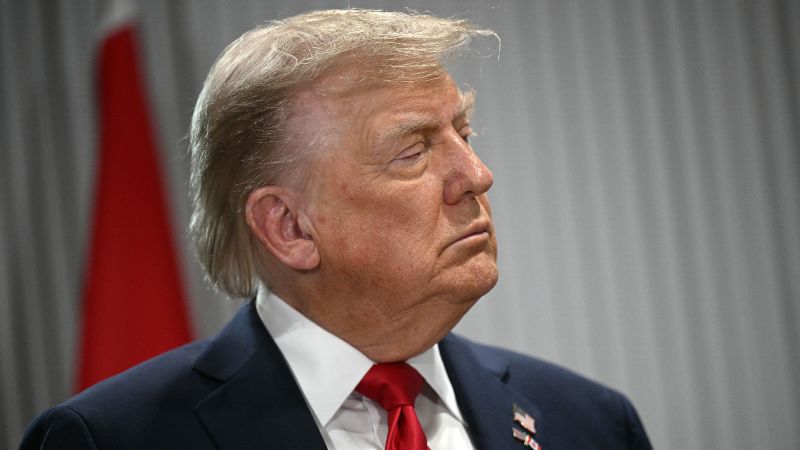
President Trump declined to endorse a G7 joint statement calling for de-escalation between Israel and Iran, creating a rift with European leaders who spearheaded the draft, which affirmed Israel's right to self-defense and opposed Iran's nuclear ambitions. Trump expressed confidence that Iran seeks de-escalation and believes they should negotiate directly, while his counterparts plan to press him on his strategy given the escalating conflict and US influence over Israel. The summit also highlighted divisions regarding Russia's potential role as a mediator, with Trump suggesting Putin could help, while Macron dismissed the idea due to Russia's actions in Ukraine.
President Trump's stated intention not to sign a G7 joint statement calling for de-escalation between Israel and Iran underscores a significant divergence with European allies, notably France, Germany, and the United Kingdom, who drafted the document. The proposed statement, which affirmed Israel's right to self-defense and aimed to prevent Iran from obtaining nuclear weapons, faced Trump's reluctance, with White House officials suggesting his existing public stance and efforts towards peace negate the need for his signature, and that his summit attendance itself demonstrates unity. This diplomatic division emerges against a backdrop of heightened Middle East tensions, following Israel's recent strikes on Iran's nuclear program and military leadership, which occurred after a 60-day ultimatum from Trump for a nuclear deal. While Trump expressed belief that Iran seeks de-escalation and should negotiate directly, European leaders are pressing for clarity on the US strategy and its intentions regarding the conflict's duration, given American influence over Israel. The disagreement extends to Russia's potential mediation role, with Trump suggesting President Putin could be a mediator, a notion French President Macron dismissed. The overall situation, marked by a "moderately negative" sentiment, an "uncertain" tone, and a market impact score of 0.45, points to increased geopolitical instability and potential market volatility due to the lack of cohesive action among leading democracies on critical security issues.
AI-powered research, real-time alerts, and portfolio analytics for institutional investors.
Request DemoOverall Sentiment
moderately negative
Sentiment Score
-0.40
