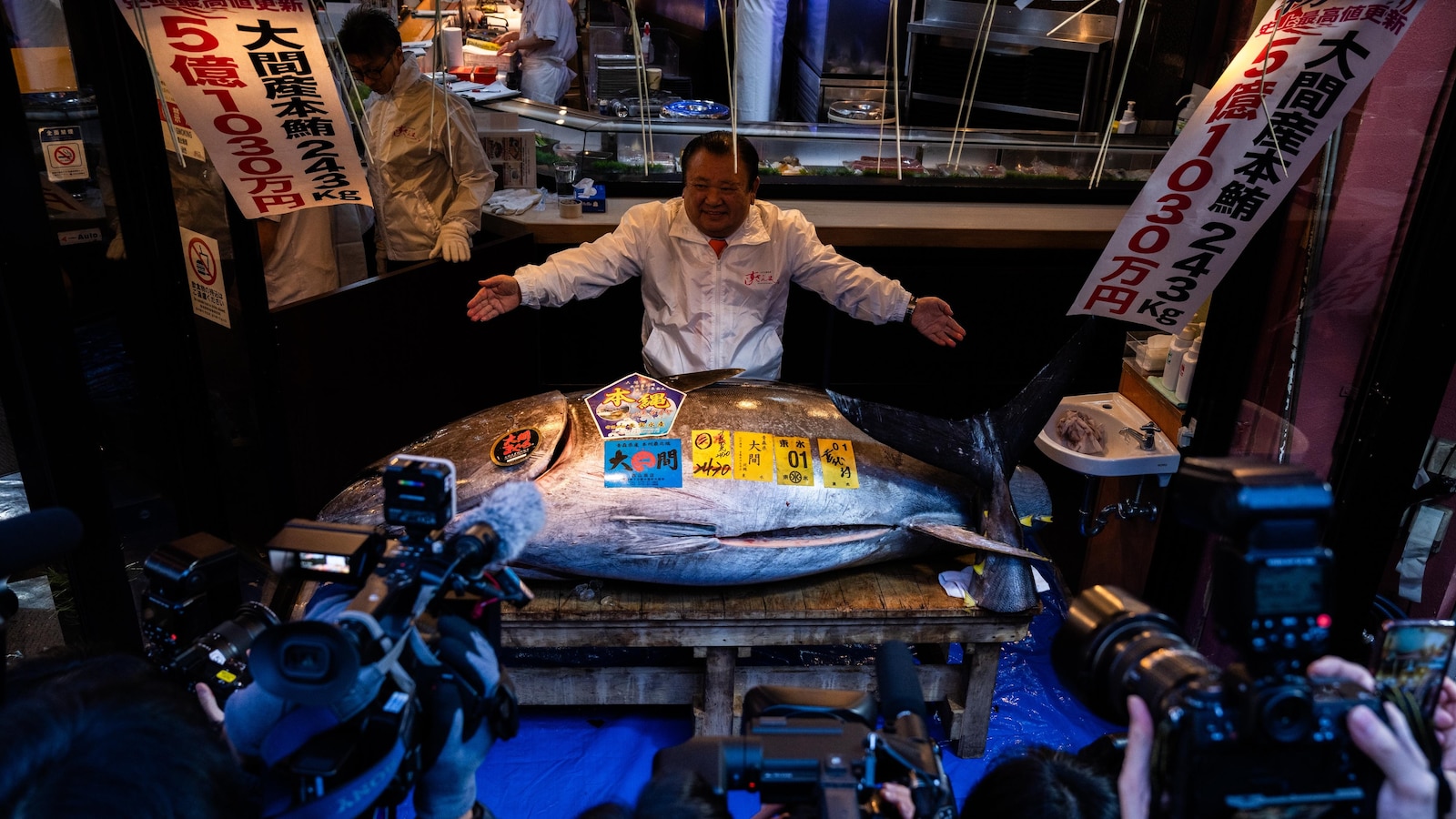
A 243-kilogram bluefin tuna fetched a record 510 million yen ($3.2 million) at Tokyo’s first 2026 Toyosu fish market auction, purchased by Kiyomura Corp., operator of the Sushi Zanmai chain and owned by Kiyoshi Kimura, surpassing his prior 2019 high of 334 million yen. Caught off Oma, a noted tuna-producing region, the sale underscores robust high-end demand and premium pricing dynamics in the sushi/seafood market, with reputational and marketing benefits for the buyer rather than immediate broad market repercussions.
Market structure: The 510M yen bid (≈$3.2M) — ~53% above the 2019 record — is primarily a signaling/marketing event that directly benefits high-end restaurant operators (privately held Sushi Zanmai) and premium wholesalers by increasing brand visibility and willingness-to-pay at trophy auctions. Broad retail seafood prices will see only a localized and short-lived uplift unless large-grade bluefin supply (Oma/Oma-class) tightens materially; marginal pricing power accrues to premium suppliers, not mass-market processors.
Risk assessment: Tail risks include regulatory tightening (quota cuts from ICCAT/Japan Fisheries), reputational/backlash risk leading to demand destruction, or a sharp supply shock from disease/IUU enforcement — each could move prices ±20–50% over 12–36 months. Immediate effect (days–weeks) is publicity-driven traffic for premium restaurants; short-term (3–6 months) could lift wholesale bluefin premiums 5–15%; long-term (years) underscores sustainability constraints and potential structural supply decline.
Trade implications: Tactical trades favor selective exposure to premium dining and integrated seafood processors while avoiding broad consumer discretionary beta. Expect alpha windows of 1–3 quarters around New Year auction publicity; options can define downside given headline-driven volatility. Cross-asset impacts are minimal for FX/bonds but watch JPY on luxury tourism flows and seafood commodity baskets for 1–3% moves.
Contrarian angles: Consensus treats this as benign PR; miss is that record bids are financed as marketing, not structural demand — history (2019) shows no sustained market-wide price shock. The market may overprice luxury-dining equities on headline momentum; downside catalysts (quota cuts, consumer sentiment shifts) could produce quick reversals of 10–30% in exposed names.
AI-powered research, real-time alerts, and portfolio analytics for institutional investors.
Request DemoOverall Sentiment
mildly positive
Sentiment Score
0.25
