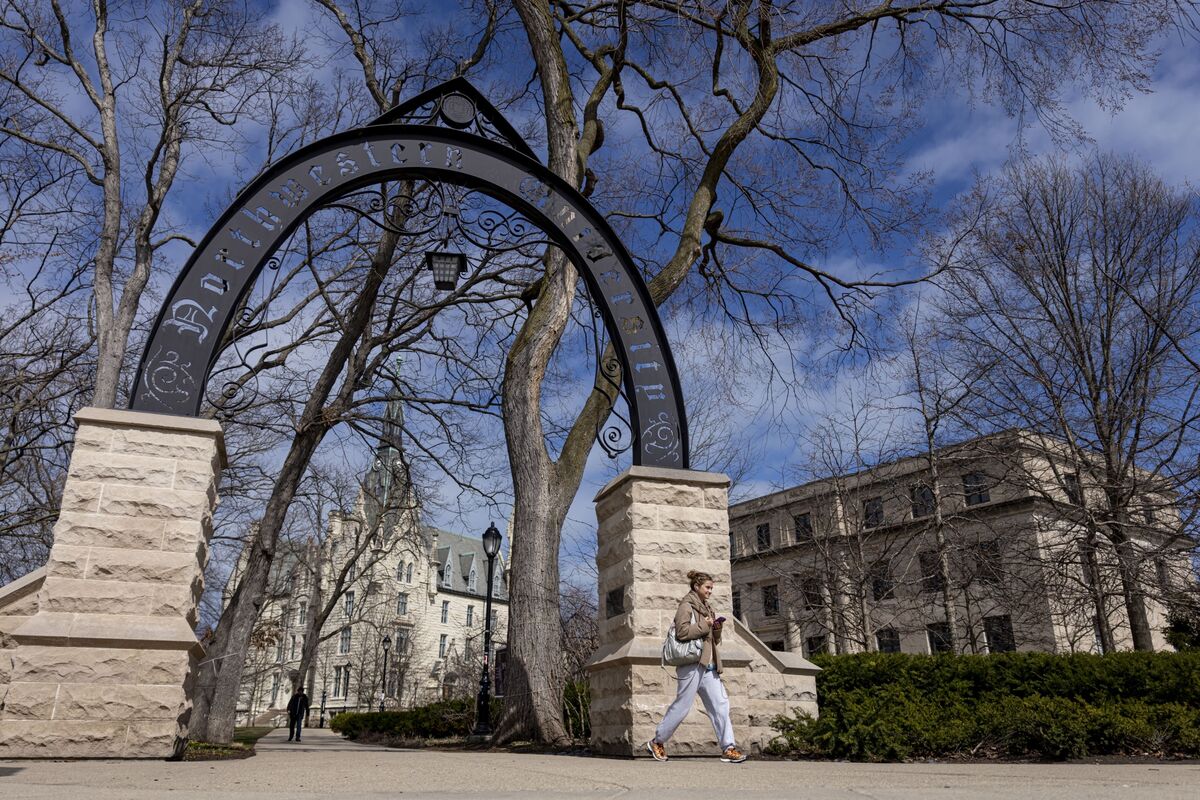
Northwestern University is reportedly nearing an agreement with the Trump administration to pay roughly $75 million to secure the reinstatement of about $790 million in previously frozen federal research grants. The reported concessions include steps to address antisemitism and roll back diversity, equity and inclusion programs pushed by the administration, raising potential precedent-setting implications for federal conditionality on university funding and reputational risks for campus governance.
Market structure: The immediate winner is the federal administration (political leverage) and any universities willing to accept conditionality; losers are research-heavy universities and startups that depend on university-funded IP. The $75m payment vs ~$790m frozen (~9.5%) creates a de facto “policy risk premium” on federally funded research equal to roughly 5–15% of expected near-term cashflows for affected labs, pressuring licensing revenue and spinout financing over 3–12 months.
Risk assessment: Tail risks include widespread freezes or conditional grant rollbacks expanding to 10–30% of NIH/NSF-funded projects, which could stall clinical trials and delay IPOs for biotech spinouts (6–24 months impact). Near-term (days–weeks) reputational volatility is likely; medium-term (months) credit stress for universities could raise short-term debt issuance by $1–3bn as institutions bridge grants; long-term (quarters–years) shifts toward private funding/industry partnerships change cashflow models.
Trade implications: Prefer relative safety in large-cap pharma/contract research (JNJ, PFE, TMO, IQV) and underweight small-cap/academic-dependent biotech (XBI, IBB) for 3–9 months. Short-duration muni exposure to higher-ed issuers and any single-university credit should be reduced; expect modest spread widening (20–50bps) for bespoke university paper if policy escalates.
Contrarian angles: The market will likely underprice the acceleration of private-sector partnerships — this boosts CRO/analytics firms (TMO, IQV) and selective defense/space contractors if federal research pivots. Overreaction risk concentrates in small-cap biotech: a temporary clampdown could create 6–12 month buying opportunities once grants are normalized or private bridges materialize.
AI-powered research, real-time alerts, and portfolio analytics for institutional investors.
Request DemoOverall Sentiment
mildly negative
Sentiment Score
-0.25
