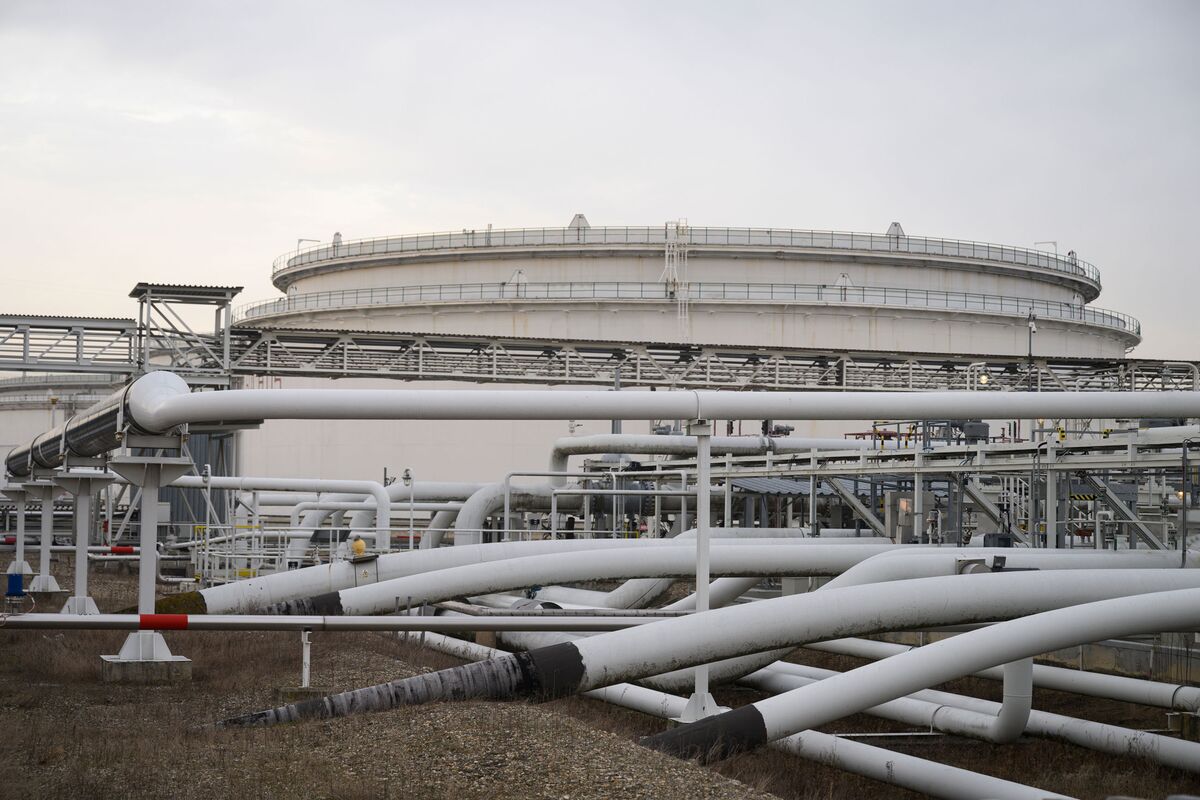
Ukraine says repairs to the Druzhba pipeline have been completed and oil flows to Hungary and Slovakia can resume after a late-January Russian attack. The restart could help unblock crucial EU aid to Kyiv, while also easing a supply disruption in Central European crude logistics. The news is constructive for affected refiners, but the broader market impact is likely limited.
The immediate market implication is less about barrels than about basis. A restart on Druzhba should narrow the Central European crude dislocation versus seaborne grades, pressuring regional refiners that had benefited from replacement barrels and elevated freight/insurance costs, while improving feedstock certainty for Hungary/Slovakia-linked refining and petrochemical chains. The bigger second-order effect is political: energy infrastructure repair is now directly tied to aid flow timing, so any renewed interruption becomes a leverage point rather than a purely operational event.
The fastest beneficiaries are logistics and regional refining assets exposed to inland pipeline economics, but the move is likely to be incremental rather than transformational unless throughput normalizes for weeks. If the restart is real, expect a short-lived compression in the “war premium” embedded in nearby European distillate margins and tanker routes servicing the Baltic/Med flows, because some displaced crude will rotate back into pipeline mode. Conversely, alternative suppliers who captured the interruption premium may see weaker pricing power over the next 1-3 weeks.
The key tail risk is not technical failure but renewed sabotage or political delay. Because the corridor is strategically important, the operational window is fragile: any fresh strike would reprice not just crude flows but also EU aid expectations, creating a reflexive risk-off move in CEE assets and European refiners over a 1-4 week horizon. Over months, the deeper issue is that repeated infrastructure shocks increase the value of redundancy, which favors flexible importers and shippers over fixed-route incumbents.
Consensus may be underestimating how little oil needs to move to matter here: the signaling value of resumed flow is likely more important than volume. That makes the setup asymmetric—if flows restart cleanly, the trade is a modest unwind of disruption winners; if they don’t, the market reprices geopolitical risk much more aggressively than the headline suggests.
AI-powered research, real-time alerts, and portfolio analytics for institutional investors.
Request TrialOverall Sentiment
neutral
Sentiment Score
0.15
