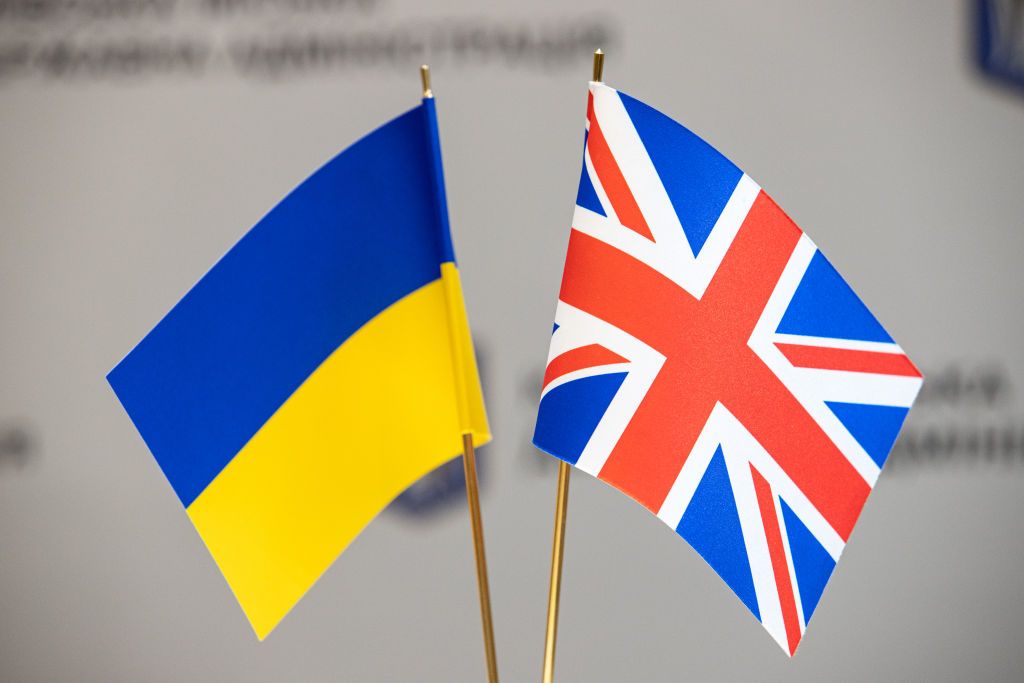
The United Kingdom transferred 752 million pounds (about $1 billion) of frozen Russian assets to Ukraine under the G7 ERA initiative, bringing total UK support under the broader agreement to 2.26 billion pounds ($3 billion). Ukraine said the funds will be directed to urgent security and defense needs. The program is part of the G7's $50 billion financing mechanism backed by profits from frozen Russian sovereign assets.
This is less a one-off headline than a signaling event: the West is moving from ad hoc support to a quasi-fiscal mechanism that monetizes immobilized sovereign balance sheets. That lowers the probability of an abrupt Ukraine funding gap over the next 6-12 months and materially reduces tail risk around battlefield logistics, which tends to support the defense complex even when headline front lines are static. The second-order effect is that markets may increasingly price frozen-asset profits as a durable funding stream, not a legal one-off, which makes the package more resilient than conventional sovereign aid but also more exposed to political cycling in donor capitals.
The main beneficiaries are European and U.S. defense primes with long-duration backlogs and exposed munitions/sustainment franchises; the tighter the Ukraine financing channel, the more likely procurement shifts toward ammunition, air defense, EW, and repairs rather than big-ticket platforms. That favors suppliers with near-term production capacity and recurring consumables, while punishing firms dependent on delayed capex cycles or discretionary modernization budgets. On the sovereign side, the initiative is mildly constructive for Ukrainian credit sentiment in the 1-3 year window, but not enough to alter the base case that the country remains financing-dependent and vulnerable to any change in donor unity.
The contrarian miss is that this is not purely bullish: by extending Ukraine’s runway, it may reduce immediate urgency for a ceasefire and keep sanctions architecture intact longer, which preserves the defense bid but raises the geopolitical duration risk premium across Europe. It also increases the probability that Russia leans harder on asymmetric responses—energy, cyber, and infrastructure disruption—rather than conventional escalation, which can intermittently hit European industrials and utilities. The market should treat this as a slow-burn positive for defense and a neutral-to-slightly-negative for broad risk assets in Europe, with the key catalyst being whether the G7 can scale the mechanism without triggering legal or political backlash.
AI-powered research, real-time alerts, and portfolio analytics for institutional investors.
Request DemoOverall Sentiment
neutral
Sentiment Score
0.15
