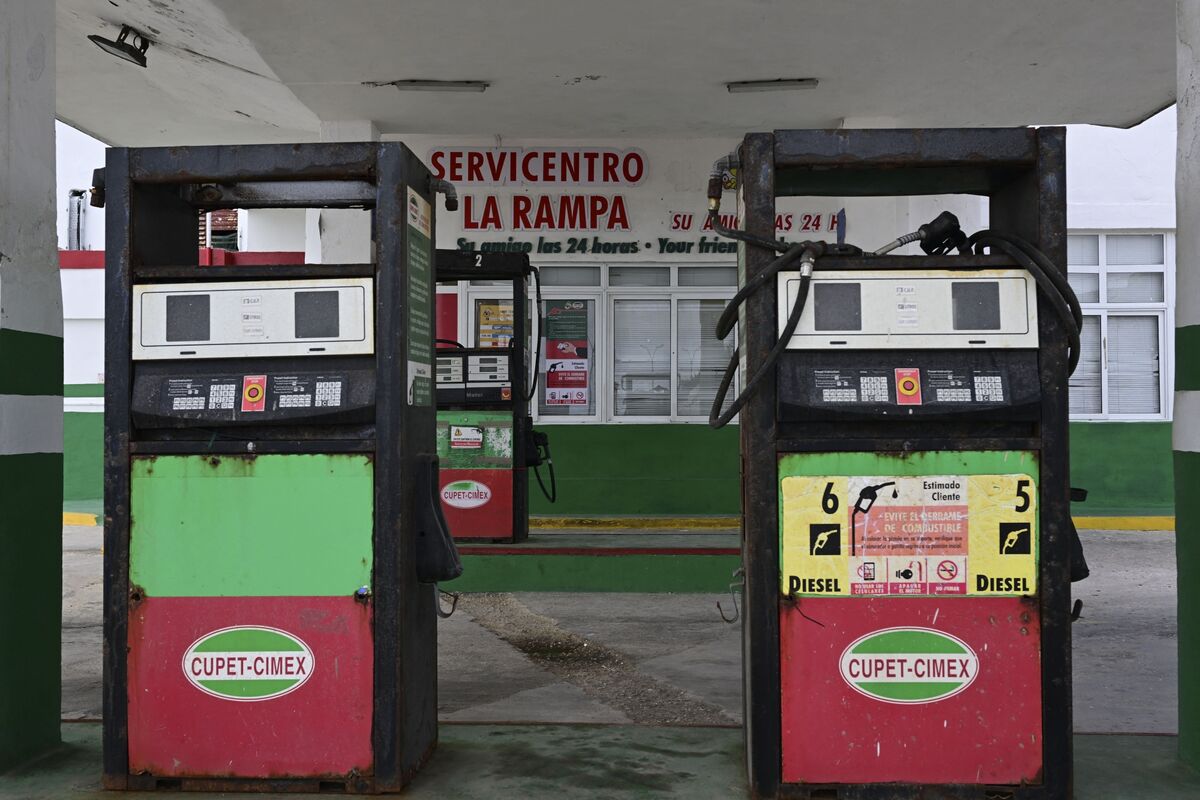
A Florida trading company is in advanced talks to send Cuba the biggest cargo of US fuel since the Eisenhower era, expanding from prior small gasoline and diesel shipments. The move comes as Cuba faces an acute energy crisis and highlights a politically sensitive, sanctions-adjacent trade flow. The article is factual and early-stage, so the immediate market impact is limited but notable for fuel trade dynamics.
This is less a Cuba story than a marginal barrel-routing story that exposes how tight and politicized the Caribbean product market remains. If this shipment scales, the near-term winner is the middleman/arb layer: traders with logistics optionality, compliant shipping capacity, and willingness to warehouse political risk. The second-order effect is a modest bid for Gulf Coast waterborne product cracks if incremental volumes are pulled out of the regional balance, but the effect should be more visible in localized differentials than in headline US gasoline prices.
The real market-moving angle is policy optionality. Any meaningful expansion would test the current enforcement posture around Cuba trade and could create a template for broader carve-outs in distressed EM fuel supply, especially if the island’s power instability worsens. That creates asymmetric tail risk for shipping insurers, counterparties, and smaller traders: the business is profitable until a licensing or enforcement action interrupts it, at which point working capital and cargo exposure can unwind quickly over days rather than months.
Contrarian view: the market may overestimate the durability of the flow while underestimating how little tonnage is needed to change sentiment in a stranded market. Even if volumes are tiny relative to US product exports, the signaling value is large, and that can compress Cuba-adjacent scarcity premiums before any physical shortage is resolved. The bigger medium-term question is whether this becomes a one-off opportunistic trade or the first visible crack in the embargo regime’s practical enforcement, which would have implications far beyond energy.
For investors, the cleaner expression is not directional oil beta but logistics and optionality around sanctioned-trade facilitation. If this story gains traction, the next beneficiaries are likely marine fuel suppliers, tanker operators, and niche commodity traders with Caribbean exposure rather than refiners or producers.
AI-powered research, real-time alerts, and portfolio analytics for institutional investors.
Request DemoOverall Sentiment
neutral
Sentiment Score
0.10
